THE ADVENTURE COLLECTIVE® · Independent discovery and booking for outdoor travel

Climb Fourvière with a private guide and see Lyon from its Roman forum to the basilica and archaeological theatre. This intimate two-hour walk blends sweeping views, layered history, and accessible routes.
Climb Fourvière with a private guide and see Lyon from its Roman forum to the basilica and archaeological theatre. This intimate two-hour walk blends sweeping views, layered history, and accessible routes.
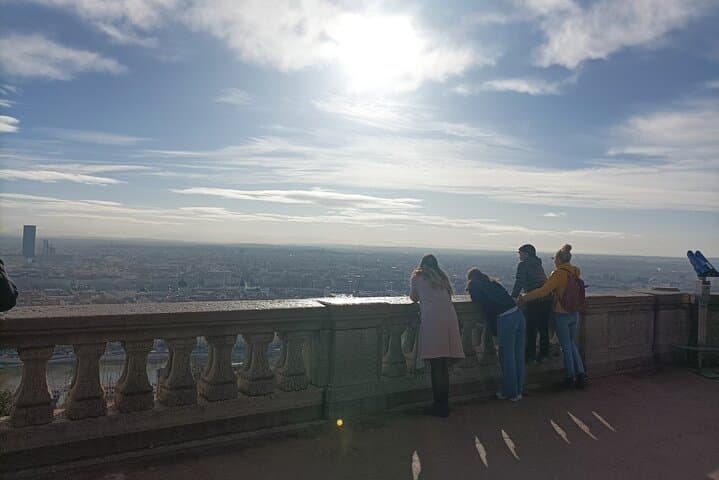
Morning light cuts across the Saône and illuminates the steps up to Fourvière — the hill that has watched Lyon since the Romans called it Lugdunum. The tour begins at the funicular exit; your guide unfolds the city’s story from the panoramic forum square where limestone terraces frame the view of converging rivers.
Verified experiences and guided adventures in the surrounding area.
Operated by Visit-France.org · Lyon, Auvergne-Rhône-Alpes
Morning light cuts across the Saône and illuminates the steps up to Fourvière — the hill that has watched Lyon since the Romans called it Lugdunum. The tour begins at the funicular exit; your guide unfolds the city’s story from the panoramic forum square where limestone terraces frame the view of converging rivers.
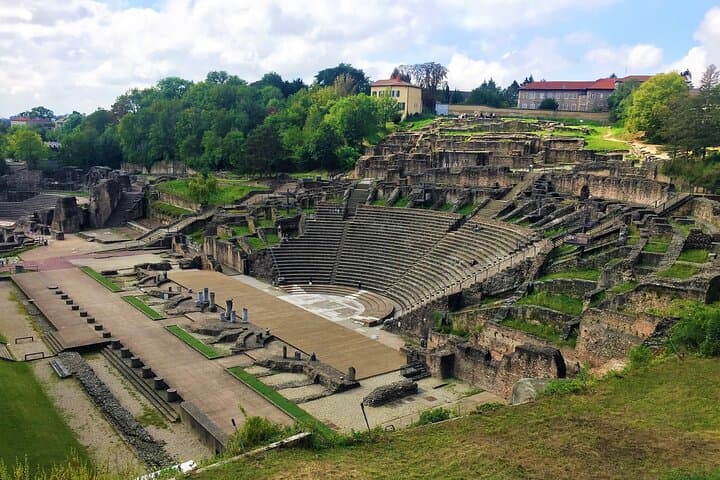
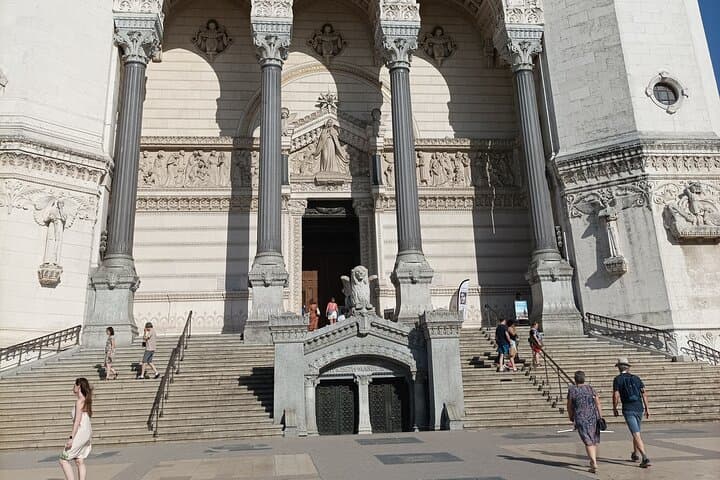
You move toward Notre-Dame de Fourvière, a late-19th-century basilica perched like an observatory above the city. Inside, mosaics and a cool crypt offer a quieter counterpoint to the sweeping terrace. From the basilica the route drops to the archaeological site, where a partially restored Roman theatre and odeon still host performances — stone seating and the curve of the stage map the city’s civic life across two millennia.
Geology is visible in the limestone outcrops that built the hill and the Roman foundations that used them. Culturally, Fourvière has alternated between religious pilgrimage and civic spectacle; the annual Festival of Lights that traces to earlier votive practices still draws locals and visitors.
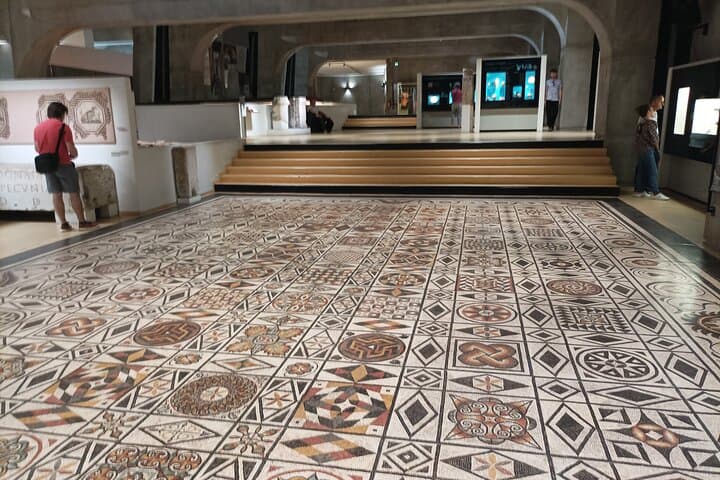
Practicalities matter: the walk is about 1–1.5 miles with short flights of stone steps and paved ramps; much of the route is wheelchair accessible but expect cobbled sections at the archaeological site. Bring a light layer against hilltop wind, sensible shoes for uneven ground, and water in summer. Early morning or late afternoon slots cut the glare and the crowds. The guide can extend the visit to the adjacent archaeological museum for a deeper look at Lugdunum's artifacts.
easy.
2 hours.
Suitable for most fitness levels; requires ability to walk short flights of stairs and navigate some uneven paving.
Yes — the tour notes state that surfaces and transportation are wheelchair accessible, though some cobbled sections may be uneven.
Admissions to the basilica and archaeological site are included on this private tour as described in the itinerary.
Yes — the guide can extend the tour to the Lyon archaeological museum for a deeper exploration, usually by prior arrangement.
Language availability depends on the guide on the day; confirm your preferred language at booking or via pre-tour communication.
Fourvière sits on the site of Roman Lugdunum; the basilica was built in the late 19th century on earlier religious foundations and the hill preserves significant Gallo-Roman remains.
Conservation focuses on preserving fragile archaeological structures and managing visitor impact; stick to marked paths and support local museums that fund restoration.
Visit-France.org operates guided outdoor trips and adventures with an emphasis on safety, stewardship, and memorable experiences.
Morning light cuts across the Saône and illuminates the steps up to Fourvière — the hill that has watched Lyon since the Romans called it Lugdunum. The tour begins at the funicular exit; your guide unfolds the city’s story from the panoramic forum square where limestone terraces frame the view of converging rivers.
Morning light cuts across the Saône and illuminates the steps up to Fourvière — the hill that has watched Lyon since the Romans called it Lugdunum. The tour begins at the funicular exit; your guide unfolds the city’s story from the panoramic forum square where limestone terraces frame the view of converging rivers.
You move toward Notre-Dame de Fourvière, a late-19th-century basilica perched like an observatory above the city. Inside, mosaics and a cool crypt offer a quieter counterpoint to the sweeping terrace. From the basilica the route drops to the archaeological site, where a partially restored Roman theatre and odeon still host performances — stone seating and the curve of the stage map the city’s civic life across two millennia.
Geology is visible in the limestone outcrops that built the hill and the Roman foundations that used them. Culturally, Fourvière has alternated between religious pilgrimage and civic spectacle; the annual Festival of Lights that traces to earlier votive practices still draws locals and visitors.
Practicalities matter: the walk is about 1–1.5 miles with short flights of stone steps and paved ramps; much of the route is wheelchair accessible but expect cobbled sections at the archaeological site. Bring a light layer against hilltop wind, sensible shoes for uneven ground, and water in summer. Early morning or late afternoon slots cut the glare and the crowds. The guide can extend the visit to the adjacent archaeological museum for a deeper look at Lugdunum's artifacts.