THE ADVENTURE COLLECTIVE® · Independent discovery and booking for outdoor travel

A compact, four-day private loop from Athens that pairs coastal engineering, Bronze Age citadels, classical sanctuaries, and the soaring monasteries of Meteora. Expect long drives, short walks through world-class sites, and vivid geological contrasts.
A compact, four-day private loop from Athens that pairs coastal engineering, Bronze Age citadels, classical sanctuaries, and the soaring monasteries of Meteora. Expect long drives, short walks through world-class sites, and vivid geological contrasts.
You leave the city edge at first light, the coastal road unspooling toward the thin slit of the Corinth Canal — a 6.4 km cut of water that seems to dare ships to thread its 21.4 m throat. Over four days the landscape shifts beneath the van: olive-grey hills give way to fortified ruins, mountain terraces, and finally the vertical cliffs of Meteora where monasteries cling to pillars 300–400 m high.
Verified experiences and guided adventures in the surrounding area.
Operated by Tours of Athens · Athens, Attica
You leave the city edge at first light, the coastal road unspooling toward the thin slit of the Corinth Canal — a 6.4 km cut of water that seems to dare ships to thread its 21.4 m throat. Over four days the landscape shifts beneath the van: olive-grey hills give way to fortified ruins, mountain terraces, and finally the vertical cliffs of Meteora where monasteries cling to pillars 300–400 m high.
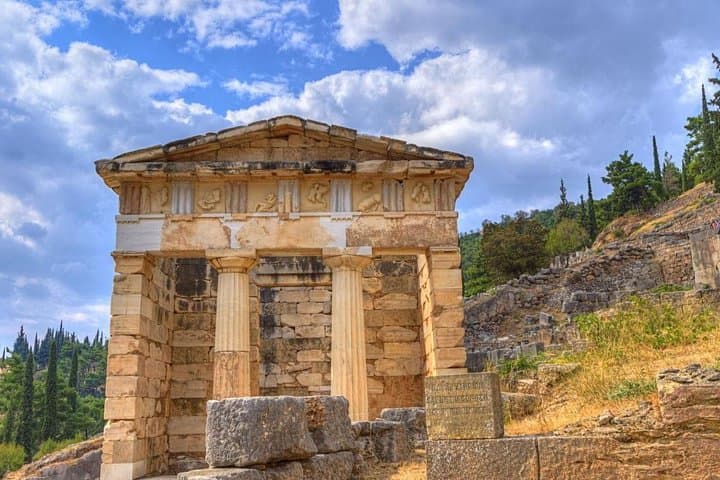
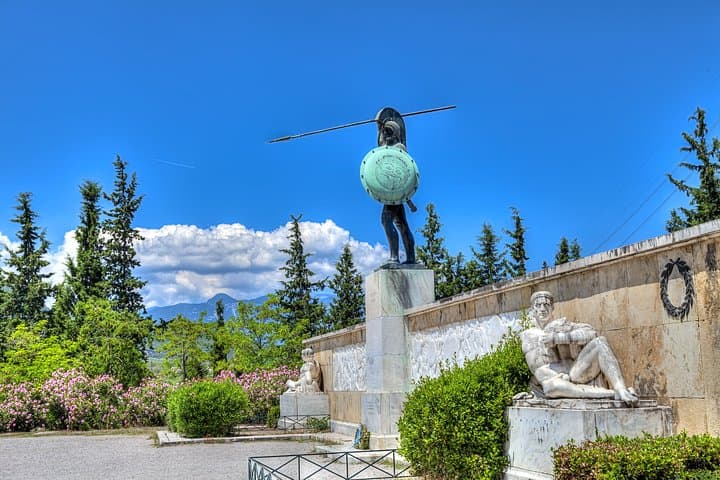
This route stitches together layers of Greek history. Ancient Corinth controlled maritime trade between the gulfs; Mycenae speaks to a Bronze Age warrior culture (c.1600–1100 BCE) and the tombs excavated by Schliemann. Olympia offers the stadium and the 5th-century Temple of Zeus where the ancient Games began in 776 BCE. Delphi sits on the slopes of Mount Parnassos, once thought the world’s omphalos, and Thermopylae carries the memory of the Hot Gates and sulfur springs.
Geology matters here: the isthmus, the folded Parnassos limestones and the eroded conglomerate of Meteora create dramatic contrasts and unexpected microclimates. Cultural life is active — Arachova's mountain crafts, Nauplion's neoclassical streets, and small villages where drivers share local stories.
Practical guide: this is a driving-heavy but low-impact itinerary with short on-foot explorations at each site. Book tickets ahead for museums, wear supportive shoes for uneven ancient stones, and pack layers — mountain afternoons cool quickly. Start early to beat crowds at Delphi and Meteora; carry water and sunscreen. The tour includes a Mercedes air-conditioned vehicle and Wi‑Fi, but many sites have steps and irregular paths, so plan mobility accommodations in advance.
moderate.
4 days.
Suitable for travelers in average physical condition who can manage short walks up steps and uneven terrain
No, most admission fees (Delphi, Olympia, Meteora monasteries) are not included — buy tickets in advance where possible.
Transport is wheelchair accessible but many sites have uneven terrain and steps; guests with mobility issues should notify the operator to plan accordingly.
Expect multiple drives of up to 3–4 hours between major stops; days are full but feature short guided walks at each site.
Spring and fall offer mild temperatures and thinner crowds; summer is hottest and busiest while winter can be cool and wet in mountain areas.
Each stop marks a chapter of Greek civilization — Mycenae's Bronze Age fortifications, Olympia's athletic cult, Delphi's oracle, and Meteora's medieval monasticism.
Meteora and Delphi are protected UNESCO sites; visitors should stay on marked paths, avoid climbing unrecommended rock faces, and respect monastery rules to limit erosion and preserve cultural fabric.
Tours of Athens operates guided outdoor trips and adventures with an emphasis on safety, stewardship, and memorable experiences.

You leave the city edge at first light, the coastal road unspooling toward the thin slit of the Corinth Canal — a 6.4 km cut of water that seems to dare ships to thread its 21.4 m throat. Over four days the landscape shifts beneath the van: olive-grey hills give way to fortified ruins, mountain terraces, and finally the vertical cliffs of Meteora where monasteries cling to pillars 300–400 m high.
You leave the city edge at first light, the coastal road unspooling toward the thin slit of the Corinth Canal — a 6.4 km cut of water that seems to dare ships to thread its 21.4 m throat. Over four days the landscape shifts beneath the van: olive-grey hills give way to fortified ruins, mountain terraces, and finally the vertical cliffs of Meteora where monasteries cling to pillars 300–400 m high.
This route stitches together layers of Greek history. Ancient Corinth controlled maritime trade between the gulfs; Mycenae speaks to a Bronze Age warrior culture (c.1600–1100 BCE) and the tombs excavated by Schliemann. Olympia offers the stadium and the 5th-century Temple of Zeus where the ancient Games began in 776 BCE. Delphi sits on the slopes of Mount Parnassos, once thought the world’s omphalos, and Thermopylae carries the memory of the Hot Gates and sulfur springs.
Geology matters here: the isthmus, the folded Parnassos limestones and the eroded conglomerate of Meteora create dramatic contrasts and unexpected microclimates. Cultural life is active — Arachova's mountain crafts, Nauplion's neoclassical streets, and small villages where drivers share local stories.
Practical guide: this is a driving-heavy but low-impact itinerary with short on-foot explorations at each site. Book tickets ahead for museums, wear supportive shoes for uneven ancient stones, and pack layers — mountain afternoons cool quickly. Start early to beat crowds at Delphi and Meteora; carry water and sunscreen. The tour includes a Mercedes air-conditioned vehicle and Wi‑Fi, but many sites have steps and irregular paths, so plan mobility accommodations in advance.