THE ADVENTURE COLLECTIVE® · Independent discovery and booking for outdoor travel

Four days of temple exploration and lakeside life: sunrise at Angkor Wat, the pink-carved panels of Banteay Srey, the overgrown ruins of Beng Mealea and a private boat ride through Kompong Phluk on Tonle Sap. Practical tips and route expectations for planning your visit.
Four days of temple exploration and lakeside life: sunrise at Angkor Wat, the pink-carved panels of Banteay Srey, the overgrown ruins of Beng Mealea and a private boat ride through Kompong Phluk on Tonle Sap. Practical tips and route expectations for planning your visit.
Dawn arrives over the moat like a slow breath — mist lifts off flooded rice paddies and the five towers of Angkor Wat throw long, patient shadows across stone.
Verified experiences and guided adventures in the surrounding area.
Operated by Angkor Wat Travel Tour · Siem Reap, Siem Reap Province
Dawn arrives over the moat like a slow breath — mist lifts off flooded rice paddies and the five towers of Angkor Wat throw long, patient shadows across stone.
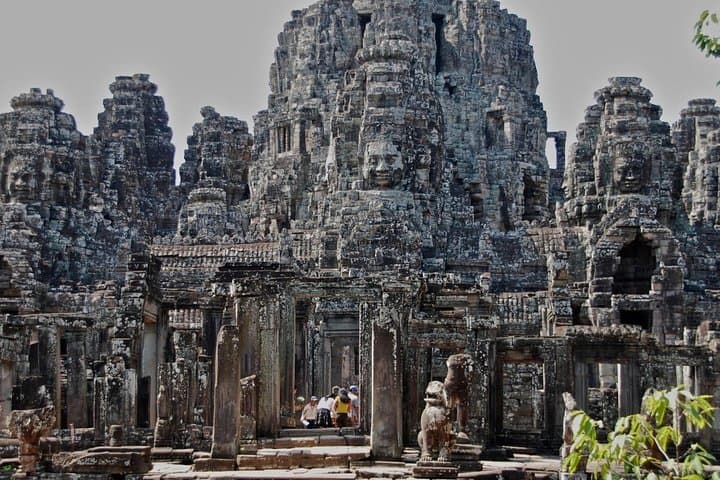
This four-day private itinerary moves from the monumental geometry of Angkor Wat and Angkor Thom to the intimate carvings of Banteay Srey, the jungle-engulfed corridors of Beng Mealea and the floating lifeworlds of Tonle Sap. Built in the 12th century under Suryavarman II, Angkor’s temples sit on sandstone laid atop ancient barays (reservoirs) and laterite foundations; the waterworks shaped both the empire’s agriculture and its rituals.
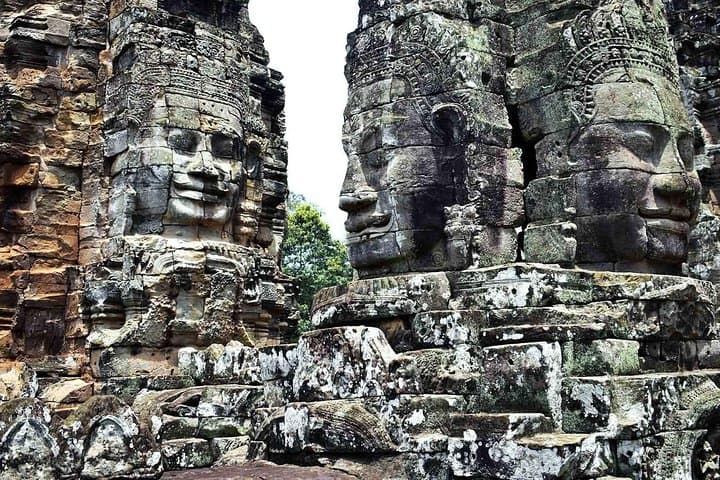
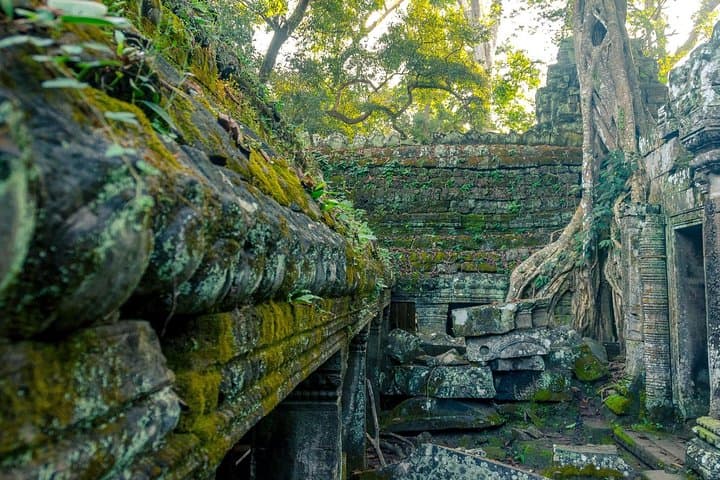
Culturally, expect a mix of Buddhist and Hindu iconography, Khmer stone carving at its most intricate, and living communities that still read the seasonal pulses of the lake. Geologically the region is flat alluvium; erosion, roots and standing water have produced the dramatic root-strewn facades at Ta Prohm and Beng Mealea.
Practical guidance: plan early starts to avoid mid-day heat and crowds, carry a reusable water bottle and local riel or dollars for small purchases, and respect temple dress codes (shoulders and knees covered). Beng Mealea requires light scrambling over mossy rubble; Kbal Spean includes a 45–60 minute uphill walk to see the riverbed carvings. Expect full days of walking and short drives between sites; guides typically handle Angkor pass logistics. Bring sturdy shoes, sun protection and patience — the reward is moving through centuries of stone under open Cambodian sky.
moderate.
4 days (full days; ~8–10 hours/day).
Suitable for travellers with moderate fitness: expect several hours of walking on uneven stone and a few short uphill sections.
Yes — an Angkor Pass is required and is purchased at the official ticket centre; your guide typically helps coordinate timing and collection.
Yes — the itinerary is rated easy-to-moderate; infants should sit on laps during transfers and caregivers should be prepared for uneven ground at ruins.
Expect multiple hours on your feet daily, often on uneven stone or dirt paths; breaks and vehicle transfers are included between major sites.
Private transfers and air-conditioned vehicle transport are included; confirm specific meal inclusions and exact pickup times with the operator.
Angkor grew from a hydraulic-capital system; kings built barays and canals that supported rice agriculture and monumental temple complexes in the 9th–13th centuries.
Rising visitor numbers place wear on sandstone and local water resources; follow trail guidance, avoid touching bas-reliefs and support local conservation and community-run craft programs.
Angkor Wat Travel Tour operates guided outdoor trips and adventures with an emphasis on safety, stewardship, and memorable experiences.
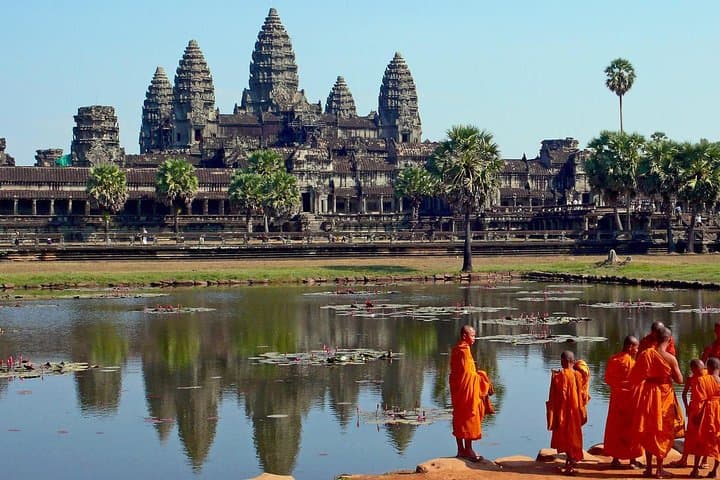
Dawn arrives over the moat like a slow breath — mist lifts off flooded rice paddies and the five towers of Angkor Wat throw long, patient shadows across stone.
Dawn arrives over the moat like a slow breath — mist lifts off flooded rice paddies and the five towers of Angkor Wat throw long, patient shadows across stone.
This four-day private itinerary moves from the monumental geometry of Angkor Wat and Angkor Thom to the intimate carvings of Banteay Srey, the jungle-engulfed corridors of Beng Mealea and the floating lifeworlds of Tonle Sap. Built in the 12th century under Suryavarman II, Angkor’s temples sit on sandstone laid atop ancient barays (reservoirs) and laterite foundations; the waterworks shaped both the empire’s agriculture and its rituals.
Culturally, expect a mix of Buddhist and Hindu iconography, Khmer stone carving at its most intricate, and living communities that still read the seasonal pulses of the lake. Geologically the region is flat alluvium; erosion, roots and standing water have produced the dramatic root-strewn facades at Ta Prohm and Beng Mealea.
Practical guidance: plan early starts to avoid mid-day heat and crowds, carry a reusable water bottle and local riel or dollars for small purchases, and respect temple dress codes (shoulders and knees covered). Beng Mealea requires light scrambling over mossy rubble; Kbal Spean includes a 45–60 minute uphill walk to see the riverbed carvings. Expect full days of walking and short drives between sites; guides typically handle Angkor pass logistics. Bring sturdy shoes, sun protection and patience — the reward is moving through centuries of stone under open Cambodian sky.