THE ADVENTURE COLLECTIVE® · Independent discovery and booking for outdoor travel

Spend the morning tracing Fortaleza’s coastal landmarks—Iracema, Praia do Futuro, the Central Market—then drive to Cumbuco’s wind-sculpted dunes for a swim in the Parnamirim pond and optional dune buggies or ski-bunda sledding.
Spend the morning tracing Fortaleza’s coastal landmarks—Iracema, Praia do Futuro, the Central Market—then drive to Cumbuco’s wind-sculpted dunes for a swim in the Parnamirim pond and optional dune buggies or ski-bunda sledding.
The tour begins with the wind off the Atlantic pushing through the coach windows as Fortaleza’s coastline unfurls—statues, boardwalks and the rhythmic pulse of beach life sliding past. Guides point out the bronze silhouette of Iracema, a literary figure that locals still joke about as if she might lift her head and walk into the surf. The bus eases through Praia do Futuro, where thatched barracas spill music onto the sand, then threads through Aldeota’s wide avenues and past the floating mausoleum of Castelo Branco, a concrete shape that looks as if gravity took a day off.
Verified experiences and guided adventures in the surrounding area.
Operated by Gray Line Brazil · Fortaleza, Ceará
The tour begins with the wind off the Atlantic pushing through the coach windows as Fortaleza’s coastline unfurls—statues, boardwalks and the rhythmic pulse of beach life sliding past. Guides point out the bronze silhouette of Iracema, a literary figure that locals still joke about as if she might lift her head and walk into the surf. The bus eases through Praia do Futuro, where thatched barracas spill music onto the sand, then threads through Aldeota’s wide avenues and past the floating mausoleum of Castelo Branco, a concrete shape that looks as if gravity took a day off.
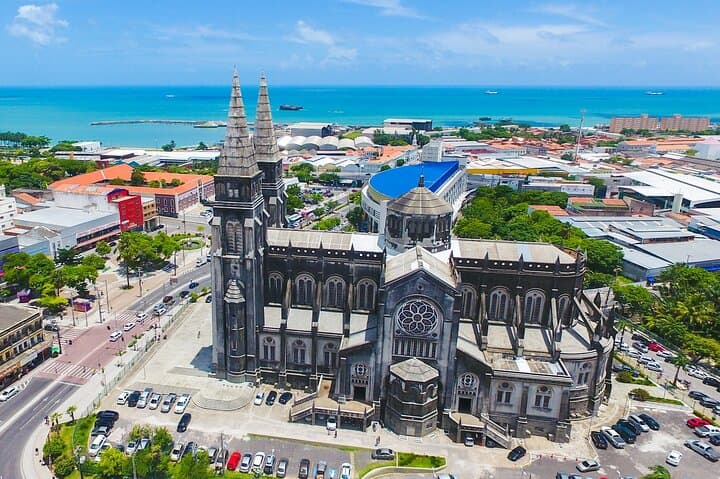
History is never far from view. Fortaleza began as a 17th-century fortification—constructed to guard an estuary prized by colonial traders—and the Fortaleza da Nossa Senhora de Assunção still marks the city’s origin. The tour passes Dragão do Mar Cultural Center, a converted industrial space that now anchors contemporary Ceará art, and the Metropolitan Cathedral, whose mid-20th-century construction gives the downtown skyline a sober punctuation.
Geology and geography show up at Cumbuco. Where Fortaleza’s beaches are urban and broad, Cumbuco’s coastline is a study in moving sand: wind-sculpted dunes that rise and fall like waves frozen mid-crest, dotted with coconuts and cut through by dark, placid lagoons. Those ponds—the Parnamirim being the liveliest—are the payoff at day’s end. They offer swimming and a cooling contrast after a dusty run down a dune with a ski-bunda sled or a dune buggy ride.
Culturally, the trip is a quick lesson in northeastern Brazil’s conviviality. Market stalls at the Central Market offer couro (leather) crafts and bright textiles, while beach bars serve fresh seafood and cajuína—nonalcoholic cashew juice—alongside the louder fuel of caipirinhas. Guides will often sketch local history in easy, practical strokes: why the fortress was placed where it is, or how Cumbuco evolved from a fishing hamlet to a kite-surfing hub.
Practicalities matter on a day like this. The experience is panoramic through city streets—expect pass-by commentary rather than long stops—then roughly an hour at Cumbuco to explore, swim, or book optional dune activities. Bring sunscreen, a swimsuit, and cash for vendors and add-ons like buggies or raft rides. Temperatures are coastal hot; hydrate on the coach and plan for sunscreen reapplication.
For travelers looking to blend civic context and coastal playfulness, the tour delivers a compact but layered day: a brisk survey of Fortaleza’s civic landmarks followed by the slow, restless dunes of Cumbuco. It’s family-friendly, low on technical challenge, and high on contrast—an accessible way to see both the city’s pulse and the Atlantic’s shifting moods.
easy.
8 hours.
Suitable for most fitness levels; able-bodied adults and children can participate since activities are low-impact.
Travel time is roughly 40–60 minutes depending on traffic and your pickup location; the itinerary allows for an hour in Cumbuco.
No—dune buggy rides, ski-bunda and similar activities are optional and priced locally; bring cash for these extras.
No—the Fortaleza segment is panoramic with pass-by viewing of major sights; only Cumbuco includes on-foot or optional short-activity time.
Yes—this is family-friendly; infants must sit on an adult’s lap for transport and guardians should supervise optional activities.
Yes—reconfirmation 48 hours ahead is recommended; the operator requires contact to finalize departure time.
Light, breathable clothing, a swimsuit underneath if you plan to swim, reef-safe sunscreen and footwear that handles sand well.
Fortaleza grew from a 17th-century coastal fort; the city’s name literally means “fortress,” and the original fort marks the colonial beginning of Ceará’s capital.
Dune ecosystems are fragile—avoid trampling vegetation and use local guides for dune drives to minimize erosion; dispose of waste with vendors or bring it back to town.
Gray Line Brazil operates guided outdoor trips and adventures with an emphasis on safety, stewardship, and memorable experiences.

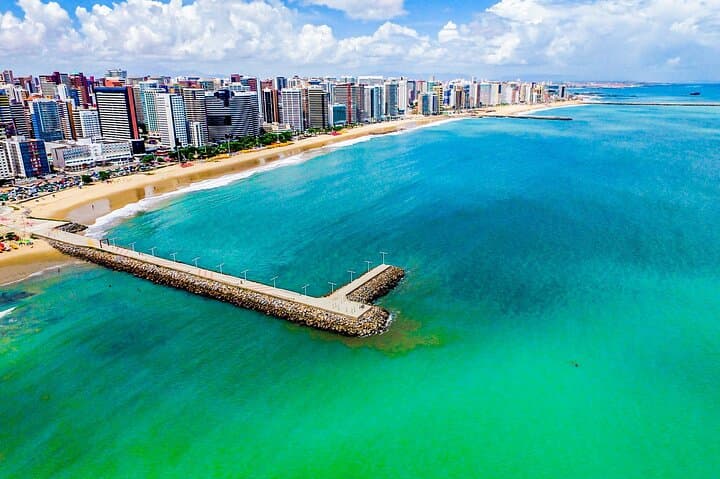
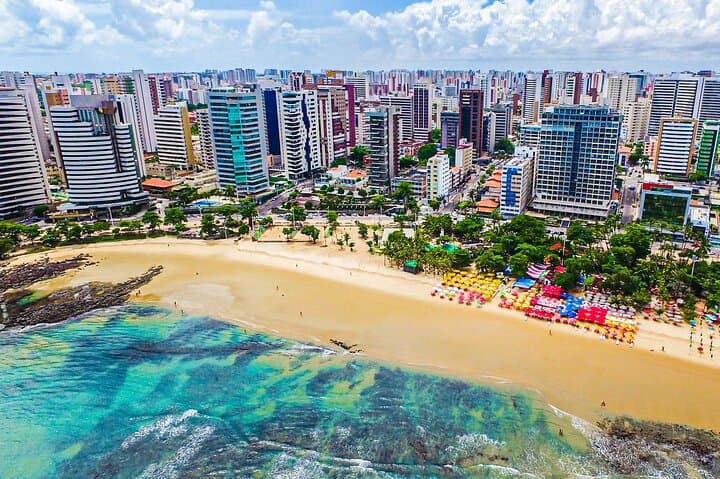
The tour begins with the wind off the Atlantic pushing through the coach windows as Fortaleza’s coastline unfurls—statues, boardwalks and the rhythmic pulse of beach life sliding past. Guides point out the bronze silhouette of Iracema, a literary figure that locals still joke about as if she might lift her head and walk into the surf. The bus eases through Praia do Futuro, where thatched barracas spill music onto the sand, then threads through Aldeota’s wide avenues and past the floating mausoleum of Castelo Branco, a concrete shape that looks as if gravity took a day off.
The tour begins with the wind off the Atlantic pushing through the coach windows as Fortaleza’s coastline unfurls—statues, boardwalks and the rhythmic pulse of beach life sliding past. Guides point out the bronze silhouette of Iracema, a literary figure that locals still joke about as if she might lift her head and walk into the surf. The bus eases through Praia do Futuro, where thatched barracas spill music onto the sand, then threads through Aldeota’s wide avenues and past the floating mausoleum of Castelo Branco, a concrete shape that looks as if gravity took a day off.
History is never far from view. Fortaleza began as a 17th-century fortification—constructed to guard an estuary prized by colonial traders—and the Fortaleza da Nossa Senhora de Assunção still marks the city’s origin. The tour passes Dragão do Mar Cultural Center, a converted industrial space that now anchors contemporary Ceará art, and the Metropolitan Cathedral, whose mid-20th-century construction gives the downtown skyline a sober punctuation.
Geology and geography show up at Cumbuco. Where Fortaleza’s beaches are urban and broad, Cumbuco’s coastline is a study in moving sand: wind-sculpted dunes that rise and fall like waves frozen mid-crest, dotted with coconuts and cut through by dark, placid lagoons. Those ponds—the Parnamirim being the liveliest—are the payoff at day’s end. They offer swimming and a cooling contrast after a dusty run down a dune with a ski-bunda sled or a dune buggy ride.
Culturally, the trip is a quick lesson in northeastern Brazil’s conviviality. Market stalls at the Central Market offer couro (leather) crafts and bright textiles, while beach bars serve fresh seafood and cajuína—nonalcoholic cashew juice—alongside the louder fuel of caipirinhas. Guides will often sketch local history in easy, practical strokes: why the fortress was placed where it is, or how Cumbuco evolved from a fishing hamlet to a kite-surfing hub.
Practicalities matter on a day like this. The experience is panoramic through city streets—expect pass-by commentary rather than long stops—then roughly an hour at Cumbuco to explore, swim, or book optional dune activities. Bring sunscreen, a swimsuit, and cash for vendors and add-ons like buggies or raft rides. Temperatures are coastal hot; hydrate on the coach and plan for sunscreen reapplication.
For travelers looking to blend civic context and coastal playfulness, the tour delivers a compact but layered day: a brisk survey of Fortaleza’s civic landmarks followed by the slow, restless dunes of Cumbuco. It’s family-friendly, low on technical challenge, and high on contrast—an accessible way to see both the city’s pulse and the Atlantic’s shifting moods.