THE ADVENTURE COLLECTIVE® · Independent discovery and booking for outdoor travel

Walk the New River at your own pace with a GPS-triggered audio guide that narrates Fort Lauderdale’s history, public art and waterfront life. Download once, follow the live map and pause wherever you want for photos or coffee along Las Olas.
Walk the New River at your own pace with a GPS-triggered audio guide that narrates Fort Lauderdale’s history, public art and waterfront life. Download once, follow the live map and pause wherever you want for photos or coffee along Las Olas.
The New River edges along downtown Fort Lauderdale like a patient guide, its surface reflecting palms, high-rises and the occasional wake of a passing boat. Start where the city hums—near the Broward Center—and let the audio guide point you downstream, through esplanades, public art and the shaded lawns of Esplanade Park.
Verified experiences and guided adventures in the surrounding area.
Operated by Tripvia Tours · Fort Lauderdale, Florida
The New River edges along downtown Fort Lauderdale like a patient guide, its surface reflecting palms, high-rises and the occasional wake of a passing boat. Start where the city hums—near the Broward Center—and let the audio guide point you downstream, through esplanades, public art and the shaded lawns of Esplanade Park.
This self-guided route threads through key moments of local history: early 20th-century river commerce, Frank Stranahan’s trading post turned museum, and civic investments that turned a working waterfront into a civic promenade. Geologically the area sits on low coastal plains and mangrove-lined estuaries; the river’s flow and tides shaped early settlement patterns and still govern how the city manages stormwater and salt intrusion.
Culturally, Las Olas Boulevard is the city’s social spine—galleries, cafés and restored historic houses chronicle Fort Lauderdale’s shift from pioneer outpost to modern beach city. Keep an eye for small memorial bricks and public sculptures; they’re local fundraisers and neighborhood stories carved in place.
Practical guidance: download the Tripvia app on Wi‑Fi, enter the tour code and follow the live GPS map. The full route is about 1.5–2 hours at a steady pace with plenty of stops; wear supportive shoes and bring sun protection and water. Accessibility is high—stroller and wheelchair friendly surfaces run much of the route—but expect some pedestrian traffic near restaurants and events. Early morning or late afternoon offers cooler light and fewer crowds. Take your time: the audio pauses at points of interest so you can step off the path, explore a museum or sit by the river and watch tides and boats set the tempo of the city.
easy.
1–2 hours.
Suitable for most fitness levels—mostly flat paved surfaces with frequent place-to-stop options
Plan for 1 to 2 hours of walking time; you can stop at points of interest and take detours, which will extend the visit.
No—download the tour on Wi‑Fi before you start and the GPS-triggered audio will play without using data.
Yes—the Riverwalk route and major points of interest use paved, level surfaces suitable for strollers and many wheelchairs; check specific venue access if you need ramp or elevator access indoors.
Yes—this self-guided tour is flexible: the audio resumes at nearby points and the live map helps you find the next stop when you’re ready to continue.
The Riverwalk follows the New River, which shaped Fort Lauderdale’s growth; the nearby Stranahan House, built by trader Frank Stranahan, marks the city’s 20th-century origins.
The riverfront relies on community stewardship—avoid litter, respect wildlife, and support local initiatives like Go Riverwalk that fund maintenance and habitat-friendly plantings.
Tripvia Tours operates guided outdoor trips and adventures with an emphasis on safety, stewardship, and memorable experiences.
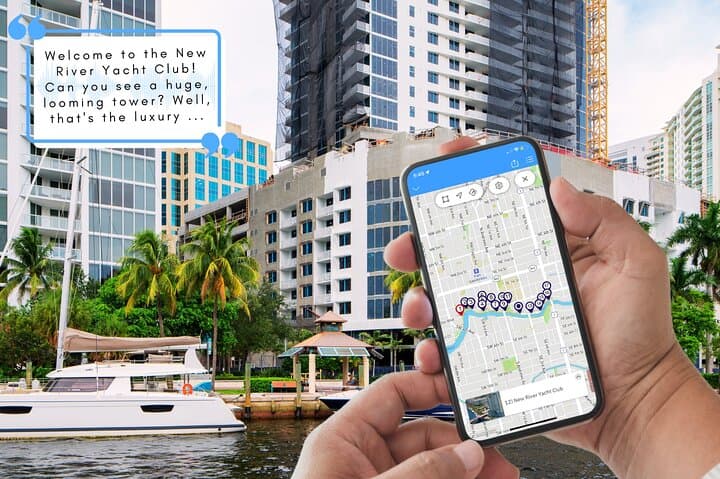


The New River edges along downtown Fort Lauderdale like a patient guide, its surface reflecting palms, high-rises and the occasional wake of a passing boat. Start where the city hums—near the Broward Center—and let the audio guide point you downstream, through esplanades, public art and the shaded lawns of Esplanade Park.
The New River edges along downtown Fort Lauderdale like a patient guide, its surface reflecting palms, high-rises and the occasional wake of a passing boat. Start where the city hums—near the Broward Center—and let the audio guide point you downstream, through esplanades, public art and the shaded lawns of Esplanade Park.
This self-guided route threads through key moments of local history: early 20th-century river commerce, Frank Stranahan’s trading post turned museum, and civic investments that turned a working waterfront into a civic promenade. Geologically the area sits on low coastal plains and mangrove-lined estuaries; the river’s flow and tides shaped early settlement patterns and still govern how the city manages stormwater and salt intrusion.
Culturally, Las Olas Boulevard is the city’s social spine—galleries, cafés and restored historic houses chronicle Fort Lauderdale’s shift from pioneer outpost to modern beach city. Keep an eye for small memorial bricks and public sculptures; they’re local fundraisers and neighborhood stories carved in place.
Practical guidance: download the Tripvia app on Wi‑Fi, enter the tour code and follow the live GPS map. The full route is about 1.5–2 hours at a steady pace with plenty of stops; wear supportive shoes and bring sun protection and water. Accessibility is high—stroller and wheelchair friendly surfaces run much of the route—but expect some pedestrian traffic near restaurants and events. Early morning or late afternoon offers cooler light and fewer crowds. Take your time: the audio pauses at points of interest so you can step off the path, explore a museum or sit by the river and watch tides and boats set the tempo of the city.