THE ADVENTURE COLLECTIVE® · Independent discovery and booking for outdoor travel

Explore Fort Collins’ origins along the Cache la Poudre River on a two‑hour van tour that mixes period dress, historic artifacts, and short riverbank walks. Learn where early cabins stood, why Harmony Mill rose, and practical tips for visiting this 19th‑century landscape.
Explore Fort Collins’ origins along the Cache la Poudre River on a two‑hour van tour that mixes period dress, historic artifacts, and short riverbank walks. Learn where early cabins stood, why Harmony Mill rose, and practical tips for visiting this 19th‑century landscape.
You step out of an air-conditioned van into a cold Colorado wind that seems to nudge the Cache la Poudre River along its bed—history tugging at the riverbank as much as the current pushes downstream. The tour begins at Watson Lake State Wildlife Area; the guide in period clothing unfolds 19th‑century life with artifacts, stagecoach tickets and anecdotes that make the streets and river feel lived‑in rather than merely preserved.
Verified experiences and guided adventures in the surrounding area.
Operated by Traces of the Past History Tours · Fort Collins, Colorado
You step out of an air-conditioned van into a cold Colorado wind that seems to nudge the Cache la Poudre River along its bed—history tugging at the riverbank as much as the current pushes downstream. The tour begins at Watson Lake State Wildlife Area; the guide in period clothing unfolds 19th‑century life with artifacts, stagecoach tickets and anecdotes that make the streets and river feel lived‑in rather than merely preserved.
This two‑hour guided van tour traces Euro‑American settlement in the Poudre valley from the first cabins in 1859 through the agricultural boom that produced brick grainworks like Harmony Mill (built 1886). Geologically, the area sits on the eastern flank of the Laramie Foothills where alluvial terraces meet shale and sandstone outcrops; the river carved the corridor that attracted settlers and mills. Culturally the tour links Fort Collins to military routes, ranching families, and seasonal river work—stories that ripple into southeastern Wyoming and western Nebraska.
Expect short, easy walks (10–20 minutes) to cabin remains and mill viewpoints, mostly flat riverbank or paved streets in town. The guide provides hands‑on historic objects and a personalized “stagecoach” ticket for keepsakes.
Practical notes: the tour runs about 120 minutes, suitable for most fitness levels; elevation is roughly 5,000 ft, so bring water and sun protection. Wear sturdy walking shoes for muddy riverbank sections and dress in layers—Colorado weather shifts fast. Arrive early to the Rist Canyon parking lot for best parking and cell reception; cameras and sensible curiosity are all you really need.
easy.
2 hours.
Suitable for most fitness levels; involves short, low‑impact walks of under half a mile per stop.
The tour meets and ends at the Watson Lake State Wildlife Area parking lot near 4900 Rist Canyon Rd., Laporte, CO (next to the bridge over the Cache la Poudre River).
Yes; the tour is family‑friendly—infants must sit on an adult’s lap and short walks are easy for older children.
Yes—guides provide historic objects for viewing and handling, and photography is allowed at outdoor stops.
Full refunds available if you cancel at least 24 hours before the scheduled departure; tours may be canceled for bad weather.
Fort Collins began as a military camp and agricultural hub in the mid‑19th century; Harmony Mill (1886) reflects the valley’s grain‑processing boom tied to railroad access.
The Cache la Poudre watershed is managed for irrigation, wildlife and recreation—stay on designated paths and avoid disturbing cabin ruins to protect archaeological resources.
Traces of the Past History Tours operates guided outdoor trips and adventures with an emphasis on safety, stewardship, and memorable experiences.
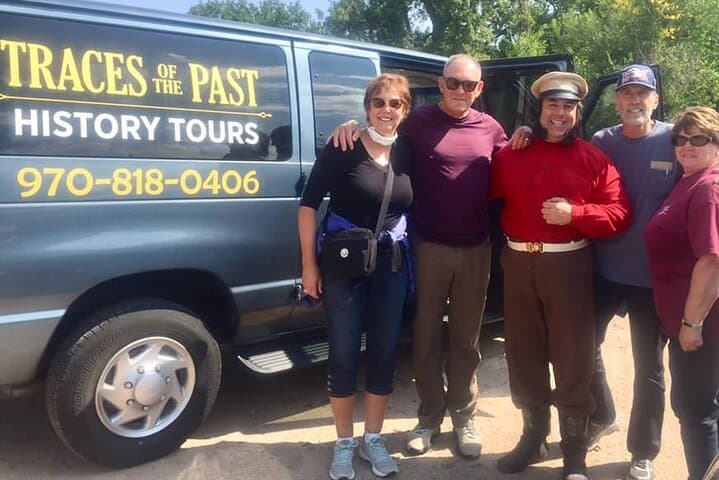
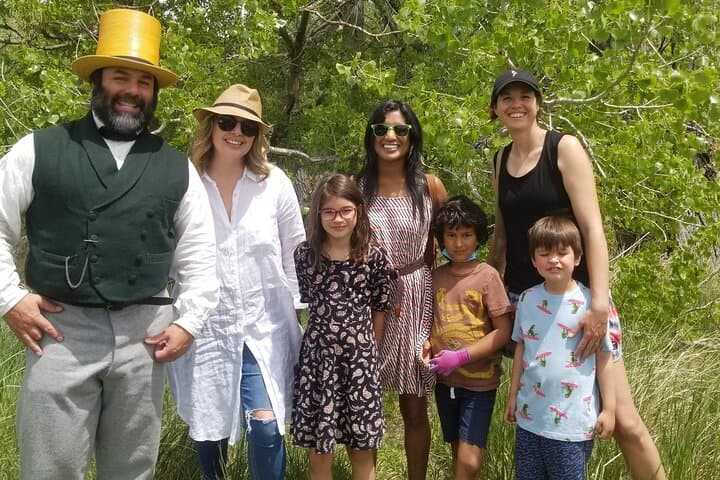
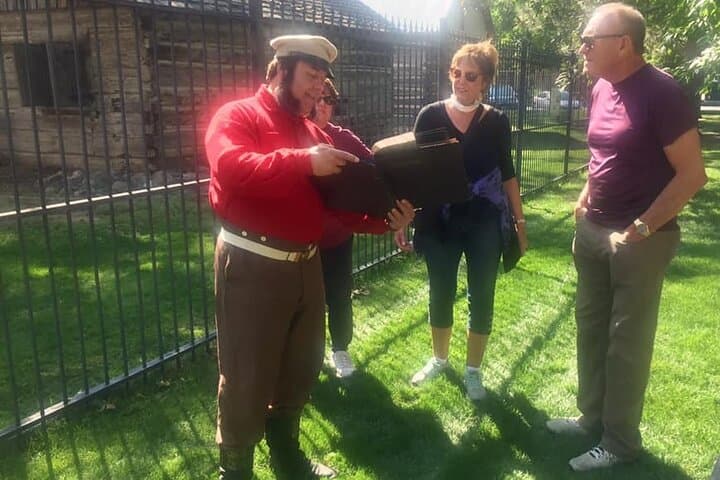
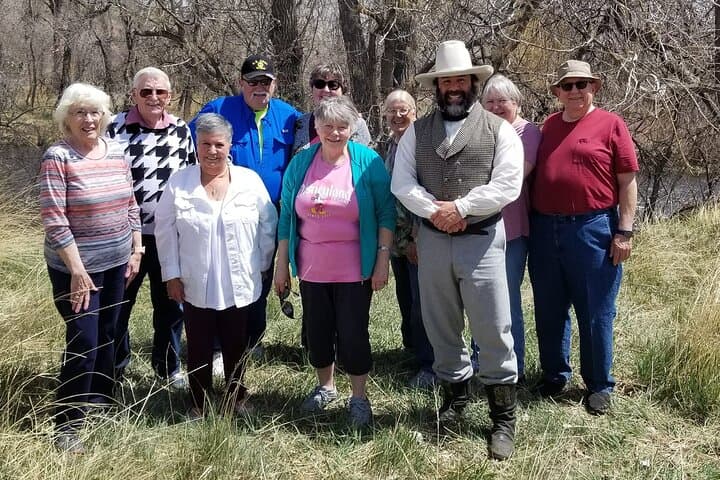
You step out of an air-conditioned van into a cold Colorado wind that seems to nudge the Cache la Poudre River along its bed—history tugging at the riverbank as much as the current pushes downstream. The tour begins at Watson Lake State Wildlife Area; the guide in period clothing unfolds 19th‑century life with artifacts, stagecoach tickets and anecdotes that make the streets and river feel lived‑in rather than merely preserved.
You step out of an air-conditioned van into a cold Colorado wind that seems to nudge the Cache la Poudre River along its bed—history tugging at the riverbank as much as the current pushes downstream. The tour begins at Watson Lake State Wildlife Area; the guide in period clothing unfolds 19th‑century life with artifacts, stagecoach tickets and anecdotes that make the streets and river feel lived‑in rather than merely preserved.
This two‑hour guided van tour traces Euro‑American settlement in the Poudre valley from the first cabins in 1859 through the agricultural boom that produced brick grainworks like Harmony Mill (built 1886). Geologically, the area sits on the eastern flank of the Laramie Foothills where alluvial terraces meet shale and sandstone outcrops; the river carved the corridor that attracted settlers and mills. Culturally the tour links Fort Collins to military routes, ranching families, and seasonal river work—stories that ripple into southeastern Wyoming and western Nebraska.
Expect short, easy walks (10–20 minutes) to cabin remains and mill viewpoints, mostly flat riverbank or paved streets in town. The guide provides hands‑on historic objects and a personalized “stagecoach” ticket for keepsakes.
Practical notes: the tour runs about 120 minutes, suitable for most fitness levels; elevation is roughly 5,000 ft, so bring water and sun protection. Wear sturdy walking shoes for muddy riverbank sections and dress in layers—Colorado weather shifts fast. Arrive early to the Rist Canyon parking lot for best parking and cell reception; cameras and sensible curiosity are all you really need.