THE ADVENTURE COLLECTIVE® · Independent discovery and booking for outdoor travel

Soak in the milky-blue warmth of the Forest Lagoon, then chase the Aurora Borealis outside Akureyri on a single evening tour. This hybrid spa-and-sky trip blends geothermal calm with the unpredictable thrill of Northern Lights hunting.
Soak in the milky-blue warmth of the Forest Lagoon, then chase the Aurora Borealis outside Akureyri on a single evening tour. This hybrid spa-and-sky trip blends geothermal calm with the unpredictable thrill of Northern Lights hunting.
You step out of the minivan into a thin, cold air that smells faintly of pine and mineral steam. A ribbon of light from the spa spills into the dark; the Forest Lagoon itself glows a soft milky blue against the black of Eyjafjörður. Birch branches scrape the sky and the fjord sits like a flat, dark mirror below—it’s the kind of place where silence has weight, and steam seems to carry a memory.
Verified experiences and guided adventures in the surrounding area.
Operated by Star Travel Iceland · Akureyri, Northeastern Region
You step out of the minivan into a thin, cold air that smells faintly of pine and mineral steam. A ribbon of light from the spa spills into the dark; the Forest Lagoon itself glows a soft milky blue against the black of Eyjafjörður. Birch branches scrape the sky and the fjord sits like a flat, dark mirror below—it’s the kind of place where silence has weight, and steam seems to carry a memory.
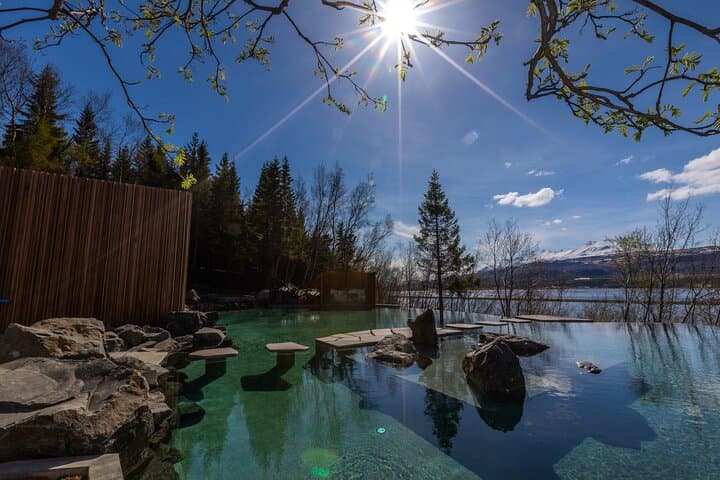
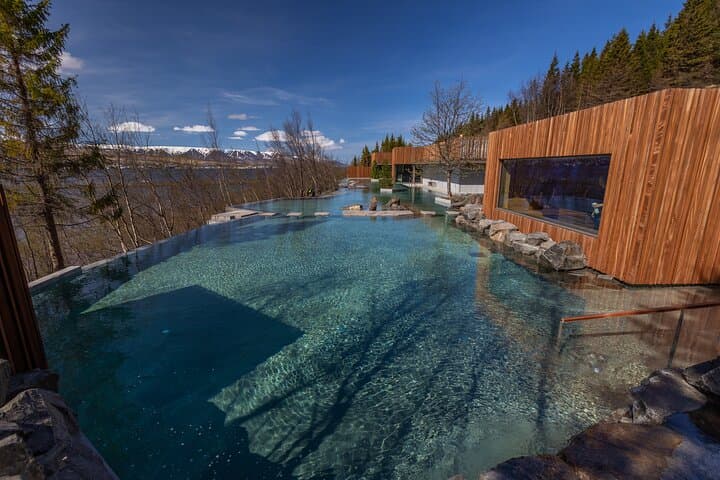
The evening begins here, in the sheltered arms of Vaðlaskógur, where geothermal water has been coaxed into a modern spa that still feels connected to the old growth around it. The baths were built to take advantage of a unique marriage: hot spring geology and one of Iceland’s denser patches of woodland. Eyjafjörður, the fjord you look over from the lagoon, is one of Iceland’s longest and carved by glacial rivers thousands of years ago; the trees on its slopes are a relatively recent reclamation project in a landscape long denuded by settlement and soil erosion.
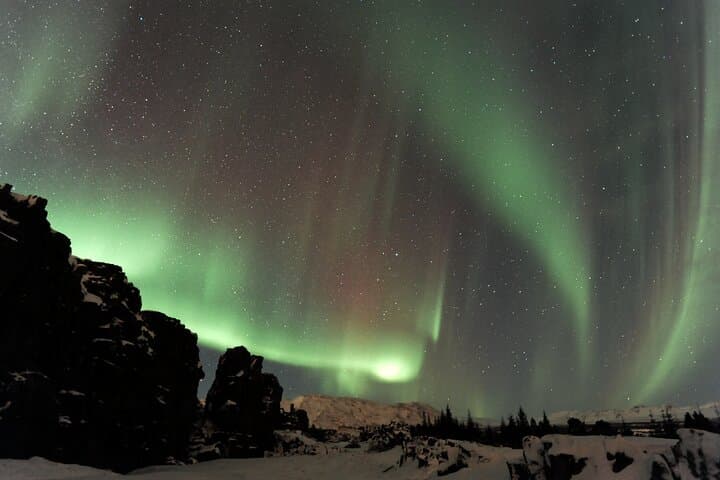
After an hour or two of soaking—the water encourages you to slow your breath and let the cold pinch out of your fingers—the guide drives you away from Akureyri’s sodium lights. The second act of the night is a practiced hunt for aurora: a drive to places where cloud cover and light pollution are minimal, binoculars and cameras readied, breath visible in the beam of your headlamp. The Northern Lights don’t perform on cue; they respond to solar wind and magnetism, but when they come they curve, ripple, and appear to peel across the sky as if the atmosphere itself were writing.
Culturally, the tour sits between two Icelandic traditions: bathing in geothermal pools has been both practical and social for centuries; aurora-watching taps into the modern tourist’s appetite for rare, ephemeral spectacle. Guides blend local weather sense with aurora forecasts and will often retarget by road if cloud cover shifts.
Practicalities: the full experience runs about 4–5 hours door-to-door from Akureyri and includes entrance and towel. Expect short walks across cold gravel and standing time outside. Dress in layers—wool base, insulated mid-layer, and a windproof shell—and bring footwear that can handle slushy or icy paths. Charge your camera batteries in your pockets and warm them between shots; cameras drain fast in Arctic temperatures. The operator offers pickup from Akureyri hotels; children are welcome but those with heart conditions should avoid geothermal soaking.
Even if the aurora plays coy, the contrast of warm water, dark fjord, and the hush of northern forest makes the night worth the drive. When the lights do arrive, the steam around you seems to lift and hand the sky its own moving curtain—an elemental, patient show that rewards patience and presence.
easy.
4–5 hours.
Suitable for most fitness levels; expect short, gentle walks and brief standing periods outdoors.
The tour runs approximately 4–5 hours (270 minutes total), including transfer time from Akureyri, Lagoon entry, and aurora searching.
No—aurora are a natural phenomenon. If the tour runs and you don’t see the lights, the operator typically offers a free re-booking on a later night with availability.
Yes—entrance fee to the Forest Lagoon and a towel are included in the tour price.
Children are welcome but must be supervised; infants can use strollers, and infant seats are available for transport.
The soak is not recommended for travelers with poor cardiovascular health due to hot water immersion—consult your physician before booking.
Yes—hotel pickup in Akureyri is included; be in the lobby 15 minutes before departure.
Eyjafjörður’s shores have been fishing and trading hubs for centuries; the surrounding forest is part of modern reforestation efforts after historic soil loss.
Stay on marked paths and follow spa rules—geothermal landscapes are fragile, and minimizing light pollution helps aurora viewing and local wildlife.
Star Travel Iceland operates guided outdoor trips and adventures with an emphasis on safety, stewardship, and memorable experiences.
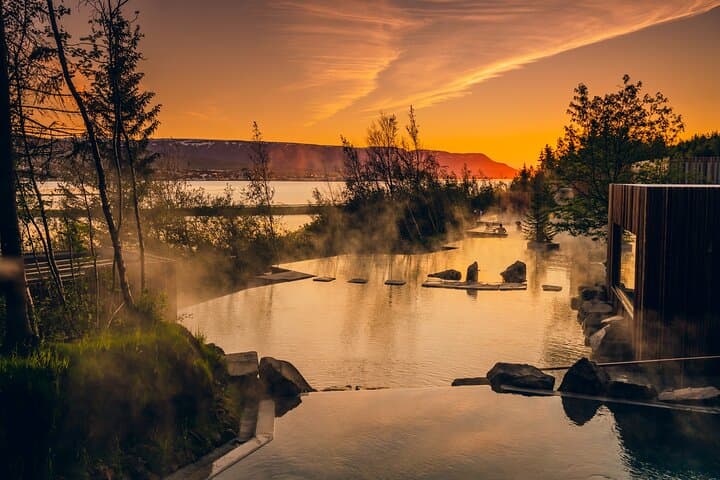
You step out of the minivan into a thin, cold air that smells faintly of pine and mineral steam. A ribbon of light from the spa spills into the dark; the Forest Lagoon itself glows a soft milky blue against the black of Eyjafjörður. Birch branches scrape the sky and the fjord sits like a flat, dark mirror below—it’s the kind of place where silence has weight, and steam seems to carry a memory.
You step out of the minivan into a thin, cold air that smells faintly of pine and mineral steam. A ribbon of light from the spa spills into the dark; the Forest Lagoon itself glows a soft milky blue against the black of Eyjafjörður. Birch branches scrape the sky and the fjord sits like a flat, dark mirror below—it’s the kind of place where silence has weight, and steam seems to carry a memory.
The evening begins here, in the sheltered arms of Vaðlaskógur, where geothermal water has been coaxed into a modern spa that still feels connected to the old growth around it. The baths were built to take advantage of a unique marriage: hot spring geology and one of Iceland’s denser patches of woodland. Eyjafjörður, the fjord you look over from the lagoon, is one of Iceland’s longest and carved by glacial rivers thousands of years ago; the trees on its slopes are a relatively recent reclamation project in a landscape long denuded by settlement and soil erosion.
After an hour or two of soaking—the water encourages you to slow your breath and let the cold pinch out of your fingers—the guide drives you away from Akureyri’s sodium lights. The second act of the night is a practiced hunt for aurora: a drive to places where cloud cover and light pollution are minimal, binoculars and cameras readied, breath visible in the beam of your headlamp. The Northern Lights don’t perform on cue; they respond to solar wind and magnetism, but when they come they curve, ripple, and appear to peel across the sky as if the atmosphere itself were writing.
Culturally, the tour sits between two Icelandic traditions: bathing in geothermal pools has been both practical and social for centuries; aurora-watching taps into the modern tourist’s appetite for rare, ephemeral spectacle. Guides blend local weather sense with aurora forecasts and will often retarget by road if cloud cover shifts.
Practicalities: the full experience runs about 4–5 hours door-to-door from Akureyri and includes entrance and towel. Expect short walks across cold gravel and standing time outside. Dress in layers—wool base, insulated mid-layer, and a windproof shell—and bring footwear that can handle slushy or icy paths. Charge your camera batteries in your pockets and warm them between shots; cameras drain fast in Arctic temperatures. The operator offers pickup from Akureyri hotels; children are welcome but those with heart conditions should avoid geothermal soaking.
Even if the aurora plays coy, the contrast of warm water, dark fjord, and the hush of northern forest makes the night worth the drive. When the lights do arrive, the steam around you seems to lift and hand the sky its own moving curtain—an elemental, patient show that rewards patience and presence.