THE ADVENTURE COLLECTIVE® · Independent discovery and booking for outdoor travel

Spend a private day beneath Mt. Fuji: a gentle 1.5-hour forest hike from Mizugatsuka Park, a locally sourced bento lunch in a mossy glade, then a relaxing onsen finish. This experience emphasizes forest bathing, quiet observation, and accessible mountain views.
Spend a private day beneath Mt. Fuji: a gentle 1.5-hour forest hike from Mizugatsuka Park, a locally sourced bento lunch in a mossy glade, then a relaxing onsen finish. This experience emphasizes forest bathing, quiet observation, and accessible mountain views.
A low morning sun slices between tall cedar trunks as the private car turns toward Mizugatsuka Park and Mt. Fuji rises, an immense grey shoulder above the ridgeline. Guests step out on cool gravel; the guide points to Hoei-zan, the crater formed by the 1707 eruption, then leads a steady, unhurried climb into the forest.
Verified experiences and guided adventures in the surrounding area.
Operated by Great Outdoors Japan · Gotemba, Shizuoka Prefecture
A low morning sun slices between tall cedar trunks as the private car turns toward Mizugatsuka Park and Mt. Fuji rises, an immense grey shoulder above the ridgeline. Guests step out on cool gravel; the guide points to Hoei-zan, the crater formed by the 1707 eruption, then leads a steady, unhurried climb into the forest.
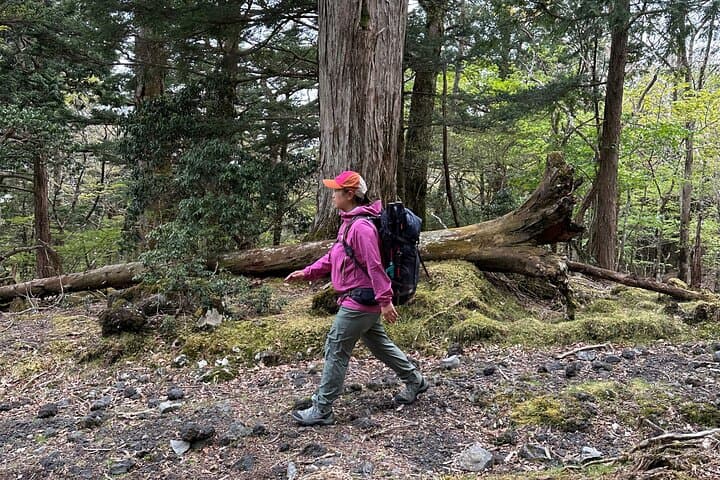
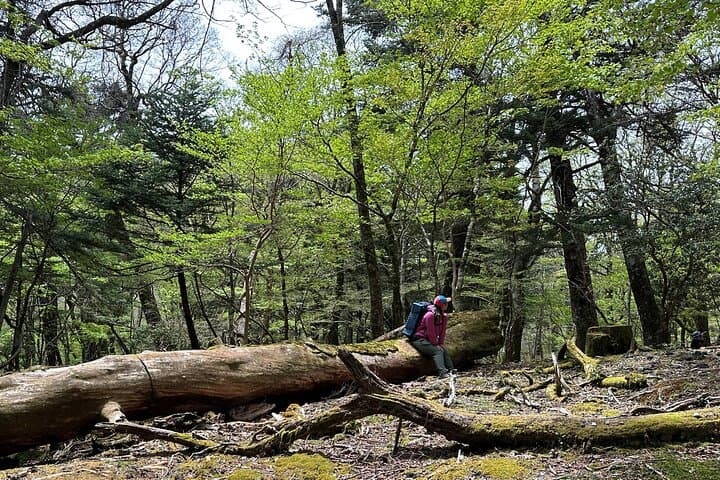
This is a forest-bathing day more than a summit attempt. The route climbs for roughly 1.5 hours along a gentle, well-shaded trail—expect mixed dirt and root-strewn sections, moss-covered fallen logs and pockets of alpine flowers in spring. Geology is visible in the volcanic ash layers underfoot and the Hoei deposit that reshaped Fuji’s southeastern flank. Culturally, the walk leans on shinrin-yoku practices: attentive breathing, quiet observation, and a bento lunch sourced from nearby farms.
After lunch in a secluded glade the group returns on a different trail, seeing alternate viewpoints and forest types before the private vehicle takes participants to a local onsen to wash off the day.
Practical guidance: the full experience runs about 5–7 hours including transfers. The hike itself is moderate—roughly 3–5 km round-trip with an estimated 150–300 m of elevation gain—suitable for anyone with regular activity. Wear sturdy, grippy shoes for uneven roots and possible mud; carry layers, water (at least 1–1.5 L), and rain protection. Be prepared to follow low-impact forest-bathing exercises and onsen etiquette: clean thoroughly before entering and bring a small towel. The private format means flexible pacing and photo stops, and the onsen finish is a relaxed way to close a day beneath Fuji.
moderate.
5–7 hours.
Suitable for people with regular physical activity; requires moderate cardiovascular fitness and the ability to hike uneven ground for 1–2 hours at a time.
You can be picked up at Mishima Station (north exit modern art statue) or Gotemba Station (by the Bellmart near the Fujisan exit); guides arrive about 10 minutes before pickup.
The trail is a steady, gentle ascent taking about 1.5 hours each way on mixed terrain—appropriate for those with moderate fitness but not recommended for severe cardiovascular conditions.
Yes — a locally sourced bento box is included and enjoyed in a secluded glade as part of the forest-bathing experience.
An onsen visit is included at the end of the day; guests should bring or wear appropriate swim/onsen towels—most facilities supply basic soap but not large towels.
Mt. Fuji’s southeastern slopes were reshaped by the 1707 Hoei eruption; Mizugatsuka Park offers a clear view of the crater that formed during that event.
Stay on marked trails to protect fragile alpine plants and follow leave-no-trace and quiet-forest-bathing practices; the area benefits from low-impact visitation and respectful onsen use.
Great Outdoors Japan operates guided outdoor trips and adventures with an emphasis on safety, stewardship, and memorable experiences.
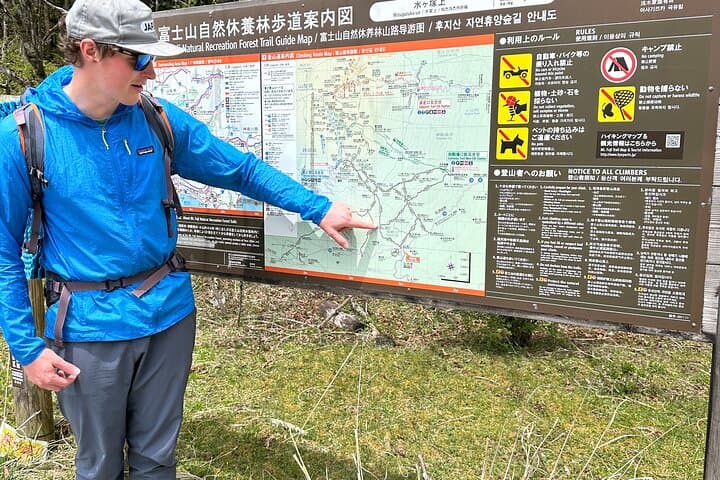
A low morning sun slices between tall cedar trunks as the private car turns toward Mizugatsuka Park and Mt. Fuji rises, an immense grey shoulder above the ridgeline. Guests step out on cool gravel; the guide points to Hoei-zan, the crater formed by the 1707 eruption, then leads a steady, unhurried climb into the forest.
A low morning sun slices between tall cedar trunks as the private car turns toward Mizugatsuka Park and Mt. Fuji rises, an immense grey shoulder above the ridgeline. Guests step out on cool gravel; the guide points to Hoei-zan, the crater formed by the 1707 eruption, then leads a steady, unhurried climb into the forest.
This is a forest-bathing day more than a summit attempt. The route climbs for roughly 1.5 hours along a gentle, well-shaded trail—expect mixed dirt and root-strewn sections, moss-covered fallen logs and pockets of alpine flowers in spring. Geology is visible in the volcanic ash layers underfoot and the Hoei deposit that reshaped Fuji’s southeastern flank. Culturally, the walk leans on shinrin-yoku practices: attentive breathing, quiet observation, and a bento lunch sourced from nearby farms.
After lunch in a secluded glade the group returns on a different trail, seeing alternate viewpoints and forest types before the private vehicle takes participants to a local onsen to wash off the day.
Practical guidance: the full experience runs about 5–7 hours including transfers. The hike itself is moderate—roughly 3–5 km round-trip with an estimated 150–300 m of elevation gain—suitable for anyone with regular activity. Wear sturdy, grippy shoes for uneven roots and possible mud; carry layers, water (at least 1–1.5 L), and rain protection. Be prepared to follow low-impact forest-bathing exercises and onsen etiquette: clean thoroughly before entering and bring a small towel. The private format means flexible pacing and photo stops, and the onsen finish is a relaxed way to close a day beneath Fuji.