THE ADVENTURE COLLECTIVE® · Independent discovery and booking for outdoor travel

Spend two focused hours where saltwater, Civil War history, and playful bottlenose dolphins meet. This private Folly Beach tour pairs an estuary cruise with shelling on Morris Island and close views of the historic lighthouse.
Spend two focused hours where saltwater, Civil War history, and playful bottlenose dolphins meet. This private Folly Beach tour pairs an estuary cruise with shelling on Morris Island and close views of the historic lighthouse.
The air tastes like salt and diesel as the captain eases the private skiff away from Folly Beach’s public launch. Marsh grasses bend and the estuary narrows into a channel marked by oysters—black ridges that look almost deliberate in the shallows—until the harbor opens and dolphins begin to ride the bow wave. They don’t perform on command; they decide when to show off, noses coming up with the same casual curiosity as a neighbor saying hello.
Verified experiences and guided adventures in the surrounding area.
Operated by Absolute Reel Screamer Charters · Folly Beach, South Carolina
The air tastes like salt and diesel as the captain eases the private skiff away from Folly Beach’s public launch. Marsh grasses bend and the estuary narrows into a channel marked by oysters—black ridges that look almost deliberate in the shallows—until the harbor opens and dolphins begin to ride the bow wave. They don’t perform on command; they decide when to show off, noses coming up with the same casual curiosity as a neighbor saying hello.
This two-hour outing splits cleanly: roughly an hour skimming tidal creeks and oyster beds looking for bottlenose dolphins, then an hour ashore on Morris Island collecting shells, scanning for shark teeth, and staring across the sand at the historic lighthouse. The island’s geology is simple and blunt: wind-driven dunes, shifting sands that expose the bones of Civil War earthworks, and tidal flats that make the estuary an ideal feeding ground for both dolphins and shorebirds.
Morris Island’s human story is compact but powerful. During the Civil War the beaches and nearby Fort Wagner saw fierce fighting—most famously the 54th Massachusetts regiment’s assault in 1863—and the lighthouse that watches the channel has been a nautical landmark since the 19th century. Around Charleston, saltwater and human history have long been entwined; remnants of the past surface in bits of brick, cannonball-sized stones, and the occasional shell-strewn midden.
On the practical side, this is an approachable adventure for families and first-time boaters. The captain—an 8th-generation local guide by description—knows the tides and the best dolphin lanes, and the private format lets you set the pace for shelling and exploration. Expect light chop on open water; the estuary stretches are calmer. You’ll be standing and moving frequently on the boat and walking across soft sand and dunes on the island, so steady shoes and a balanced pack make the hour onshore comfortable.
Respect rules about protected nesting areas and avoid trampling dune vegetation; Morris Island shifts and breathes with currents and storms, so what’s beach today may be gone tomorrow. Shells and small finds are part of the memory, but consider leaving large, fragile structures for others and for the ecosystem that depends on them.
Timing matters: tours often run around high tide for smoother access to the island and better dolphin activity in the channels. Bring sun protection, a dry bag for phone and camera, and a light wind layer—the Atlantic can turn breezy fast. In less than two hours you’ll have traded sidewalks for salt spray, caught a glimpse of maritime history, and walked a stretch of barrier island that still insists on surprising you.
moderate.
2 hours.
Moderate fitness—able to stand and move on a boat for 60 minutes and walk across soft, uneven sand for up to an hour.
You’ll have about one hour ashore for shelling, short walks, and lighthouse viewing before returning to the boat.
Dolphins are frequently sighted in the estuary, but sightings aren’t guaranteed—captain knowledge and timing increase your chances.
Families and young children are welcome; infants must sit on laps. Service animals are allowed but check with the operator for specifics.
Small, empty shells can be collected, but avoid taking live organisms, and follow local rules about protected areas when removing natural items.
Light, sun-protective clothing and a wind layer; non-slip shoes for boarding. A waterproof bag for valuables is recommended.
Tours are cancellable for unsafe conditions—operators typically refund full tickets if canceled at least 24 hours in advance or due to bad weather.
Morris Island played a notable role in Civil War operations, including the 1863 assault on Fort Wagner, and the nearby lighthouse has served as a maritime marker since the 19th century.
Barrier islands here are dynamic and vulnerable—stick to established paths, avoid stepping on dune vegetation, and pack out everything you bring in to protect nesting birds and fragile habitats.
Absolute Reel Screamer Charters operates guided outdoor trips and adventures with an emphasis on safety, stewardship, and memorable experiences.
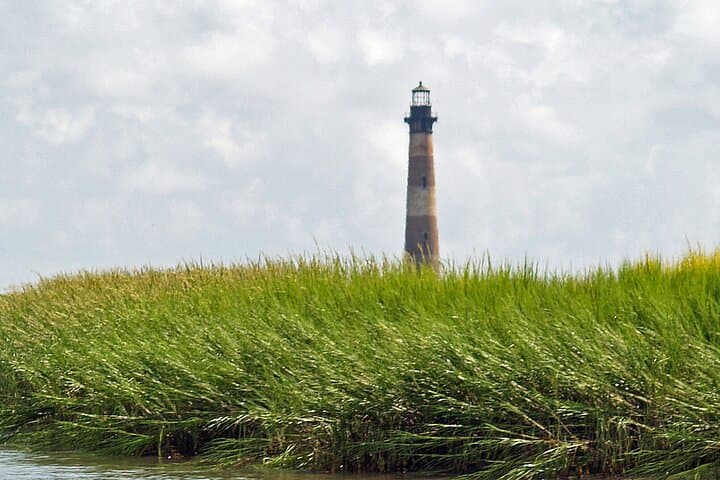


The air tastes like salt and diesel as the captain eases the private skiff away from Folly Beach’s public launch. Marsh grasses bend and the estuary narrows into a channel marked by oysters—black ridges that look almost deliberate in the shallows—until the harbor opens and dolphins begin to ride the bow wave. They don’t perform on command; they decide when to show off, noses coming up with the same casual curiosity as a neighbor saying hello.
The air tastes like salt and diesel as the captain eases the private skiff away from Folly Beach’s public launch. Marsh grasses bend and the estuary narrows into a channel marked by oysters—black ridges that look almost deliberate in the shallows—until the harbor opens and dolphins begin to ride the bow wave. They don’t perform on command; they decide when to show off, noses coming up with the same casual curiosity as a neighbor saying hello.
This two-hour outing splits cleanly: roughly an hour skimming tidal creeks and oyster beds looking for bottlenose dolphins, then an hour ashore on Morris Island collecting shells, scanning for shark teeth, and staring across the sand at the historic lighthouse. The island’s geology is simple and blunt: wind-driven dunes, shifting sands that expose the bones of Civil War earthworks, and tidal flats that make the estuary an ideal feeding ground for both dolphins and shorebirds.
Morris Island’s human story is compact but powerful. During the Civil War the beaches and nearby Fort Wagner saw fierce fighting—most famously the 54th Massachusetts regiment’s assault in 1863—and the lighthouse that watches the channel has been a nautical landmark since the 19th century. Around Charleston, saltwater and human history have long been entwined; remnants of the past surface in bits of brick, cannonball-sized stones, and the occasional shell-strewn midden.
On the practical side, this is an approachable adventure for families and first-time boaters. The captain—an 8th-generation local guide by description—knows the tides and the best dolphin lanes, and the private format lets you set the pace for shelling and exploration. Expect light chop on open water; the estuary stretches are calmer. You’ll be standing and moving frequently on the boat and walking across soft sand and dunes on the island, so steady shoes and a balanced pack make the hour onshore comfortable.
Respect rules about protected nesting areas and avoid trampling dune vegetation; Morris Island shifts and breathes with currents and storms, so what’s beach today may be gone tomorrow. Shells and small finds are part of the memory, but consider leaving large, fragile structures for others and for the ecosystem that depends on them.
Timing matters: tours often run around high tide for smoother access to the island and better dolphin activity in the channels. Bring sun protection, a dry bag for phone and camera, and a light wind layer—the Atlantic can turn breezy fast. In less than two hours you’ll have traded sidewalks for salt spray, caught a glimpse of maritime history, and walked a stretch of barrier island that still insists on surprising you.