THE ADVENTURE COLLECTIVE® · Independent discovery and booking for outdoor travel

Experience the Serengeti’s most dramatic season: a ten-day circuit from Arusha to Ndutu and Seronera timed for the wildebeest calving. Luxury lodges, hot-air balloons and expert guides put you close to newborn calves, stalking predators and the geology that shapes Africa’s greatest migration.
Experience the Serengeti’s most dramatic season: a ten-day circuit from Arusha to Ndutu and Seronera timed for the wildebeest calving. Luxury lodges, hot-air balloons and expert guides put you close to newborn calves, stalking predators and the geology that shapes Africa’s greatest migration.
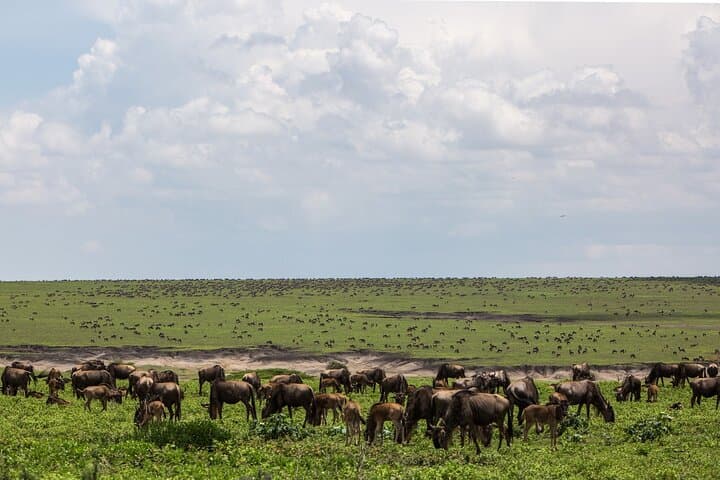
The Land Cruiser settles into a rhythm—wheels humming on red dirt, the horizon a low green swell that suddenly parts to reveal a living tide. It’s early morning in Ndutu; dust hangs in the air like a slow film and the plains are already full of sound: the bleat of a new calf, the rasp of hooves, and a distant, deliberate growl. Over ten days you’ll trace that sound across Tarangire, Manyara, the Ngorongoro rim and deep into the southern Serengeti, where the migration’s great calving takes place between December and March.
Verified experiences and guided adventures in the surrounding area.
Operated by Gosheni Safaris (T) Limited · Ndutu (Serengeti), Arusha Region
The Land Cruiser settles into a rhythm—wheels humming on red dirt, the horizon a low green swell that suddenly parts to reveal a living tide. It’s early morning in Ndutu; dust hangs in the air like a slow film and the plains are already full of sound: the bleat of a new calf, the rasp of hooves, and a distant, deliberate growl. Over ten days you’ll trace that sound across Tarangire, Manyara, the Ngorongoro rim and deep into the southern Serengeti, where the migration’s great calving takes place between December and March.
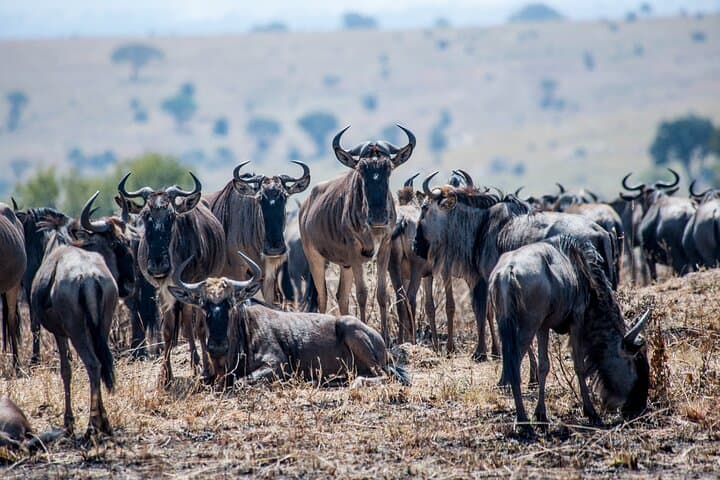
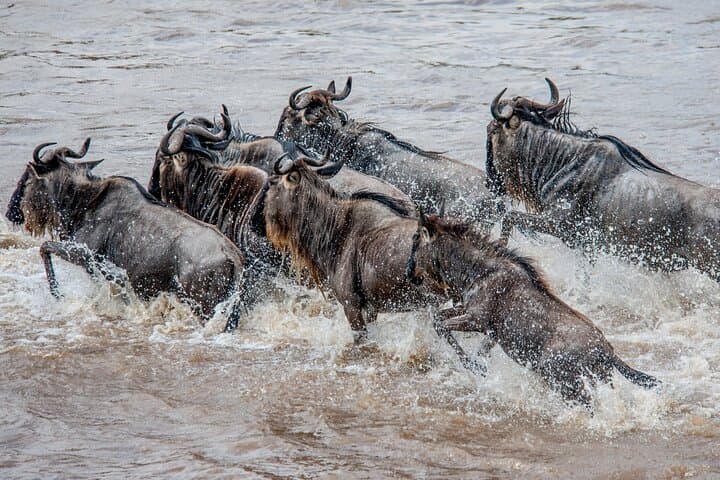
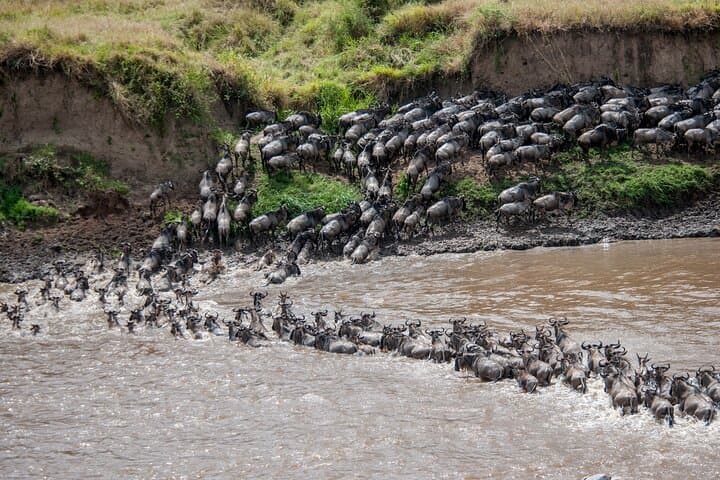
This is not just wildlife viewing; it’s landscape reading. The Serengeti’s short grass plains and soda lakes are products of ancient volcanic forces and seasonal rains that steer millions of wildebeest and zebra in a clockwork of survival. Ngorongoro—an unbroken caldera carved when a volcano collapsed—creates a rare micro-ecosystem; its rim stands roughly 600–700 meters above the crater floor, and the change in elevation brings different habitats within an hour’s drive. Maasai culture threads through the places you pass: herders and their shukas dot the road, and a few cultural stops or lodge visits will give context to the human side of this landscape.
You’ll move between luxury lodges and tented camps, but the rhythm is the same: dawn game drives, shaded bush lunches, midday rest, and late-afternoon pushes when predators express hunger. The itinerary includes a sunrise hot-air balloon—floating over the grazing herds offers a perspective that rearranges how you see scale and movement—and an armed walking safari in Tarangire for close-but-careful ground time.
Practicalities matter: this is vehicle-based travel across unpaved tracks—expect dust, bumpy roads, and long drives punctuated with intense sightings. Carry binoculars, a fast prime lens for cats and a telephoto for distant drama. Mornings and evenings can be cool at higher elevations; days bake under the equatorial sun. Malaria prophylaxis, up-to-date vaccines, valid passport and visa paperwork, and travel insurance are non-negotiable. Tipping drivers and lodge staff is customary and appreciated.
If you go between December and March you’ll likely witness calving—an intense, three-week pulse when the plains fill with newborns and the predator-prey choreography is at its rawest. Move slowly, keep the guide’s instructions, and let the land and its animals shape your itinerary: the migration is ruled by rain, not calendars. A careful, curious approach will reward you with scenes that feel both intimate and impossibly vast.
moderate.
10 days.
Suitable for travelers who can manage bumpy vehicle rides, short walks with an armed ranger, and full days of game driving.
The calving pulse is most reliably December through March in the Ndutu area, but timing shifts with rainfall—exact dates vary year to year.
Yes—accommodations are comfortable and game drives are vehicle-based, but consult your doctor about long drives and altitude at Ngorongoro.
Yes, the itinerary includes a sunrise balloon flight; operators follow strict safety standards and supply a post-landing breakfast.
Malaria prophylaxis is strongly recommended for most travelers to this region—check with your physician before travel.
Valid passport with at least six months validity is required; proof of yellow fever vaccination may be asked depending on travel history—check current entry rules.
Tipping is customary; guides typically receive $15–$25 per person per day and lodge staff pooled tips around $10–$15 per person per day, adjusted for service.
The Serengeti has been inhabited and traversed by pastoralist Maasai communities for centuries; modern protected areas were shaped in the 20th century to preserve migratory routes.
The migration depends on free movement across national parks and conservancies; sustainable safari practices and income for local communities help protect corridors.
Gosheni Safaris (T) Limited operates guided outdoor trips and adventures with an emphasis on safety, stewardship, and memorable experiences.
The Land Cruiser settles into a rhythm—wheels humming on red dirt, the horizon a low green swell that suddenly parts to reveal a living tide. It’s early morning in Ndutu; dust hangs in the air like a slow film and the plains are already full of sound: the bleat of a new calf, the rasp of hooves, and a distant, deliberate growl. Over ten days you’ll trace that sound across Tarangire, Manyara, the Ngorongoro rim and deep into the southern Serengeti, where the migration’s great calving takes place between December and March.
The Land Cruiser settles into a rhythm—wheels humming on red dirt, the horizon a low green swell that suddenly parts to reveal a living tide. It’s early morning in Ndutu; dust hangs in the air like a slow film and the plains are already full of sound: the bleat of a new calf, the rasp of hooves, and a distant, deliberate growl. Over ten days you’ll trace that sound across Tarangire, Manyara, the Ngorongoro rim and deep into the southern Serengeti, where the migration’s great calving takes place between December and March.
This is not just wildlife viewing; it’s landscape reading. The Serengeti’s short grass plains and soda lakes are products of ancient volcanic forces and seasonal rains that steer millions of wildebeest and zebra in a clockwork of survival. Ngorongoro—an unbroken caldera carved when a volcano collapsed—creates a rare micro-ecosystem; its rim stands roughly 600–700 meters above the crater floor, and the change in elevation brings different habitats within an hour’s drive. Maasai culture threads through the places you pass: herders and their shukas dot the road, and a few cultural stops or lodge visits will give context to the human side of this landscape.
You’ll move between luxury lodges and tented camps, but the rhythm is the same: dawn game drives, shaded bush lunches, midday rest, and late-afternoon pushes when predators express hunger. The itinerary includes a sunrise hot-air balloon—floating over the grazing herds offers a perspective that rearranges how you see scale and movement—and an armed walking safari in Tarangire for close-but-careful ground time.
Practicalities matter: this is vehicle-based travel across unpaved tracks—expect dust, bumpy roads, and long drives punctuated with intense sightings. Carry binoculars, a fast prime lens for cats and a telephoto for distant drama. Mornings and evenings can be cool at higher elevations; days bake under the equatorial sun. Malaria prophylaxis, up-to-date vaccines, valid passport and visa paperwork, and travel insurance are non-negotiable. Tipping drivers and lodge staff is customary and appreciated.
If you go between December and March you’ll likely witness calving—an intense, three-week pulse when the plains fill with newborns and the predator-prey choreography is at its rawest. Move slowly, keep the guide’s instructions, and let the land and its animals shape your itinerary: the migration is ruled by rain, not calendars. A careful, curious approach will reward you with scenes that feel both intimate and impossibly vast.