THE ADVENTURE COLLECTIVE® · Independent discovery and booking for outdoor travel

Fly from Aswan to Abu Simbel for a focused, private day visit to the monumental temples of Ramesses II and Nefertari. This private flight tour combines an Egyptologist-guided walkthrough with efficient transfers so you can experience the rescued temples without an overnight detour.
Fly from Aswan to Abu Simbel for a focused, private day visit to the monumental temples of Ramesses II and Nefertari. This private flight tour combines an Egyptologist-guided walkthrough with efficient transfers so you can experience the rescued temples without an overnight detour.
The airplane drops you over ochre desert and the flat blue of Lake Nasser; on the ground a private driver meets you and the facade of colossal seated kings towers closer with every step. The scale hits first—the four giant statues of Ramesses II stare like carved horizons, eyes trained on the road ahead and the light that will reveal their painted faces.
Verified experiences and guided adventures in the surrounding area.
Operated by Reflections Travel · Abu Simbel, Aswan Governorate
The airplane drops you over ochre desert and the flat blue of Lake Nasser; on the ground a private driver meets you and the facade of colossal seated kings towers closer with every step. The scale hits first—the four giant statues of Ramesses II stare like carved horizons, eyes trained on the road ahead and the light that will reveal their painted faces.
Abu Simbel was carved in the 13th century BCE and reassembled in the 1960s when UNESCO moved the temples block-by-block above the rising waters of the Aswan High Dam. Geologically the site sits on sandstone bedrock beside the man-made lake; culturally it reads as imperial stagecraft—temples aligned to catch sunlight and hieroglyphics that record campaigns and deities alike.
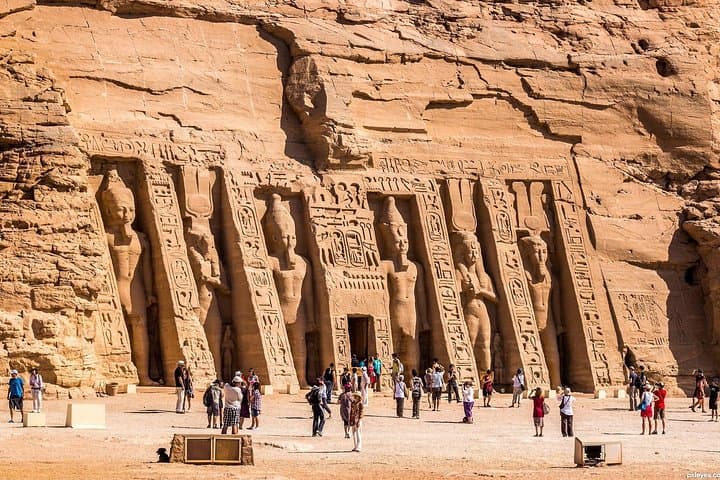
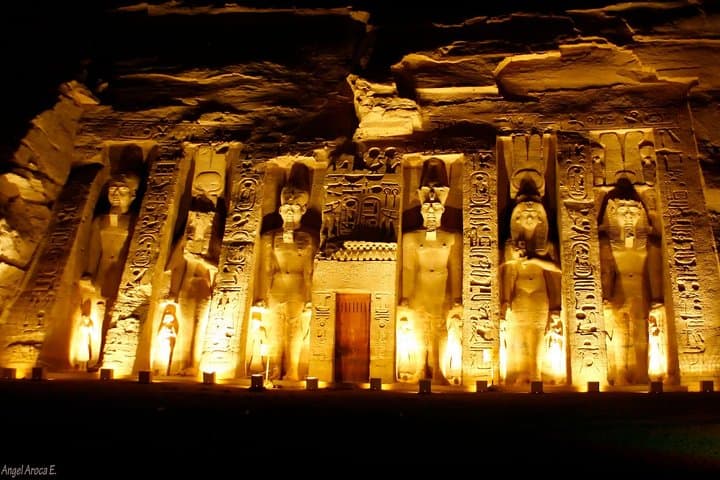
On this private day trip you fly from Aswan, meet an Egyptologist guide, and spend roughly two hours exploring the Great Temple of Ramesses II and the smaller Hathor temple of Nefertari. Expect flat, compacted ground around the monuments, short walks between viewing points, and open sun with little shade. The light here is brutal mid-day and soft at dawn and dusk; the famed solar illumination inside Ramesses’ sanctuary occurs predictably in February and October.
Practical guidance: carry at least 1–2 liters of water, wear sturdy closed shoes for uneven stone surfaces, and bring sunscreen and a brimmed hat. Your passport is required for the domestic flight; allow extra time for security and airport transfers. Photography is allowed but avoid touching reliefs. With straightforward logistics and a professional guide, the trip compresses ancient spectacle and modern engineering into a single, manageable day.
moderate.
6 hours.
Light to moderate fitness; the tour involves short periods of walking and standing on uneven stone surfaces.
The tour is about 6 hours total from Aswan; the domestic round-trip flight takes around 40–60 minutes each way and on-site visiting time is roughly two hours.
The internal solar illumination into the sanctuary occurs annually around February and October—otherwise the effect won’t be visible.
Yes—tour is described as physically easy; however, domestic flight rules and airport procedures apply, and passport/ID is required for all passengers.
Basic restroom facilities and a small café are usually available at the site; bring snacks if you need particular dietary items between transfers.
The temples date to the reign of Ramesses II and were physically relocated in 1963–1968 to save them from inundation after the Aswan High Dam, a major UNESCO-led engineering effort.
Visitor management and the earlier relocation are central to protecting the site; follow guide instructions, avoid touching reliefs, and carry out waste to minimize impact.
Reflections Travel operates guided outdoor trips and adventures with an emphasis on safety, stewardship, and memorable experiences.
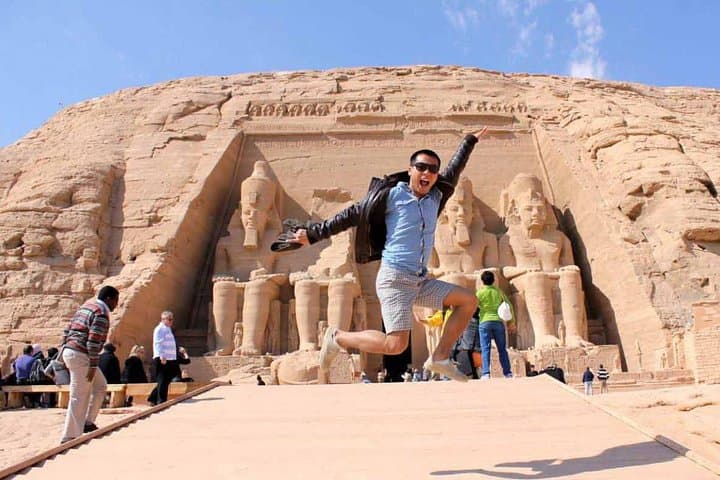
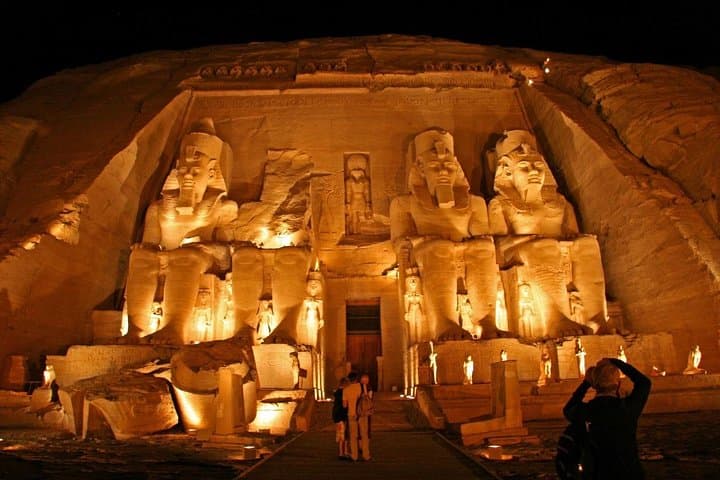
The airplane drops you over ochre desert and the flat blue of Lake Nasser; on the ground a private driver meets you and the facade of colossal seated kings towers closer with every step. The scale hits first—the four giant statues of Ramesses II stare like carved horizons, eyes trained on the road ahead and the light that will reveal their painted faces.
The airplane drops you over ochre desert and the flat blue of Lake Nasser; on the ground a private driver meets you and the facade of colossal seated kings towers closer with every step. The scale hits first—the four giant statues of Ramesses II stare like carved horizons, eyes trained on the road ahead and the light that will reveal their painted faces.
Abu Simbel was carved in the 13th century BCE and reassembled in the 1960s when UNESCO moved the temples block-by-block above the rising waters of the Aswan High Dam. Geologically the site sits on sandstone bedrock beside the man-made lake; culturally it reads as imperial stagecraft—temples aligned to catch sunlight and hieroglyphics that record campaigns and deities alike.
On this private day trip you fly from Aswan, meet an Egyptologist guide, and spend roughly two hours exploring the Great Temple of Ramesses II and the smaller Hathor temple of Nefertari. Expect flat, compacted ground around the monuments, short walks between viewing points, and open sun with little shade. The light here is brutal mid-day and soft at dawn and dusk; the famed solar illumination inside Ramesses’ sanctuary occurs predictably in February and October.
Practical guidance: carry at least 1–2 liters of water, wear sturdy closed shoes for uneven stone surfaces, and bring sunscreen and a brimmed hat. Your passport is required for the domestic flight; allow extra time for security and airport transfers. Photography is allowed but avoid touching reliefs. With straightforward logistics and a professional guide, the trip compresses ancient spectacle and modern engineering into a single, manageable day.