THE ADVENTURE COLLECTIVE® · Independent discovery and booking for outdoor travel

Launch from the Tijuca ridgeline above São Conrado and glide over Rio’s coastline on a tandem hang-glider or paraglider. This two-hour experience includes briefing, gear and a pilot-shot video option.
Launch from the Tijuca ridgeline above São Conrado and glide over Rio’s coastline on a tandem hang-glider or paraglider. This two-hour experience includes briefing, gear and a pilot-shot video option.
You step onto the launch lip above São Conrado, wind already reading your name. Below, the curved sweep of beach and the tiled roofs of the neighborhood recede as instructors clip harnesses and run through checks; the city loosens its grip and the Atlantic dares you forward.
Verified experiences and guided adventures in the surrounding area.
Operated by Hang Gliding Brazil · Rio de Janeiro, Rio de Janeiro
You step onto the launch lip above São Conrado, wind already reading your name. Below, the curved sweep of beach and the tiled roofs of the neighborhood recede as instructors clip harnesses and run through checks; the city loosens its grip and the Atlantic dares you forward.
Flights here use the forested ridges of Tijuca and launch points that have been used for free flight for decades, offering panoramic views of Pedra da Gávea, the long ribbon of São Conrado beach and the distant skyline of Zona Sul. Geologically, the peaks are granite outcrops carved by wind and sea, giving pilots reliable thermals on calmer days and brisk lift when coastal winds swing in.
The local flying culture is tight-knit — instructors follow standards set by the Brazilian Association of Free Flight — and flights are as much about pilot judgment as they are about scenery. Tijuca National Park’s restored forest provides a green backdrop and a corridor for birds and small primates, whose calls often accompany launches.
Practical notes: tandem flights last minutes in the air but plan for roughly two hours total for briefing, gearing and transport. You’ll need ID, meet weight and age limits, and accept that weather cancels are standard. Wear sturdy shoes for the short run on launch, and bring sun protection; a small dry bag for phone or camera helps, but record-keeping usually includes a main GoPro shot from the instructor.
Expect an adrenal beat and steady calm: the city falling away, the ocean pushing you forward, and a clear, fast dialogue between pilot and wind.
easy.
2 hours (including briefing and transport).
Minimal fitness required; participants should be able to run a few steps and stand during gearing.
Minimum age is 14; those 17–18 need a guardian. Maximum weight differs by craft—about 85 kg for hang gliders and 100 kg for paragliders; check operator rules when booking.
Flights are weather-dependent; operators cancel in unsafe wind or rain. You’ll receive a full refund if you cancel at least 24 hours prior or if the operator cancels for weather.
No—this is a tandem flight with a certified instructor; participants need no technical skills but should be able to follow safety instructions and run a few steps at launch.
Instructors typically record a main GoPro video; you should bring an 8GB memory card or free phone storage to receive photos/video after the flight.
Free-flight in Rio grew in the late 20th century around Tijuca’s ridgelines; local pilots helped formalize safety standards under Brazil’s free flight association.
Flights cross Tijuca National Park airspace; operators encourage sticking to approved launch sites, minimizing noise and avoiding wildlife disturbance to protect the restored urban forest.
Hang Gliding Brazil operates guided outdoor trips and adventures with an emphasis on safety, stewardship, and memorable experiences.
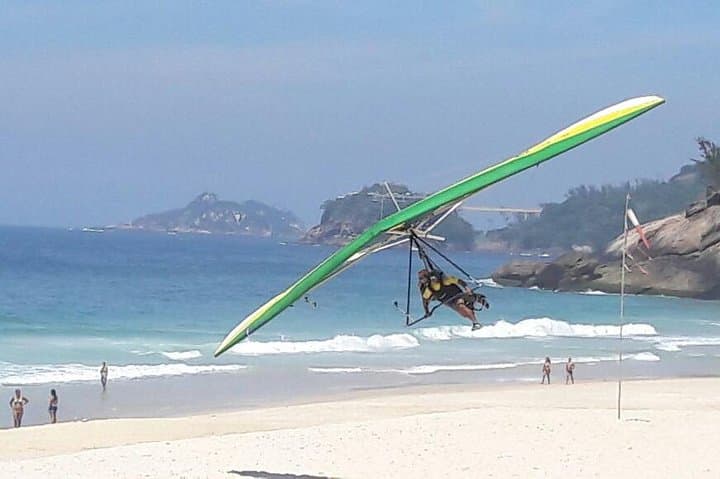
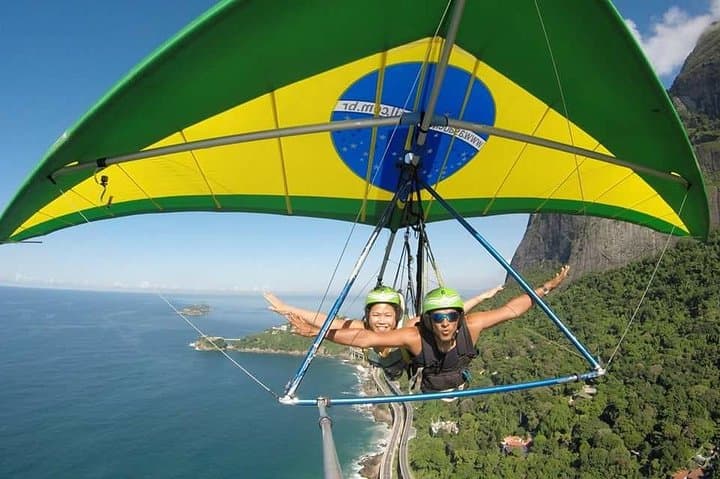
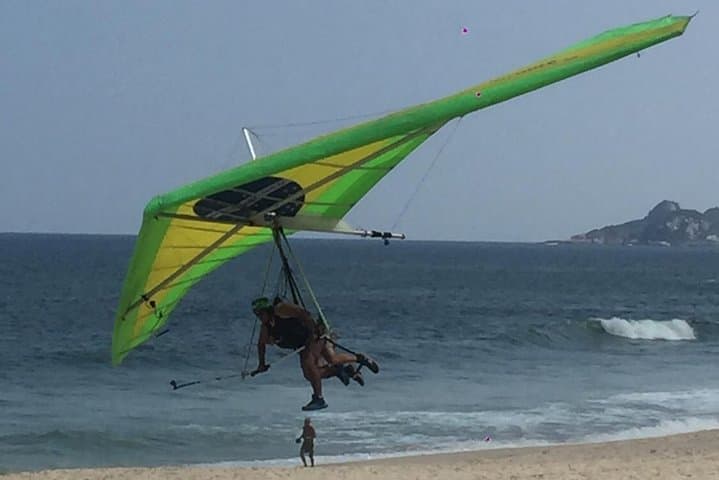
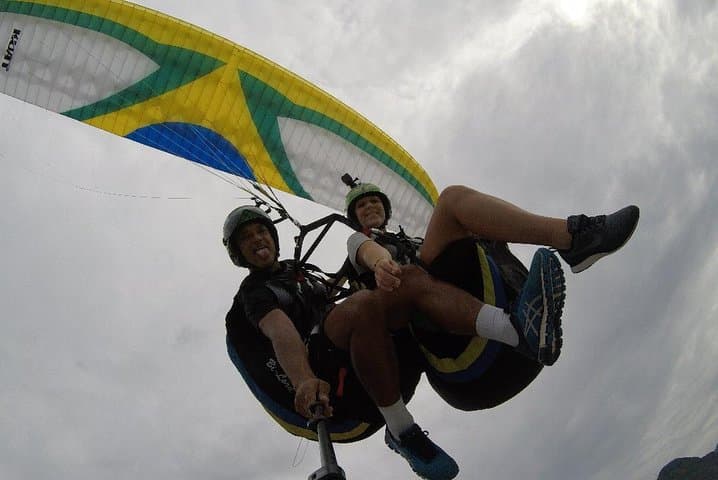
You step onto the launch lip above São Conrado, wind already reading your name. Below, the curved sweep of beach and the tiled roofs of the neighborhood recede as instructors clip harnesses and run through checks; the city loosens its grip and the Atlantic dares you forward.
You step onto the launch lip above São Conrado, wind already reading your name. Below, the curved sweep of beach and the tiled roofs of the neighborhood recede as instructors clip harnesses and run through checks; the city loosens its grip and the Atlantic dares you forward.
Flights here use the forested ridges of Tijuca and launch points that have been used for free flight for decades, offering panoramic views of Pedra da Gávea, the long ribbon of São Conrado beach and the distant skyline of Zona Sul. Geologically, the peaks are granite outcrops carved by wind and sea, giving pilots reliable thermals on calmer days and brisk lift when coastal winds swing in.
The local flying culture is tight-knit — instructors follow standards set by the Brazilian Association of Free Flight — and flights are as much about pilot judgment as they are about scenery. Tijuca National Park’s restored forest provides a green backdrop and a corridor for birds and small primates, whose calls often accompany launches.
Practical notes: tandem flights last minutes in the air but plan for roughly two hours total for briefing, gearing and transport. You’ll need ID, meet weight and age limits, and accept that weather cancels are standard. Wear sturdy shoes for the short run on launch, and bring sun protection; a small dry bag for phone or camera helps, but record-keeping usually includes a main GoPro shot from the instructor.
Expect an adrenal beat and steady calm: the city falling away, the ocean pushing you forward, and a clear, fast dialogue between pilot and wind.