THE ADVENTURE COLLECTIVE® · Independent discovery and booking for outdoor travel

Rise above Alicante’s harbor on a flyboard: an instructor-led session that teaches you to hover, spin and skim over the Mediterranean. Short, intense and supplied with all safety gear, it’s the quickest way to feel like you’re flying on the Costa Blanca.
Rise above Alicante’s harbor on a flyboard: an instructor-led session that teaches you to hover, spin and skim over the Mediterranean. Short, intense and supplied with all safety gear, it’s the quickest way to feel like you’re flying on the Costa Blanca.
The jet under your feet hisses; salt air snaps at your face as the coastline drops away and the city’s pale buildings shrink into a ribbon of tile and sunlight. A certified instructor steadies the hose, counts down, and for a few breathless moments you hover—then push, pivot, and skim the Mediterranean like a creature learning to remember flight.
Verified experiences and guided adventures in the surrounding area.
Operated by Actividades Náuticas Torrevieja · Alicante, Valencian Community
The jet under your feet hisses; salt air snaps at your face as the coastline drops away and the city’s pale buildings shrink into a ribbon of tile and sunlight. A certified instructor steadies the hose, counts down, and for a few breathless moments you hover—then push, pivot, and skim the Mediterranean like a creature learning to remember flight.
Alicante’s harbor has been a working port since Phoenician and Roman times, and the hollow of the bay sits beneath Mount Benacantil and the medieval Santa Bárbara Castle. Geologically the Costa Blanca is limestone and marine terrace—clear water, rocky outcrops, and underwater seagrass meadows that frame places like Tabarca Island, a short boat hop away. The city’s culture mixes fishing heritage, tapas bars, and the loud summer fiestas of Hogueras de San Juan, which color evenings with bonfires and fireworks.
This experience pairs a short instructor-led course with 20 minutes of actual flight time (30 minutes total onsite). Operators supply helmet, life jacket, wetsuit, and a post-flight drink. Expect hands-on tuition: mounting, body position, emergency signals and a gradual progression from low lifts to higher maneuvers. It’s physically engaging—good buoyancy and basic swimming comfort are needed—and not recommended for pregnant people or those with serious back or heart conditions.
Practical tips: book morning slots for calmer water and better visibility, use reef-safe sunscreen, and bring a towel and a dry bag. Arrive hydrated, listen to the safety briefing, and plan a relaxed recovery at Postiguet Beach or a seafood meal along the Explanada de España after your flight.
moderate.
30–45 minutes.
Participants should have a moderate level of fitness, basic swimming ability, and reasonable balance; not suitable for people with serious cardiovascular or spinal conditions.
Flight time is about 20 minutes per booking; total on-site time is typically 30–45 minutes to include briefing, gearing up and instruction.
Yes—qualified instructors guide beginners step-by-step. Safety equipment is provided and you’ll practice low lifts before attempting higher maneuvers; disclose any health issues before booking.
Limits vary by operator but most require basic swimming ability and set a minimum age (often around 12) and a practical weight maximum—confirm exact limits when you book.
Sessions are canceled for unsafe sea conditions or high winds; operators usually offer full refunds or rescheduling if weather prevents flying.
Alicante’s harbor has been a maritime hub since antiquity; Mount Benacantil’s Santa Bárbara Castle recalls Moorish and medieval strategic importance.
The area includes protected marine zones around Tabarca; use reef-safe products, avoid anchoring on seagrass and follow operator guidance to minimize disturbance.
Actividades Náuticas Torrevieja operates guided outdoor trips and adventures with an emphasis on safety, stewardship, and memorable experiences.
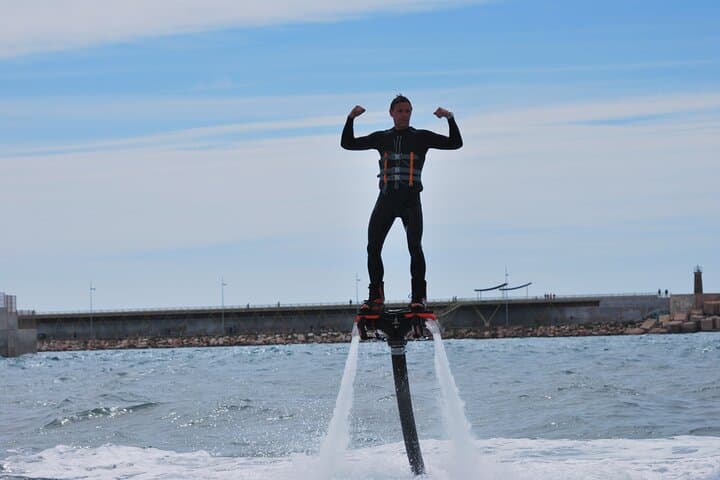
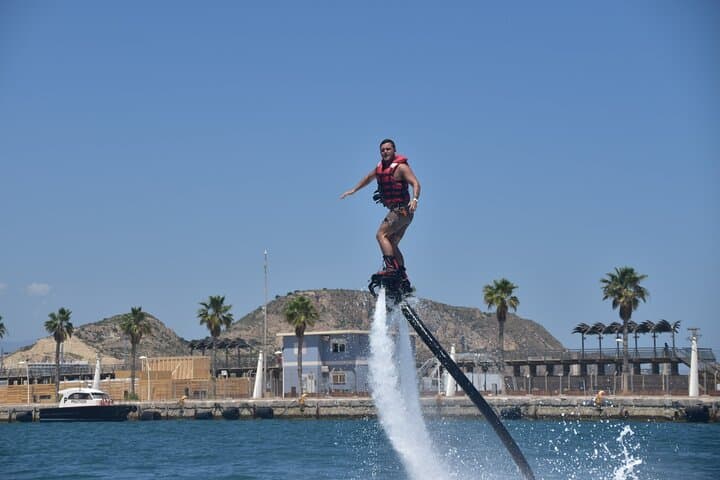
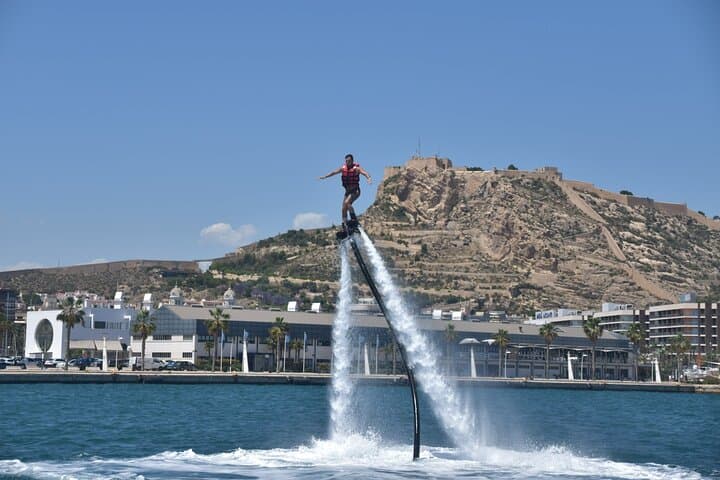
The jet under your feet hisses; salt air snaps at your face as the coastline drops away and the city’s pale buildings shrink into a ribbon of tile and sunlight. A certified instructor steadies the hose, counts down, and for a few breathless moments you hover—then push, pivot, and skim the Mediterranean like a creature learning to remember flight.
The jet under your feet hisses; salt air snaps at your face as the coastline drops away and the city’s pale buildings shrink into a ribbon of tile and sunlight. A certified instructor steadies the hose, counts down, and for a few breathless moments you hover—then push, pivot, and skim the Mediterranean like a creature learning to remember flight.
Alicante’s harbor has been a working port since Phoenician and Roman times, and the hollow of the bay sits beneath Mount Benacantil and the medieval Santa Bárbara Castle. Geologically the Costa Blanca is limestone and marine terrace—clear water, rocky outcrops, and underwater seagrass meadows that frame places like Tabarca Island, a short boat hop away. The city’s culture mixes fishing heritage, tapas bars, and the loud summer fiestas of Hogueras de San Juan, which color evenings with bonfires and fireworks.
This experience pairs a short instructor-led course with 20 minutes of actual flight time (30 minutes total onsite). Operators supply helmet, life jacket, wetsuit, and a post-flight drink. Expect hands-on tuition: mounting, body position, emergency signals and a gradual progression from low lifts to higher maneuvers. It’s physically engaging—good buoyancy and basic swimming comfort are needed—and not recommended for pregnant people or those with serious back or heart conditions.
Practical tips: book morning slots for calmer water and better visibility, use reef-safe sunscreen, and bring a towel and a dry bag. Arrive hydrated, listen to the safety briefing, and plan a relaxed recovery at Postiguet Beach or a seafood meal along the Explanada de España after your flight.