THE ADVENTURE COLLECTIVE® · Independent discovery and booking for outdoor travel

Fly from Cairo to Aswan for a single-day visit to Abu Simbel’s colossal temples. This practical guide outlines what to expect — timing, terrain, and essential tips to make the most of a long but rewarding day trip.
Fly from Cairo to Aswan for a single-day visit to Abu Simbel’s colossal temples. This practical guide outlines what to expect — timing, terrain, and essential tips to make the most of a long but rewarding day trip.
Before dawn the van slips through Cairo's quiet streets and the city lights give way to the wide, patient sky — by midmorning the desert sun dares you to look away as Abu Simbel rises from the horizon.
Verified experiences and guided adventures in the surrounding area.
Operated by Emo Tours Swiss · Abu Simbel, Aswan Governorate
Before dawn the van slips through Cairo's quiet streets and the city lights give way to the wide, patient sky — by midmorning the desert sun dares you to look away as Abu Simbel rises from the horizon.
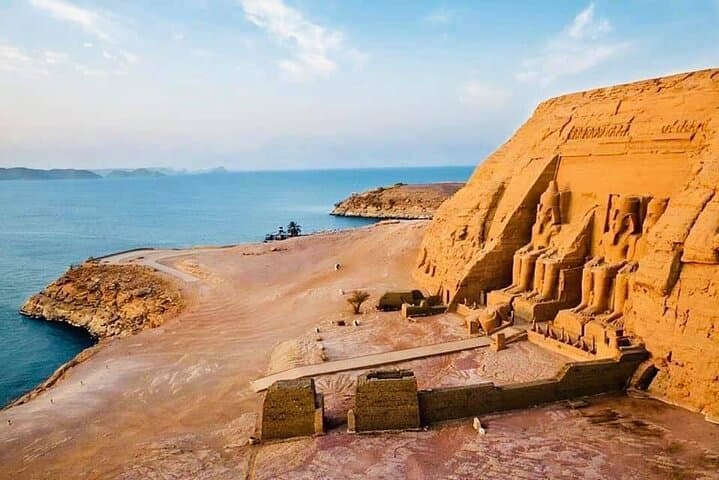
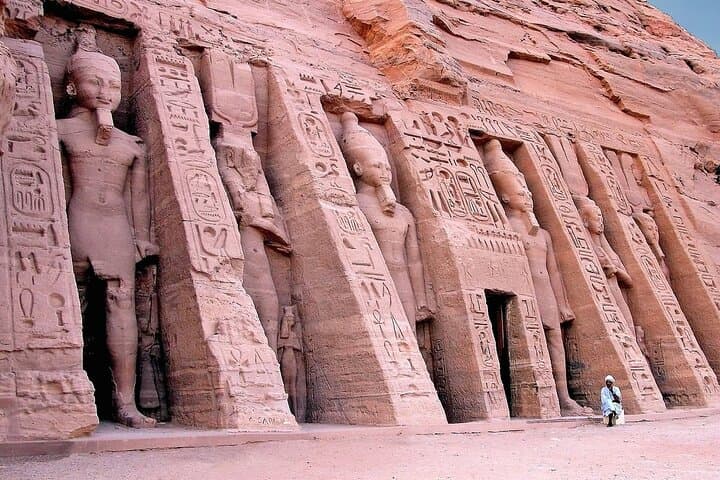
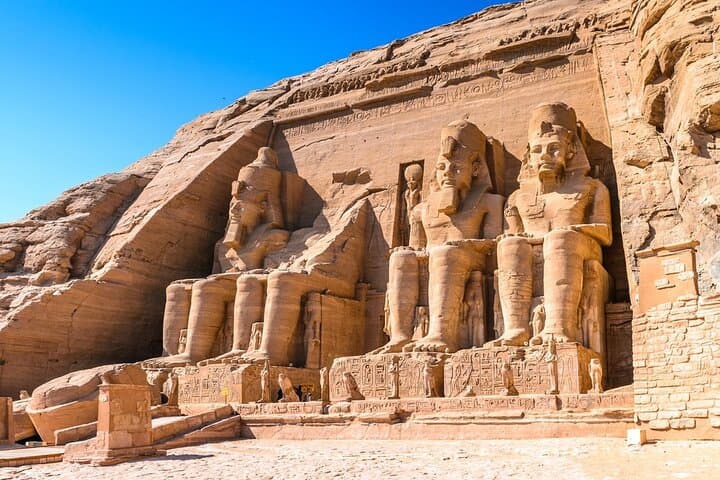
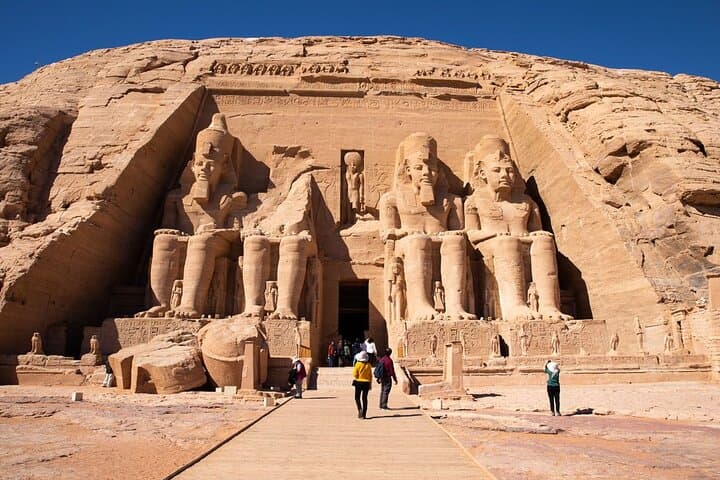
The two colossal rock-cut temples, carved under Ramesses II in the 13th century BC and later relocated stone-by-stone to escape Lake Nasser's rise, dominate a low desert plain. Geology here is simple and honest: exposed sandstone and worked bedrock, with the Nile's former influence betrayed by broad alluvial deposits and the shadow of the modern reservoir. Culturally the site is loud with imperial symbolism — Ramses' four seated colossi, the intimate Hathor temple for Nefertari — each façade engineered to align with the sun twice a year.
Expect about 1.5 hours flying time from Cairo to Aswan, a roughly 3-hour chauffeured drive south to Abu Simbel, and 2–3 hours on site; walking is short but on uneven stone and a few stairs. The experience mixes archaeology, engineering history (the 1960s UNESCO salvage), and the stark beauty of desert-edges meeting Lake Nasser.
Practical guidance: carry passport and printed or mobile tickets, start very early to avoid heat when possible, and bring at least 1–2 liters of water. Lightweight long sleeves and a broad-brim hat protect against sun, while comfortable shoes handle hard-packed sand and temple steps. Photography is allowed in most areas but follow signage and guide instructions. The day is long but efficient — a single, concentrated window into ancient Egypt's ambition.
easy.
Approx. 15 hours.
Suitable for most fitness levels; requires short walks on flat to slightly uneven terrain and a few steps inside temple areas.
The itinerary typically includes an early-morning pickup, a ~1.5-hour flight Cairo→Aswan, a ~3-hour drive Aswan→Abu Simbel, 2–3 hours at the temples, then the return transfer and flight back to Cairo — about 14–16 hours total.
This particular tour includes flights and transfers; check the booking details for whether official site admission is covered—some packages include tickets, others add them at checkout.
No—walking at the temples is short and mostly flat, though there are uneven stones and some stairs; it’s suitable for most travelers but not recommended for people with severe back or heart conditions.
Photography is generally allowed in exterior and most interior areas, but follow signage and guide instructions since flash or tripods may be restricted in certain rooms.
The temples were carved during Ramesses II’s reign c.1270 BCE and were dismantled and relocated in the 1960s under a UNESCO-led project to save them from Lake Nasser’s rising waters.
Visitor management and the original relocation preserved the monuments, but continued care is needed—stay on paths, avoid touching reliefs, and minimize plastic waste.
Emo Tours Swiss operates guided outdoor trips and adventures with an emphasis on safety, stewardship, and memorable experiences.
Before dawn the van slips through Cairo's quiet streets and the city lights give way to the wide, patient sky — by midmorning the desert sun dares you to look away as Abu Simbel rises from the horizon.
Before dawn the van slips through Cairo's quiet streets and the city lights give way to the wide, patient sky — by midmorning the desert sun dares you to look away as Abu Simbel rises from the horizon.
The two colossal rock-cut temples, carved under Ramesses II in the 13th century BC and later relocated stone-by-stone to escape Lake Nasser's rise, dominate a low desert plain. Geology here is simple and honest: exposed sandstone and worked bedrock, with the Nile's former influence betrayed by broad alluvial deposits and the shadow of the modern reservoir. Culturally the site is loud with imperial symbolism — Ramses' four seated colossi, the intimate Hathor temple for Nefertari — each façade engineered to align with the sun twice a year.
Expect about 1.5 hours flying time from Cairo to Aswan, a roughly 3-hour chauffeured drive south to Abu Simbel, and 2–3 hours on site; walking is short but on uneven stone and a few stairs. The experience mixes archaeology, engineering history (the 1960s UNESCO salvage), and the stark beauty of desert-edges meeting Lake Nasser.
Practical guidance: carry passport and printed or mobile tickets, start very early to avoid heat when possible, and bring at least 1–2 liters of water. Lightweight long sleeves and a broad-brim hat protect against sun, while comfortable shoes handle hard-packed sand and temple steps. Photography is allowed in most areas but follow signage and guide instructions. The day is long but efficient — a single, concentrated window into ancient Egypt's ambition.