THE ADVENTURE COLLECTIVE® · Independent discovery and booking for outdoor travel

Spend an overnight in the wilds around Buttala: a private bush tent beside a waterhole, naturalist-led jeep outings, and a night sky free of city glow. Practical, intimate, and wildlife-focused—this fly-camping experience blends comfort with low-impact immersion.
Spend an overnight in the wilds around Buttala: a private bush tent beside a waterhole, naturalist-led jeep outings, and a night sky free of city glow. Practical, intimate, and wildlife-focused—this fly-camping experience blends comfort with low-impact immersion.
You arrive at dusk, the jeep doors thudding closed like a punctuation mark, and the world narrows to the crunch of dry grass and the low chorus of nocturnal birds. The camp is set beside a quiet waterhole; a 10x10 bush tent and a private bathroom stand ready, lanterns casting a small civilized circle while the forest beyond exhales. Above, the Milky Way pulls a pale road across the sky and the night feels deliberately loud—jackal cries, a leopard’s distant cough, and the wind threading through low canopy.
Verified experiences and guided adventures in the surrounding area.
Operated by HolidayTrail Ceylon (pvt) Ltd · Buttala, Uva Province
You arrive at dusk, the jeep doors thudding closed like a punctuation mark, and the world narrows to the crunch of dry grass and the low chorus of nocturnal birds. The camp is set beside a quiet waterhole; a 10x10 bush tent and a private bathroom stand ready, lanterns casting a small civilized circle while the forest beyond exhales. Above, the Milky Way pulls a pale road across the sky and the night feels deliberately loud—jackal cries, a leopard’s distant cough, and the wind threading through low canopy.
Buttala sits in Sri Lanka’s Uva dry zone, a landscape shaped by seasonal monsoons and ancient routes between the interior highlands and coastal trading ports. Soils here are weathered, red-brown laterites cut by seasonal tanks (small lakes) that anchor local agriculture; nearby villages keep cultural rhythms tied to rice, chena cultivation, and temple festivals. The safari experience leans on that ecological and human history—naturalists point out termite mounds, elephant trails, and the birdlife that uses the waterholes after dusk.
Practically, this is guided fly-camping: minimal footprint, full service—private transport, meals, binoculars and a spotting scope, and a naturalist-led jeep for wildlife viewing. Expect basic but comfortable bedding and an emphasis on quiet observation rather than big-group spectacle. Bring layered clothing for cool nights, waterproofs for sudden rains, and binoculars to scan the waterhole at dawn. Keep respectful distance from wildlife, charge devices during daylight, and plan your arrival and departure with the operator’s pickup times—this is wilderness hospitality with a local, conservation-minded frame.
moderate.
24 hours (overnight).
Moderate fitness; able to walk short uneven trails and manage basic camp movements
Yes—this product is a private fly-camp for your party with a dedicated tent, private bathroom facilities, and a naturalist-guided jeep.
Sightings are possible but not guaranteed; guides maximize chances by using local knowledge and waterhole watches during dawn and dusk.
Comfort is basic-to-comfortable: classic bush tents with mattresses and a private bathroom are provided, but this is not a luxury glamping setup.
Children are permitted but must be accompanied by an adult; operators recommend moderate fitness and no serious medical conditions for participants.
The Uva dry zone carries landscapes shaped by ancient irrigation tanks and trade corridors that linked highland settlements with coastal commerce, influencing local settlement and land use patterns.
Operators emphasize low-impact camping and naturalist-led viewing to minimize disturbance; follow Leave No Trace, avoid feeding wildlife, and support guides who work with local conservation efforts.
HolidayTrail Ceylon (pvt) Ltd operates guided outdoor trips and adventures with an emphasis on safety, stewardship, and memorable experiences.
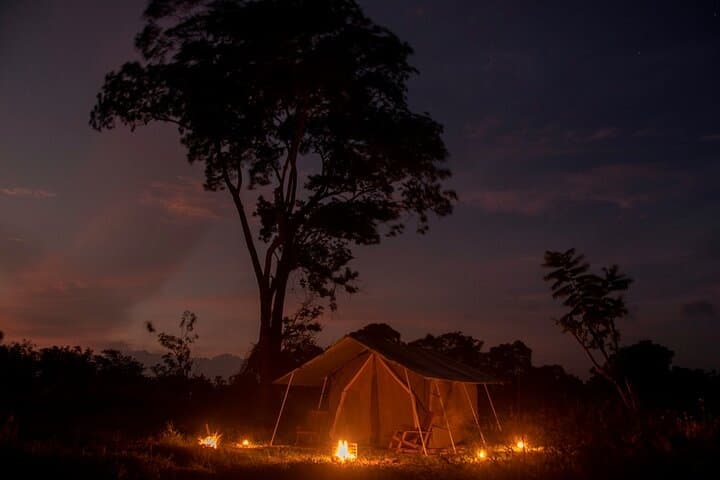
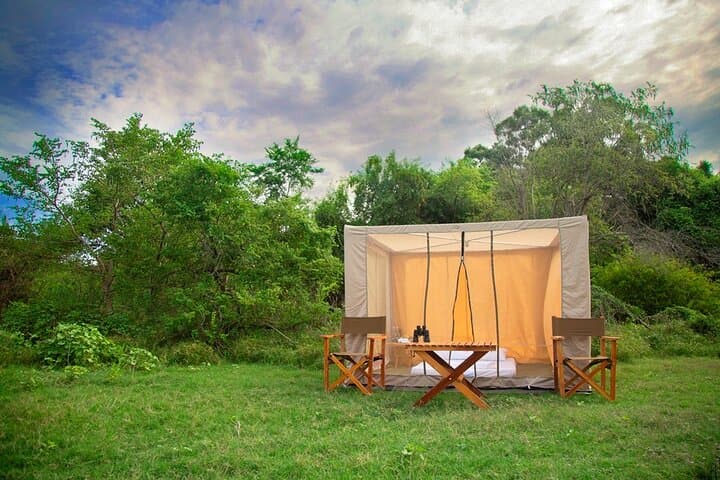
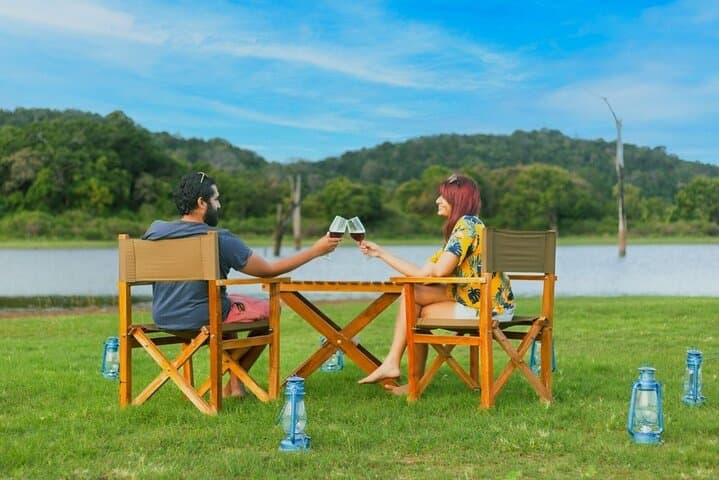
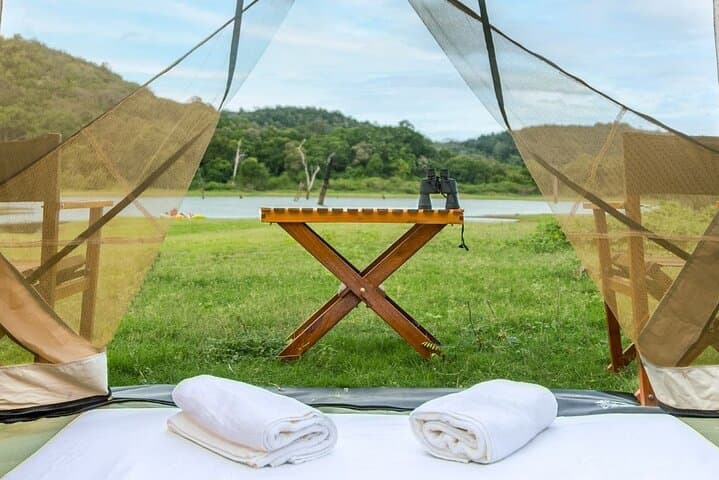
You arrive at dusk, the jeep doors thudding closed like a punctuation mark, and the world narrows to the crunch of dry grass and the low chorus of nocturnal birds. The camp is set beside a quiet waterhole; a 10x10 bush tent and a private bathroom stand ready, lanterns casting a small civilized circle while the forest beyond exhales. Above, the Milky Way pulls a pale road across the sky and the night feels deliberately loud—jackal cries, a leopard’s distant cough, and the wind threading through low canopy.
You arrive at dusk, the jeep doors thudding closed like a punctuation mark, and the world narrows to the crunch of dry grass and the low chorus of nocturnal birds. The camp is set beside a quiet waterhole; a 10x10 bush tent and a private bathroom stand ready, lanterns casting a small civilized circle while the forest beyond exhales. Above, the Milky Way pulls a pale road across the sky and the night feels deliberately loud—jackal cries, a leopard’s distant cough, and the wind threading through low canopy.
Buttala sits in Sri Lanka’s Uva dry zone, a landscape shaped by seasonal monsoons and ancient routes between the interior highlands and coastal trading ports. Soils here are weathered, red-brown laterites cut by seasonal tanks (small lakes) that anchor local agriculture; nearby villages keep cultural rhythms tied to rice, chena cultivation, and temple festivals. The safari experience leans on that ecological and human history—naturalists point out termite mounds, elephant trails, and the birdlife that uses the waterholes after dusk.
Practically, this is guided fly-camping: minimal footprint, full service—private transport, meals, binoculars and a spotting scope, and a naturalist-led jeep for wildlife viewing. Expect basic but comfortable bedding and an emphasis on quiet observation rather than big-group spectacle. Bring layered clothing for cool nights, waterproofs for sudden rains, and binoculars to scan the waterhole at dawn. Keep respectful distance from wildlife, charge devices during daylight, and plan your arrival and departure with the operator’s pickup times—this is wilderness hospitality with a local, conservation-minded frame.