THE ADVENTURE COLLECTIVE® · Independent discovery and booking for outdoor travel

Take to the skies above Devon’s Blackdown Hills on a 30-minute motorglider flight. Enjoy near-silent gliding, guided handling instruction from a qualified pilot, and unobstructed aerial views of Wellington Monument, Culmstock Beacon and former WW2 airfields.
Take to the skies above Devon’s Blackdown Hills on a 30-minute motorglider flight. Enjoy near-silent gliding, guided handling instruction from a qualified pilot, and unobstructed aerial views of Wellington Monument, Culmstock Beacon and former WW2 airfields.
You climb into a slender cockpit, the bubble canopy closing around you, and the Devon wind becomes a presence that you can see: patchwork fields, hedgerows and the northern edge of the Blackdown Hills unfolding beneath. The motorglider slips forward with a hushed whirr; the runway drops away and countryside that usually reads as map detail opens into ridges, river valleys and the squat outline of old airfields.
Verified experiences and guided adventures in the surrounding area.
Operated by Southwest Motor Gliders · Dunkeswell (operational base), Devon
You climb into a slender cockpit, the bubble canopy closing around you, and the Devon wind becomes a presence that you can see: patchwork fields, hedgerows and the northern edge of the Blackdown Hills unfolding beneath. The motorglider slips forward with a hushed whirr; the runway drops away and countryside that usually reads as map detail opens into ridges, river valleys and the squat outline of old airfields.
This brief flight threads past Culmstock Beacon — once a watch point for Armada warnings — and traces a route above Wellington Monument, an austere, three-sided obelisk that marks a landscape of rolling Triassic and Permian sandstone. The Blackdown Hills are cumulatively low but complex: ridgelines, steep escarpments and folded valley floors carved by the River Culm sharpen as you glide.
Locals remember these fields as agricultural and wartime airspace; the disused WW2 strips at Culmhead and Upottery are visible reminders of the region’s military past. From the cockpit you get not only sweeping photo opportunities but a sense of how geology, land use and history stack in layers.
Practicalities: the 30-minute experience includes a pre-flight briefing and the option to handle the controls under an instructor’s supervision. Flights are weather-dependent and cancelled for safety. Expect easy physical requirements but moderate sensitivity to motion; bring a camera, wear layers for canopy ventilation, and plan for tight booking windows. Whether you’re after aerial photography or the calm of a near-silent glide, a motorglider in Devon turns familiar fields into immediate, kinetic terrain.
easy.
30 minutes.
Minimal fitness required — able to enter/exit a small cockpit and sit for the duration.
Yes — the instructor can provide dual controls and supervised handling time if conditions and your confidence allow.
Minimum age varies by operator; weight and passenger distribution information is collected at booking to ensure safe weight-and-balance.
Flights are cancelled for low cloud, poor visibility or unsafe winds; operators generally offer rebooking or a refund if cancelled at short notice.
The experience is classed as physically easy but boarding a small cockpit requires some mobility; contact the operator to discuss assistance needs.
The flightpath passes former WW2 airfields (Culmhead, Upottery) and the Wellington Monument — sites that map the region’s military and commemorative past.
Operators emphasize minimal noise and restricted low-level flying near sensitive bird habitats; follow pilot guidance to avoid disturbing wildlife and landowners.
Southwest Motor Gliders operates guided outdoor trips and adventures with an emphasis on safety, stewardship, and memorable experiences.
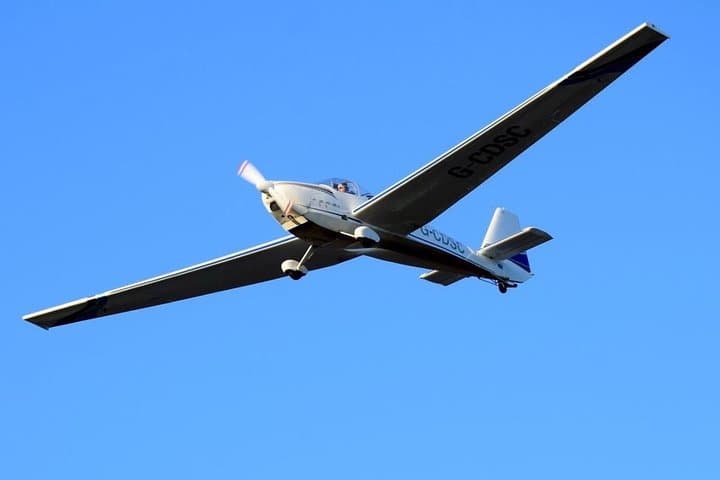
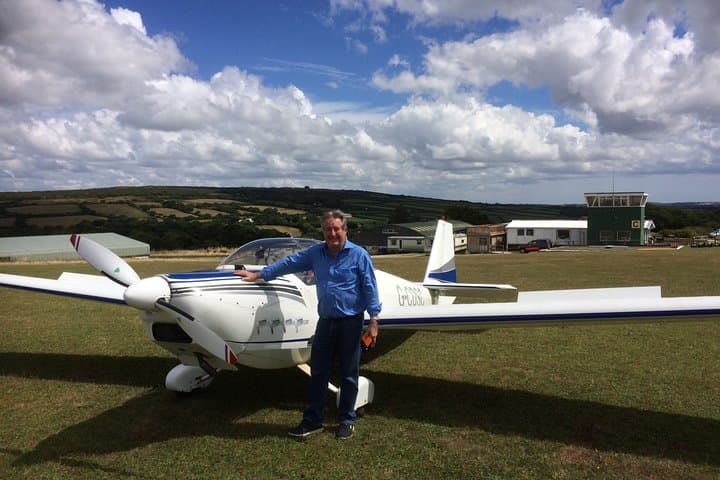
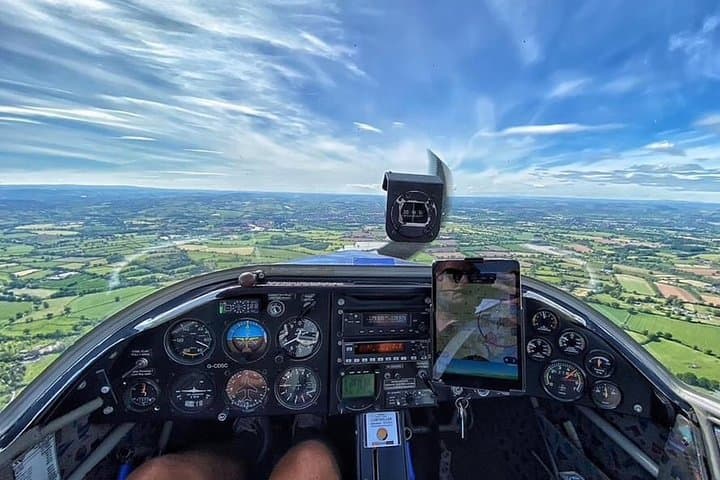
You climb into a slender cockpit, the bubble canopy closing around you, and the Devon wind becomes a presence that you can see: patchwork fields, hedgerows and the northern edge of the Blackdown Hills unfolding beneath. The motorglider slips forward with a hushed whirr; the runway drops away and countryside that usually reads as map detail opens into ridges, river valleys and the squat outline of old airfields.
You climb into a slender cockpit, the bubble canopy closing around you, and the Devon wind becomes a presence that you can see: patchwork fields, hedgerows and the northern edge of the Blackdown Hills unfolding beneath. The motorglider slips forward with a hushed whirr; the runway drops away and countryside that usually reads as map detail opens into ridges, river valleys and the squat outline of old airfields.
This brief flight threads past Culmstock Beacon — once a watch point for Armada warnings — and traces a route above Wellington Monument, an austere, three-sided obelisk that marks a landscape of rolling Triassic and Permian sandstone. The Blackdown Hills are cumulatively low but complex: ridgelines, steep escarpments and folded valley floors carved by the River Culm sharpen as you glide.
Locals remember these fields as agricultural and wartime airspace; the disused WW2 strips at Culmhead and Upottery are visible reminders of the region’s military past. From the cockpit you get not only sweeping photo opportunities but a sense of how geology, land use and history stack in layers.
Practicalities: the 30-minute experience includes a pre-flight briefing and the option to handle the controls under an instructor’s supervision. Flights are weather-dependent and cancelled for safety. Expect easy physical requirements but moderate sensitivity to motion; bring a camera, wear layers for canopy ventilation, and plan for tight booking windows. Whether you’re after aerial photography or the calm of a near-silent glide, a motorglider in Devon turns familiar fields into immediate, kinetic terrain.