THE ADVENTURE COLLECTIVE® · Independent discovery and booking for outdoor travel

Walk the grounds of two of the 20th century’s most optimistic expositions on a self-guided audio tour. Hear the engineering, politics and personalities behind the Unisphere, New York State Pavilion and the Queens Museum while navigating paved paths and open lawns.
Walk the grounds of two of the 20th century’s most optimistic expositions on a self-guided audio tour. Hear the engineering, politics and personalities behind the Unisphere, New York State Pavilion and the Queens Museum while navigating paved paths and open lawns.
You begin where concrete, steel and lawn meet—the Unisphere looming like a chrome globe that still claims the field of view. Headphones on, the warded voice of the audio guide steers you under steel ribs and through the low hills of Flushing Meadows–Corona Park, an urban plain that was once a mudflat and later a city ash dump before becoming fairgrounds.
Verified experiences and guided adventures in the surrounding area.
Operated by VoiceMap Audio Tours · Flushing, New York
You begin where concrete, steel and lawn meet—the Unisphere looming like a chrome globe that still claims the field of view. Headphones on, the warded voice of the audio guide steers you under steel ribs and through the low hills of Flushing Meadows–Corona Park, an urban plain that was once a mudflat and later a city ash dump before becoming fairgrounds.
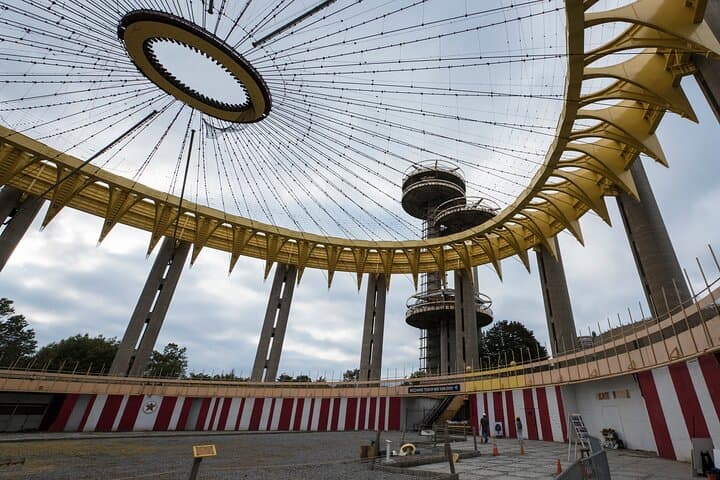
The story shifts between architecture and ambition: the futuristic optimism of the 1939 and 1964 fairs, the New York State Pavilion's soaring towers, and the Unisphere's global posture. You’ll hear how F. Scott Fitzgerald saw potential in this industrial scar, how the temporary pavilions became long-lasting civic memory, and how figures from Robert Moses to Andy Warhol left unexpected fingerprints on the site.
Geology here is urban-made—landfill and engineered turf reshape natural marsh into promenades and reservoirs—while culture is layered: Latin American, South Asian, and East Asian neighborhoods border the park, feeding the route with food carts and multilingual life.
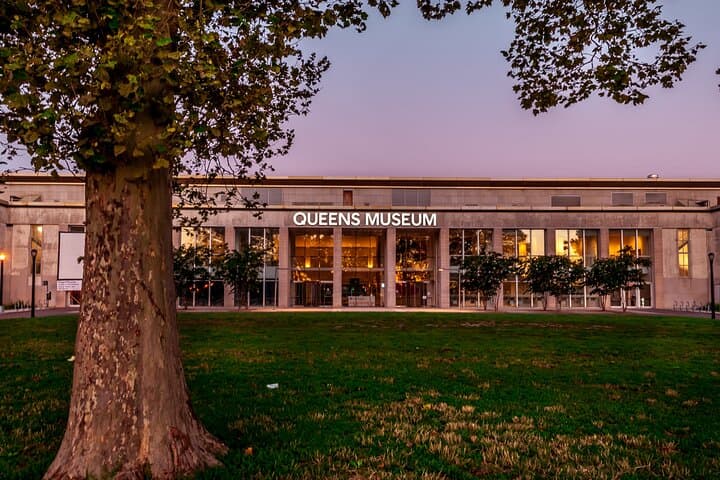
Practical guidance is woven through the narrative. Start the tour near the Queens Museum during daylight hours so you can detour inside and view the Panorama of New York; download the VoiceMap files before you arrive; carry a portable charger and water; and expect flat, paved walking with intermittent stairs near the Pavilion. Public transit brings you close; allow 45–60 minutes to move at an inquisitive pace and extra time if you plan to visit the museum or picnic on the Great Lawn.
easy.
40–60 minutes.
Suitable for all fitness levels; mostly flat walking on paved paths with occasional stairs.
No set start time—this is self-guided and can be started any time during daylight hours after you download the tour code in the VoiceMap app.
No; the audio tour ends outside the Queens Museum but museum entry is a separate fee and subject to its opening hours.
Most of the route follows wide, paved promenades suitable for wheelchairs, though some spots near the Pavilion have steps—check the VoiceMap directions for alternate paths and plan extra time if needed.
Yes—your confirmation code can be redeemed on multiple devices so groups can each listen if desired.
Flushing Meadows was transformed from tidal marsh and municipal ash dump into the site of the 1939 and 1964 Worlds Fairs; many fair structures were temporary but reshaped civic space and memory.
Park managers balance heavy recreational use with habitat restoration—stay on designated paths, pack out trash, and avoid disturbing grassy restoration areas.
VoiceMap Audio Tours operates guided outdoor trips and adventures with an emphasis on safety, stewardship, and memorable experiences.
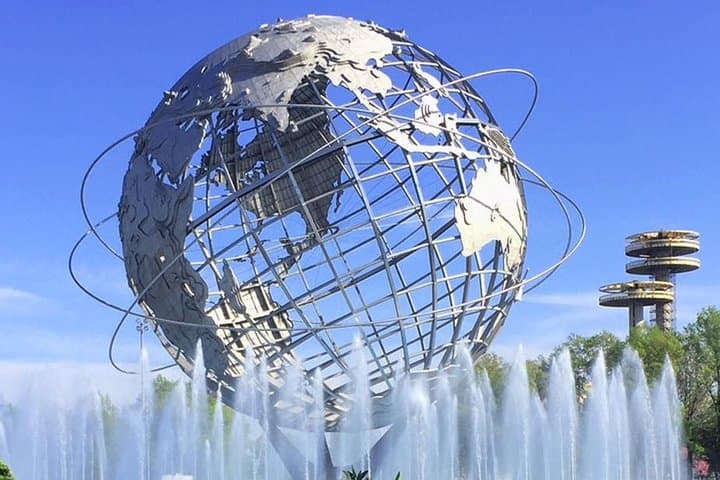
You begin where concrete, steel and lawn meet—the Unisphere looming like a chrome globe that still claims the field of view. Headphones on, the warded voice of the audio guide steers you under steel ribs and through the low hills of Flushing Meadows–Corona Park, an urban plain that was once a mudflat and later a city ash dump before becoming fairgrounds.
You begin where concrete, steel and lawn meet—the Unisphere looming like a chrome globe that still claims the field of view. Headphones on, the warded voice of the audio guide steers you under steel ribs and through the low hills of Flushing Meadows–Corona Park, an urban plain that was once a mudflat and later a city ash dump before becoming fairgrounds.
The story shifts between architecture and ambition: the futuristic optimism of the 1939 and 1964 fairs, the New York State Pavilion's soaring towers, and the Unisphere's global posture. You’ll hear how F. Scott Fitzgerald saw potential in this industrial scar, how the temporary pavilions became long-lasting civic memory, and how figures from Robert Moses to Andy Warhol left unexpected fingerprints on the site.
Geology here is urban-made—landfill and engineered turf reshape natural marsh into promenades and reservoirs—while culture is layered: Latin American, South Asian, and East Asian neighborhoods border the park, feeding the route with food carts and multilingual life.
Practical guidance is woven through the narrative. Start the tour near the Queens Museum during daylight hours so you can detour inside and view the Panorama of New York; download the VoiceMap files before you arrive; carry a portable charger and water; and expect flat, paved walking with intermittent stairs near the Pavilion. Public transit brings you close; allow 45–60 minutes to move at an inquisitive pace and extra time if you plan to visit the museum or picnic on the Great Lawn.