THE ADVENTURE COLLECTIVE® · Independent discovery and booking for outdoor travel

Experience Aruba’s reefs in ultraviolet: a guided, shore-based fluorescent night dive at The Hole in the Wall reveals glowing corals and tiny recruits with specialized blue lights and yellow visors. Perfect for certified divers who want a slow, detailed night dive.
Experience Aruba’s reefs in ultraviolet: a guided, shore-based fluorescent night dive at The Hole in the Wall reveals glowing corals and tiny recruits with specialized blue lights and yellow visors. Perfect for certified divers who want a slow, detailed night dive.
The surface is calm, a black mirror under the stars, and then the lights cut through—a narrow cone of electric blue that teases color from the reef like a signal. Divers move slowly off the shore at The Hole in the Wall, visors down, masks dimmed by a yellow filter so small fluorescent polyps and hidden critters leap into view.
Verified experiences and guided adventures in the surrounding area.
Operated by Pure Diving Aruba · Oranjestad, Aruba
The surface is calm, a black mirror under the stars, and then the lights cut through—a narrow cone of electric blue that teases color from the reef like a signal. Divers move slowly off the shore at The Hole in the Wall, visors down, masks dimmed by a yellow filter so small fluorescent polyps and hidden critters leap into view.
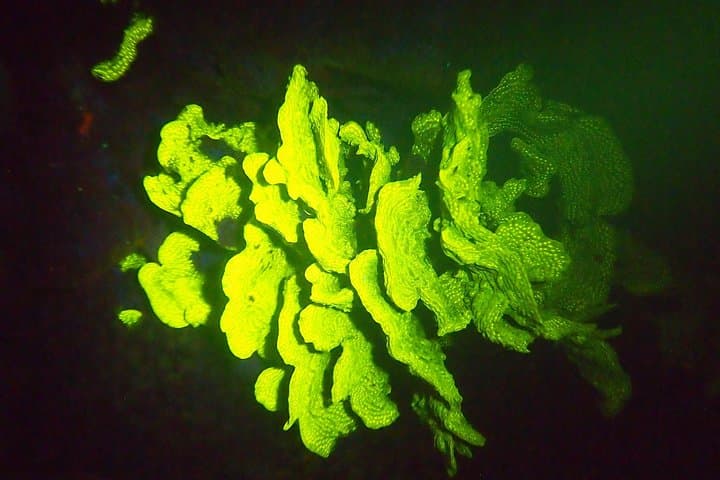
This is not theatrical lighting but fluorescence: certain corals and organisms absorb that specific wavelength and re-emit it as bright, otherworldly colors. Aruba’s reefs ride a shallow limestone shelf carved by winds and waves; coral recruits—tiny new colonies—pop like neon dots under the right light. The site’s geology creates pockets and overhangs where fluorescence is most dramatic, and local guides know the micro-habitats that host the best displays.
Culturally, night dives in Aruba have grown from scientific curiosity to a conservation tool; researchers use fluorescence to spot recruits and monitor reef health. The experience is sensory and deliberate—slow fin strokes, careful buoyancy, and a close, patient search for detail rather than speed.
Practicalities: this is a guided shore dive for certified divers, about two hours total. Bring full personal gear and a dive computer, expect warm water (thin wetsuit fine), and be prepared to wait at least 24 hours before flying. Health restrictions apply for pregnant guests and those with cardiac issues. Plan to arrive early for a briefing, listen to guides about visor use and light etiquette, and focus on buoyancy—good control preserves the reef and maximizes what you can see.
moderate.
2 hours.
Be in good cardiovascular condition and comfortable with shore entries and night diving procedures
Yes—open water certification or higher is required; guides will ask to see your card.
Minimum age is 12 years old for this activity.
No—this activity is not recommended for pregnant travelers or those with significant cardiovascular issues.
You must wait at least 24 hours after the dive before flying to reduce decompression risk.
Aruba’s fringing reefs developed on a flat limestone platform; local dive culture has long combined tourism with reef monitoring.
Guides emphasize no‑contact practices and buoyancy to protect corals; use reef‑safe sunscreen and avoid disturbing nocturnal wildlife.
Pure Diving Aruba operates guided outdoor trips and adventures with an emphasis on safety, stewardship, and memorable experiences.
The surface is calm, a black mirror under the stars, and then the lights cut through—a narrow cone of electric blue that teases color from the reef like a signal. Divers move slowly off the shore at The Hole in the Wall, visors down, masks dimmed by a yellow filter so small fluorescent polyps and hidden critters leap into view.
The surface is calm, a black mirror under the stars, and then the lights cut through—a narrow cone of electric blue that teases color from the reef like a signal. Divers move slowly off the shore at The Hole in the Wall, visors down, masks dimmed by a yellow filter so small fluorescent polyps and hidden critters leap into view.
This is not theatrical lighting but fluorescence: certain corals and organisms absorb that specific wavelength and re-emit it as bright, otherworldly colors. Aruba’s reefs ride a shallow limestone shelf carved by winds and waves; coral recruits—tiny new colonies—pop like neon dots under the right light. The site’s geology creates pockets and overhangs where fluorescence is most dramatic, and local guides know the micro-habitats that host the best displays.
Culturally, night dives in Aruba have grown from scientific curiosity to a conservation tool; researchers use fluorescence to spot recruits and monitor reef health. The experience is sensory and deliberate—slow fin strokes, careful buoyancy, and a close, patient search for detail rather than speed.
Practicalities: this is a guided shore dive for certified divers, about two hours total. Bring full personal gear and a dive computer, expect warm water (thin wetsuit fine), and be prepared to wait at least 24 hours before flying. Health restrictions apply for pregnant guests and those with cardiac issues. Plan to arrive early for a briefing, listen to guides about visor use and light etiquette, and focus on buoyancy—good control preserves the reef and maximizes what you can see.