THE ADVENTURE COLLECTIVE® · Independent discovery and booking for outdoor travel

Spend an overnight in South Florida’s wild backcountry with guided routes through pine flatwoods, hammocks, and wetlands. Expect variable trail conditions, live GPS tracking from guides, and close encounters with wading birds and natural solitude.
Spend an overnight in South Florida’s wild backcountry with guided routes through pine flatwoods, hammocks, and wetlands. Expect variable trail conditions, live GPS tracking from guides, and close encounters with wading birds and natural solitude.
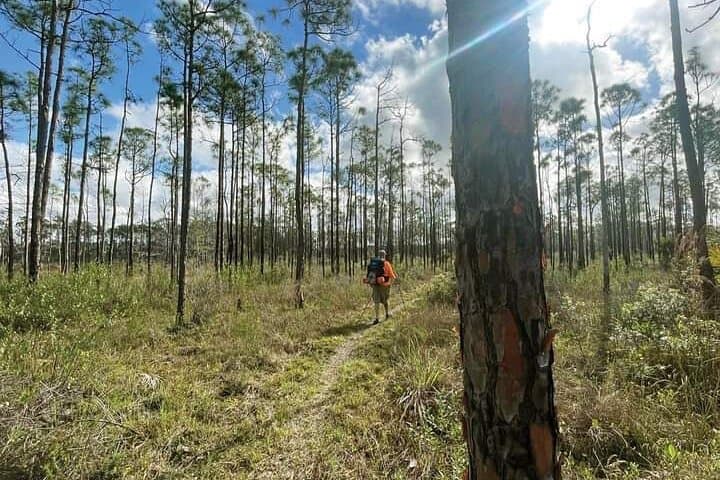
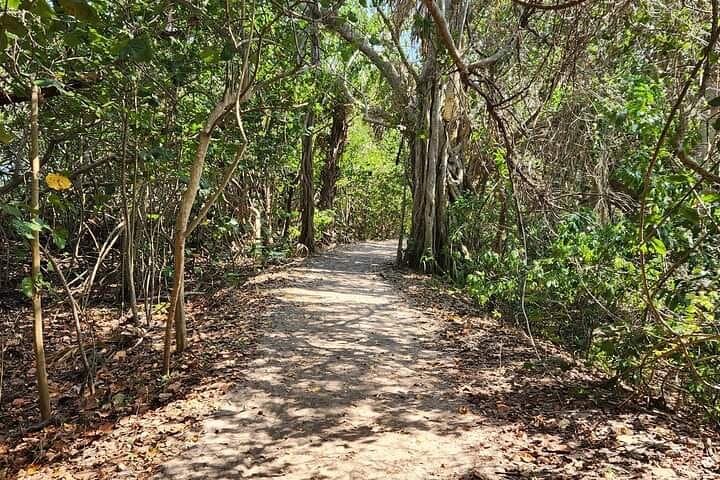
You step off the van into humid air that tastes faintly of sawgrass and salt, the sky a low, wide blue above flat horizons. Guides check packs and GPS units while the trail—sometimes boardwalk, sometimes soft sand carved by boot and bootlegger—leads into a mosaic of pine flatwoods, hardwood hammocks, and broad wetlands where water and land trade places with the tide.
Verified experiences and guided adventures in the surrounding area.
Operated by Ryan · West Palm Beach, Florida
You step off the van into humid air that tastes faintly of sawgrass and salt, the sky a low, wide blue above flat horizons. Guides check packs and GPS units while the trail—sometimes boardwalk, sometimes soft sand carved by boot and bootlegger—leads into a mosaic of pine flatwoods, hardwood hammocks, and broad wetlands where water and land trade places with the tide.
This stretch of South Florida sits on ancient marine sediments overlain by peat and marl; the landscape is shaped by seasonal floods and fire cycles that keep pines open and sawgrass resilient. Native Seminole history threads the area, and early settlers logged and drained sections for agriculture, leaving a fragile, recovering backcountry that now attracts birders, paddlers, and overnight trekkers.
Guides from Tropical Treks combine live GPS tracking with small-group instruction, so novices can learn basic campcraft while exploring variable terrain. Wildlife is bold here—wading birds quarter flooded prairies at dawn; alligators watch from dark channels—but animals usually keep their distance from a calm, prepared group.
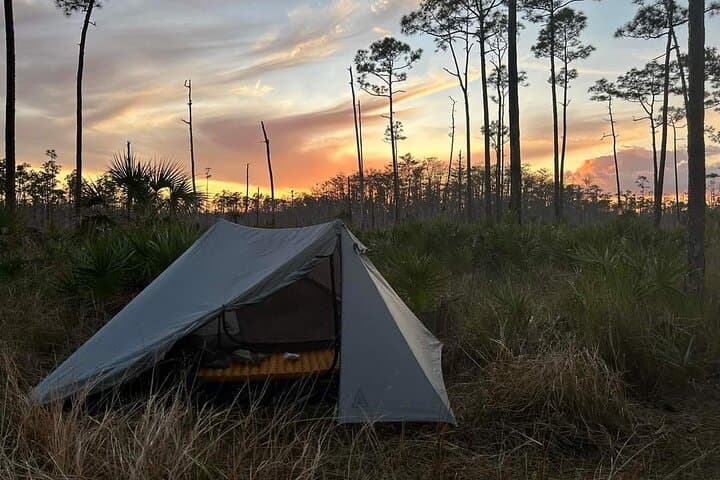
Practical guidance: pack a lightweight tent and sleeping pad, carry 2–3 liters of water or a filter, and expect sandy rooty trails and occasional wet crossings. Plan for sun and sudden rain; insect pressure can be high at dusk. The itinerary is physically demanding—expect long miles with a loaded pack and uneven footing—so train with weighted day hikes beforehand. Leave no trace applies strictly: pack out all waste and keep campfires to designated areas or stoves. When dawn arrives, the backcountry unfolds not as an escape from civilization but as a place that demands respect and rewards attention with quiet, unfiltered Florida light.
challenging.
2 days (overnight).
High-level fitness recommended; able to carry a 25–35 lb pack for multiple miles over uneven and occasionally wet terrain.
This is a physically demanding overnight with long miles carrying a pack; guides recommend prior conditioning and the trip is rated challenging.
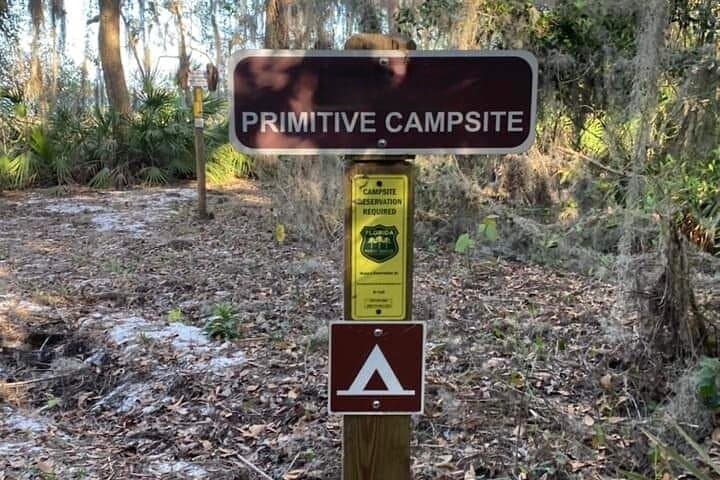
Permits depend on the specific refuge or park used; guides generally handle logistics—confirm with the operator before booking.
The operator provides Wi‑Fi at designated points, but coverage is limited in remote sections—expect intermittent cell service.
Beginners can join if in good physical shape and willing to follow guide instructions; prior overnight or backpacking experience is helpful but not mandatory.
The backcountry sits on old coastal deposits and was used seasonally by Indigenous groups; 19th–20th century drainage and agriculture reshaped many areas before conservation restored corridors.
Stick to trails and established campsites—peat soils and sawgrass communities recover slowly; operators emphasize Leave No Trace and limited group sizes to reduce impact.
Ryan operates guided outdoor trips and adventures with an emphasis on safety, stewardship, and memorable experiences.
You step off the van into humid air that tastes faintly of sawgrass and salt, the sky a low, wide blue above flat horizons. Guides check packs and GPS units while the trail—sometimes boardwalk, sometimes soft sand carved by boot and bootlegger—leads into a mosaic of pine flatwoods, hardwood hammocks, and broad wetlands where water and land trade places with the tide.
You step off the van into humid air that tastes faintly of sawgrass and salt, the sky a low, wide blue above flat horizons. Guides check packs and GPS units while the trail—sometimes boardwalk, sometimes soft sand carved by boot and bootlegger—leads into a mosaic of pine flatwoods, hardwood hammocks, and broad wetlands where water and land trade places with the tide.
This stretch of South Florida sits on ancient marine sediments overlain by peat and marl; the landscape is shaped by seasonal floods and fire cycles that keep pines open and sawgrass resilient. Native Seminole history threads the area, and early settlers logged and drained sections for agriculture, leaving a fragile, recovering backcountry that now attracts birders, paddlers, and overnight trekkers.
Guides from Tropical Treks combine live GPS tracking with small-group instruction, so novices can learn basic campcraft while exploring variable terrain. Wildlife is bold here—wading birds quarter flooded prairies at dawn; alligators watch from dark channels—but animals usually keep their distance from a calm, prepared group.
Practical guidance: pack a lightweight tent and sleeping pad, carry 2–3 liters of water or a filter, and expect sandy rooty trails and occasional wet crossings. Plan for sun and sudden rain; insect pressure can be high at dusk. The itinerary is physically demanding—expect long miles with a loaded pack and uneven footing—so train with weighted day hikes beforehand. Leave no trace applies strictly: pack out all waste and keep campfires to designated areas or stoves. When dawn arrives, the backcountry unfolds not as an escape from civilization but as a place that demands respect and rewards attention with quiet, unfiltered Florida light.