THE ADVENTURE COLLECTIVE® · Independent discovery and booking for outdoor travel

Pedal past Renaissance palaces and across the Arno on a guided two-hour bike tour of Florence’s historic center. Cover the Uffizi frontage, Ponte Vecchio, Santa Croce and Brunelleschi’s Duomo while riding through lanes closed to buses.
Pedal past Renaissance palaces and across the Arno on a guided two-hour bike tour of Florence’s historic center. Cover the Uffizi frontage, Ponte Vecchio, Santa Croce and Brunelleschi’s Duomo while riding through lanes closed to buses.
You start at Piazza della Signoria with the stone square under your wheels and Brunelleschi’s dome puncturing the sky ahead. The guide checks helmets, the group settles, and the rhythm of pedals replaces the clack of tourist footsteps as you glide through pedestrian lanes and narrow alleys that buses never see.
Verified experiences and guided adventures in the surrounding area.
Operated by Star Europe Tours · Florence, Tuscany
You start at Piazza della Signoria with the stone square under your wheels and Brunelleschi’s dome puncturing the sky ahead. The guide checks helmets, the group settles, and the rhythm of pedals replaces the clack of tourist footsteps as you glide through pedestrian lanes and narrow alleys that buses never see.
Florence is compact but layered: Roman foundations under medieval streets, Renaissance palaces raised by merchant families, and river crossings that shaped trade for centuries. The Arno threads the city, its bridges—most famously the Ponte Vecchio—acting as both market and memory. Granite pavings and centuries-old façades tell a geology of reuse: river stones, Tuscan sandstone and the brick of later reconstructions.
Culturally, expect art at every turn—open-air sculptures, workshop doors, and chapels with fresco fragments. Your guide will point to Medici-era residences, the Uffizi’s frontage, and Santa Croce’s tombs while setting an efficient pace so you cover Piazza Repubblica, Palazzo Pitti and finish at the Duomo.
Practical details: the route is roughly 5–8 km with minimal elevation gain (under 50 m), mostly flat but punctuated by cobbled sections and short pedestrian-only stretches requiring low-speed control. Helmets and comfortable hybrid bikes are typically provided; bring closed-toe shoes, a light lock and a small daypack for water and a camera. Plan for two hours, allow extra time for gelato stops, and ride defensively through crowded squares. If conditions turn stormy guides may reroute or escort the group back to base for safety.
moderate.
2 hours.
Suitable for people comfortable riding for short urban distances and standing intermittently; basic bike handling required.
Children under 14 cannot ride; child seats may be available for younger kids but check operator rules—minimum passenger age often 15 for independent riders.
Yes, helmets and comfortable bikes are typically supplied; you may bring your own for fit and comfort.
Tours operate in most conditions; guides may shorten or reroute the ride for safety and will escort groups back to the departure point if necessary.
No—this tour is short and through narrow streets; leave large bags at your hotel or the meeting point if storage is offered.
Florence rose to prominence in the Middle Ages and flourished under the Medici during the Renaissance, shaping art, banking and architecture visible across the center today.
Cycling reduces congestion and wear on sensitive zones; follow posted signs, stick to designated paths and avoid touching frescoes or architectural surfaces.
Star Europe Tours operates guided outdoor trips and adventures with an emphasis on safety, stewardship, and memorable experiences.
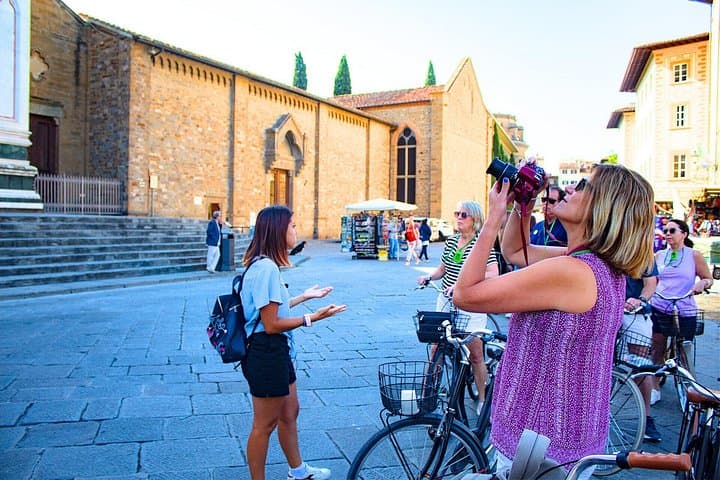
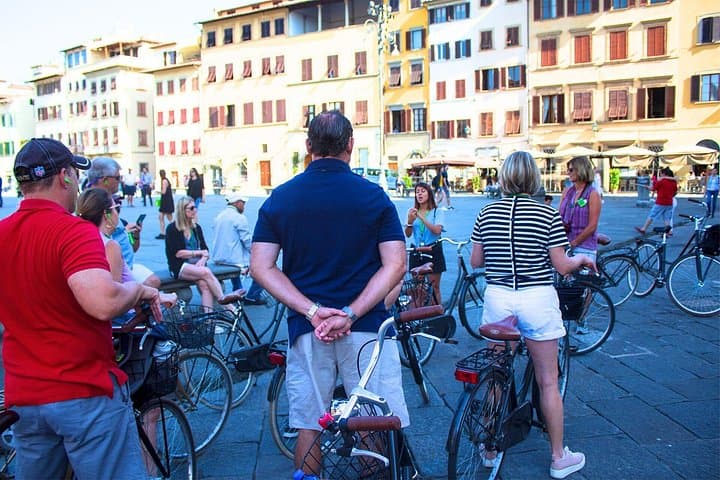
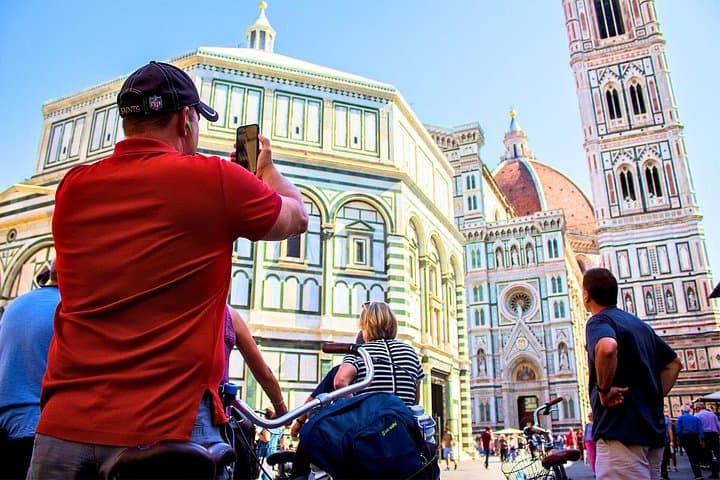
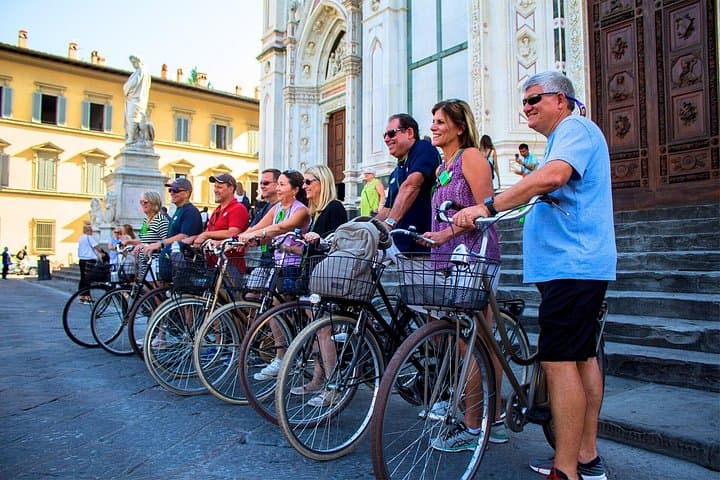
You start at Piazza della Signoria with the stone square under your wheels and Brunelleschi’s dome puncturing the sky ahead. The guide checks helmets, the group settles, and the rhythm of pedals replaces the clack of tourist footsteps as you glide through pedestrian lanes and narrow alleys that buses never see.
You start at Piazza della Signoria with the stone square under your wheels and Brunelleschi’s dome puncturing the sky ahead. The guide checks helmets, the group settles, and the rhythm of pedals replaces the clack of tourist footsteps as you glide through pedestrian lanes and narrow alleys that buses never see.
Florence is compact but layered: Roman foundations under medieval streets, Renaissance palaces raised by merchant families, and river crossings that shaped trade for centuries. The Arno threads the city, its bridges—most famously the Ponte Vecchio—acting as both market and memory. Granite pavings and centuries-old façades tell a geology of reuse: river stones, Tuscan sandstone and the brick of later reconstructions.
Culturally, expect art at every turn—open-air sculptures, workshop doors, and chapels with fresco fragments. Your guide will point to Medici-era residences, the Uffizi’s frontage, and Santa Croce’s tombs while setting an efficient pace so you cover Piazza Repubblica, Palazzo Pitti and finish at the Duomo.
Practical details: the route is roughly 5–8 km with minimal elevation gain (under 50 m), mostly flat but punctuated by cobbled sections and short pedestrian-only stretches requiring low-speed control. Helmets and comfortable hybrid bikes are typically provided; bring closed-toe shoes, a light lock and a small daypack for water and a camera. Plan for two hours, allow extra time for gelato stops, and ride defensively through crowded squares. If conditions turn stormy guides may reroute or escort the group back to base for safety.