THE ADVENTURE COLLECTIVE® · Independent discovery and booking for outdoor travel

Spend three hands-on hours in a Florentine kitchen learning to make gluten-free ravioli, tortellini and pappardelle, accompanied by unlimited Tuscan wine. This small-group class combines practical technique with regional sauces and tasting.
Spend three hands-on hours in a Florentine kitchen learning to make gluten-free ravioli, tortellini and pappardelle, accompanied by unlimited Tuscan wine. This small-group class combines practical technique with regional sauces and tasting.
You step through a heavy Florentine doorway and the city’s stone heat gives way to the quick clack of rolling pins and the smell of simmering ragù.
Verified experiences and guided adventures in the surrounding area.
Operated by Florence Untold by Roberto · Florence, Tuscany
You step through a heavy Florentine doorway and the city’s stone heat gives way to the quick clack of rolling pins and the smell of simmering ragù.
In a bright, informal kitchen near the Arno, a chef guides a small group through the tactile work of gluten-free dough — pressing, turning, and shaping ravioli, tortellini, strozzapreti and wide pappardelle with a well-worn rolling pin. The activity is hands-on: you’ll mix flours, judge dough texture by touch, and finish each shape before cooking and tasting what you made.
Florence’s food culture traces to peasant techniques that prized local grains and simple, robust sauces — here interpreted through modern, gluten-free ingredients and local Chianina beef for the ragu. Expect practical lessons on dough hydration, workable substitutes for gluten’s structure, and classic Tuscan sauces: ragu, burro e salvia, and pomodoro e basilico.
The class runs about three hours and typically serves small groups, making it social and instructional. Operators provide all equipment, aprons, and unlimited Tuscan wine or sodas while you cook and dine.
Practical guidance: arrive with closed-toe shoes, wear comfortable clothes you don’t mind flouring, and disclose severe allergies in advance. Public transport and central Florence lodging make this an easy half-day cultural immersion between museums and markets. If you have celiac disease, confirm cross-contamination protocols with the host before booking — many classes accommodate strict diets but practices vary.
easy.
3–3.5 hours.
Minimal physical fitness required; ability to stand and work at a counter for several hours
The class focuses on gluten-free pasta, but practices vary; contact the operator before booking to confirm strict cross-contamination procedures for celiac disease.
All ingredients, pasta-making equipment, aprons, instruction, and unlimited Tuscan wine or sodas are included; you also dine on the dishes you prepare.
Groups are small (typically up to 6); language can vary by operator—check the booking page or contact the host to confirm the class language.
Children are often welcome but infant seating and lap rules apply; verify age guidelines with the operator when booking.
Florence’s culinary roots emphasize simple, local ingredients; Tuscan ragù often features Chianina beef from the surrounding countryside and rustic preparations that date back centuries.
Many Florentine cooking schools source local, seasonal produce to reduce food miles; ask your host about ingredient provenance and their food-waste practices.
Florence Untold by Roberto operates guided outdoor trips and adventures with an emphasis on safety, stewardship, and memorable experiences.
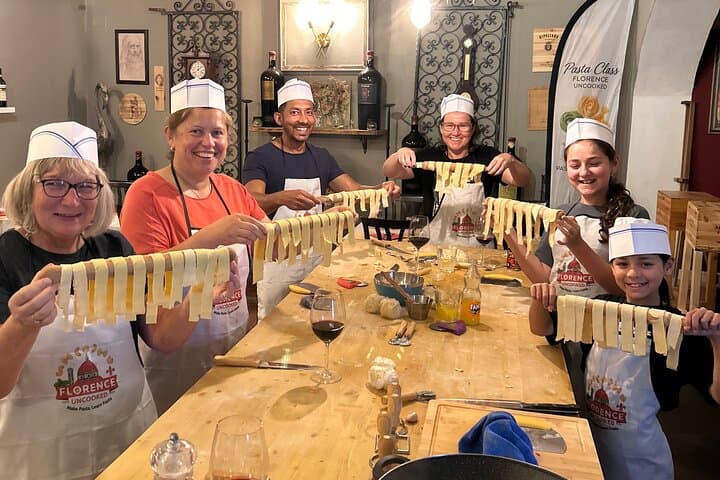


You step through a heavy Florentine doorway and the city’s stone heat gives way to the quick clack of rolling pins and the smell of simmering ragù.
You step through a heavy Florentine doorway and the city’s stone heat gives way to the quick clack of rolling pins and the smell of simmering ragù.
In a bright, informal kitchen near the Arno, a chef guides a small group through the tactile work of gluten-free dough — pressing, turning, and shaping ravioli, tortellini, strozzapreti and wide pappardelle with a well-worn rolling pin. The activity is hands-on: you’ll mix flours, judge dough texture by touch, and finish each shape before cooking and tasting what you made.
Florence’s food culture traces to peasant techniques that prized local grains and simple, robust sauces — here interpreted through modern, gluten-free ingredients and local Chianina beef for the ragu. Expect practical lessons on dough hydration, workable substitutes for gluten’s structure, and classic Tuscan sauces: ragu, burro e salvia, and pomodoro e basilico.
The class runs about three hours and typically serves small groups, making it social and instructional. Operators provide all equipment, aprons, and unlimited Tuscan wine or sodas while you cook and dine.
Practical guidance: arrive with closed-toe shoes, wear comfortable clothes you don’t mind flouring, and disclose severe allergies in advance. Public transport and central Florence lodging make this an easy half-day cultural immersion between museums and markets. If you have celiac disease, confirm cross-contamination protocols with the host before booking — many classes accommodate strict diets but practices vary.