THE ADVENTURE COLLECTIVE® · Independent discovery and booking for outdoor travel

Float over Southeast Alaska to Waterfall Creek, then sit quietly on a rocky shore as brown bears feed on the salmon run. This six-hour floatplane outing from Juneau combines dramatic wildlife viewing with a short hike through true Alaskan wilderness.
Float over Southeast Alaska to Waterfall Creek, then sit quietly on a rocky shore as brown bears feed on the salmon run. This six-hour floatplane outing from Juneau combines dramatic wildlife viewing with a short hike through true Alaskan wilderness.
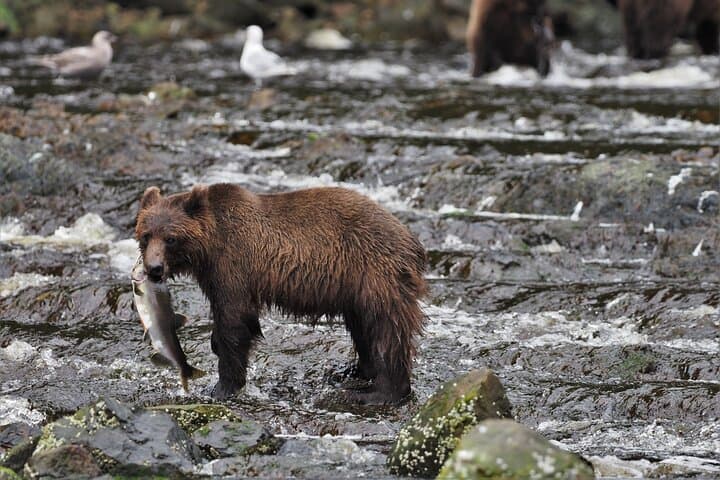
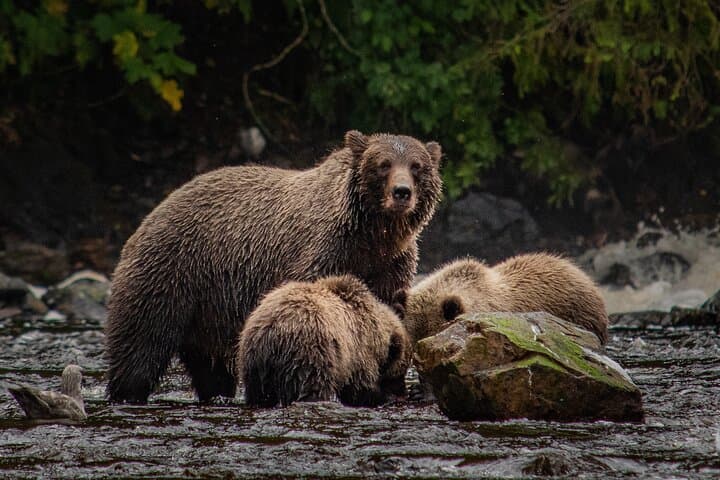
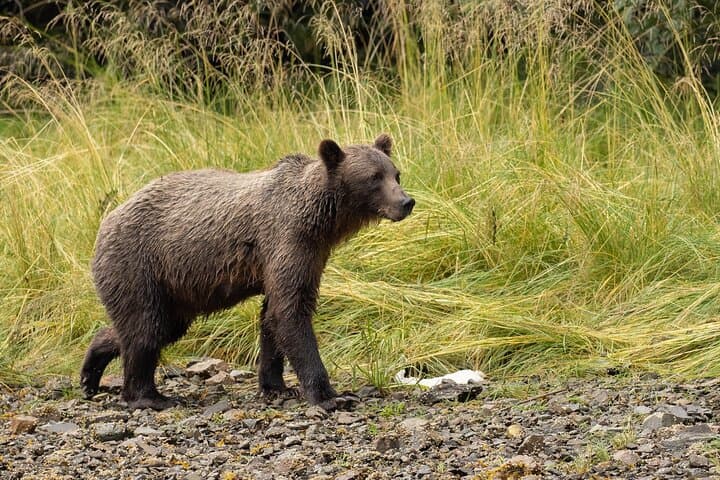
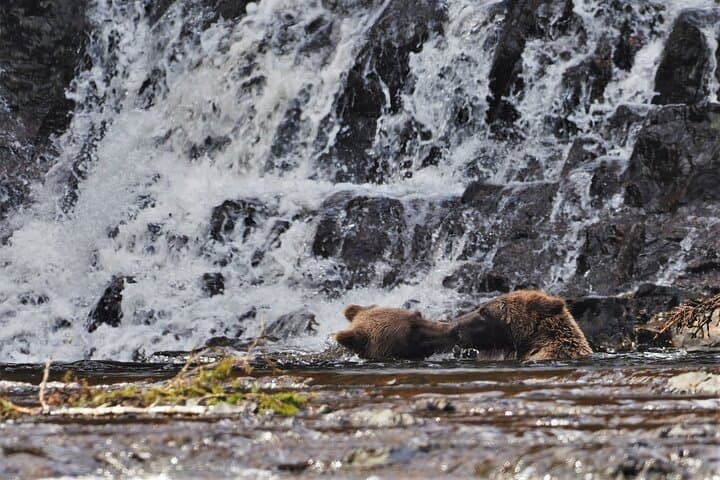
You step off the floatplane onto a narrow, rocky shoreline and the trees fall silent — the landscape itself seems to hold its breath. Sea spray cools your face, gulls wheel overhead, and a guide signals the group to sit and watch. The setting is raw Alaskan coastline: river mouths, gravel banks and a ribboning creek where salmon force their way upstream.
Verified experiences and guided adventures in the surrounding area.
Operated by Above and Beyond Alaska · Juneau, Alaska
You step off the floatplane onto a narrow, rocky shoreline and the trees fall silent — the landscape itself seems to hold its breath. Sea spray cools your face, gulls wheel overhead, and a guide signals the group to sit and watch. The setting is raw Alaskan coastline: river mouths, gravel banks and a ribboning creek where salmon force their way upstream.
This stretch of Chichagof Island sits within the traditional territory of the Tlingit and reflects a working coastline shaped by glacial geology and seasonal runs of salmon that drive the ecosystem. Waterfall Creek’s steep, rocky channels and short alder forests concentrate fish and, in turn, brown bears during late July–August. Floatplanes and small-boat access have been part of Southeast Alaska’s modern history, linking remote beaches and small communities like Tenakee Springs to Juneau.
Expect a quiet, observational day: a scenic 30-minute floatplane, several hours seated along the shoreline, and a measured 1–2 mile return hike over uneven ground. Terrain is low-elevation but rocky, often muddy near the creek, and there are no facilities.
Practical guidance: dress in waterproof layers, wear sturdy boots with ankle support, bring binoculars and a telephoto lens, and rely on your guide’s positioning for safety and the best photographic angles. Be prepared for variable weather and follow strict food-storage and group-distance rules—this is wild brown bear country. The reward is real: long windows to watch bears engage with salmon, eagles wheel above, and the landscape push quietly around you.
moderate.
6 hours.
Moderate fitness required — able to hike 1–2 miles over uneven terrain and remain seated/quiet for extended periods.
The floatplane segment is approximately 30 minutes each way, depending on conditions.
No — sightings cannot be guaranteed; however, Waterfall Creek is prime bear habitat during the late July–August salmon run and sightings are common.
Minimum age is 12; children must be supervised and able to follow safety instructions and remain quiet during viewing.
Dress in layers, bring waterproof outerwear, sturdy boots, binoculars, a camera with a telephoto lens, and any personal medications.
The area lies within Tlingit traditional territories; modern access via floatplane grew in the 20th century and enabled guided wildlife tourism and subsistence resource access.
Groups operate under strict permit conditions; visitors must pack out all waste, follow bear-aware protocols, and keep group sizes and noise low to reduce wildlife disturbance.
Above and Beyond Alaska operates guided outdoor trips and adventures with an emphasis on safety, stewardship, and memorable experiences.
You step off the floatplane onto a narrow, rocky shoreline and the trees fall silent — the landscape itself seems to hold its breath. Sea spray cools your face, gulls wheel overhead, and a guide signals the group to sit and watch. The setting is raw Alaskan coastline: river mouths, gravel banks and a ribboning creek where salmon force their way upstream.
You step off the floatplane onto a narrow, rocky shoreline and the trees fall silent — the landscape itself seems to hold its breath. Sea spray cools your face, gulls wheel overhead, and a guide signals the group to sit and watch. The setting is raw Alaskan coastline: river mouths, gravel banks and a ribboning creek where salmon force their way upstream.
This stretch of Chichagof Island sits within the traditional territory of the Tlingit and reflects a working coastline shaped by glacial geology and seasonal runs of salmon that drive the ecosystem. Waterfall Creek’s steep, rocky channels and short alder forests concentrate fish and, in turn, brown bears during late July–August. Floatplanes and small-boat access have been part of Southeast Alaska’s modern history, linking remote beaches and small communities like Tenakee Springs to Juneau.
Expect a quiet, observational day: a scenic 30-minute floatplane, several hours seated along the shoreline, and a measured 1–2 mile return hike over uneven ground. Terrain is low-elevation but rocky, often muddy near the creek, and there are no facilities.
Practical guidance: dress in waterproof layers, wear sturdy boots with ankle support, bring binoculars and a telephoto lens, and rely on your guide’s positioning for safety and the best photographic angles. Be prepared for variable weather and follow strict food-storage and group-distance rules—this is wild brown bear country. The reward is real: long windows to watch bears engage with salmon, eagles wheel above, and the landscape push quietly around you.