THE ADVENTURE COLLECTIVE® · Independent discovery and booking for outdoor travel

A short, 85‑minute floatplane flight from Rotorua delivers dramatic aerial views of Whakaari (White Island) and the scarred slopes of Mount Tarawera. Experience active volcanism and regional geology with a pilot-guide and clear commentary.
A short, 85‑minute floatplane flight from Rotorua delivers dramatic aerial views of Whakaari (White Island) and the scarred slopes of Mount Tarawera. Experience active volcanism and regional geology with a pilot-guide and clear commentary.
The floatplane lifts you over a glassy patch of Pacific and the island grows out of the ocean like a living, breathing feature — steam pluming, crater rims sharp against the sky. From the right-hand window Whakaari (White Island) shows its crater lake and recent vents; to the west Mount Tarawera’s scarred slopes and urn-shaped valleys reveal the aftermath of the 1886 eruption.
Verified experiences and guided adventures in the surrounding area.
Operated by Volcanic Air · Rotorua, Bay of Plenty
The floatplane lifts you over a glassy patch of Pacific and the island grows out of the ocean like a living, breathing feature — steam pluming, crater rims sharp against the sky. From the right-hand window Whakaari (White Island) shows its crater lake and recent vents; to the west Mount Tarawera’s scarred slopes and urn-shaped valleys reveal the aftermath of the 1886 eruption.
Geology here is immediate: an active offshore volcano set on a submarine cone, and inland, a rift zone that unleashed one of New Zealand’s most dramatic historical eruptions. Māori history and oral tradition frame both sites — Whakaari is sacred and watched closely by iwi and scientists. The flight offers a compact lens on tectonics, steam-driven hydrothermal systems, and the processes that keep the Bay of Plenty reshaping itself.
Expect 80–90 minutes in the air with a professional pilot-guide and headsets for commentary. The ride is accessible for most fitness levels but sensitive to motion; infants must sit on laps. Weather and safety protocols govern departures — flights can be cancelled if conditions are unsafe.
Practical pointers: arrive early at the Volcanic Air office in Rotorua, carry photo ID, and secure loose gear in the floatplane. Window-side seating maximizes views, and a mid-morning slot often catches the best light and calmer winds. Respect exclusion zones — pilots and operators work under strict consent and conservation rules to minimize disturbance to wildlife and culturally sensitive sites. This is a short, high-impact way to see both an active marine volcano and the inland scar of Tarawera without a multi-day trek.
easy.
1–1.5 hours.
Minimal fitness required; suitable for most people though those prone to motion sickness should prepare.
The advertised duration is about 85 minutes from departure to return, including transit time over both White Island and Mount Tarawera.
No — hotel transfers are not included; make your own way to the Volcanic Air office in Rotorua for check‑in.
This experience is a scenic flight only; landing on Whakaari requires special permissions and guided landings which are separate, regulated trips.
Flights may be cancelled for safety; the operator’s policy offers a full refund if cancelled at least 24 hours prior or reschedules/cancels for weather.
Mount Tarawera erupted catastrophically in 1886, reshaping local landscapes and affecting nearby Māori communities; Whakaari has been active for centuries and is an important site for iwi and scientists.
Whakaari and nearby marine areas are managed with strict safety and conservation guidelines; flights operate under permissions designed to limit disturbance and protect fragile volcanic ecosystems.
Volcanic Air operates guided outdoor trips and adventures with an emphasis on safety, stewardship, and memorable experiences.
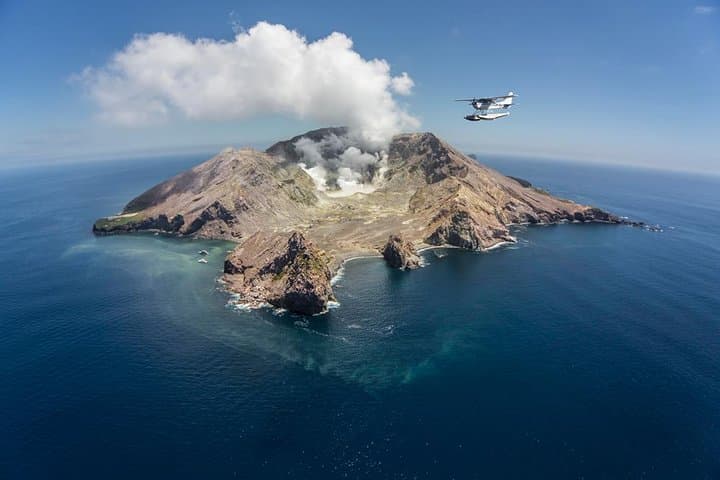
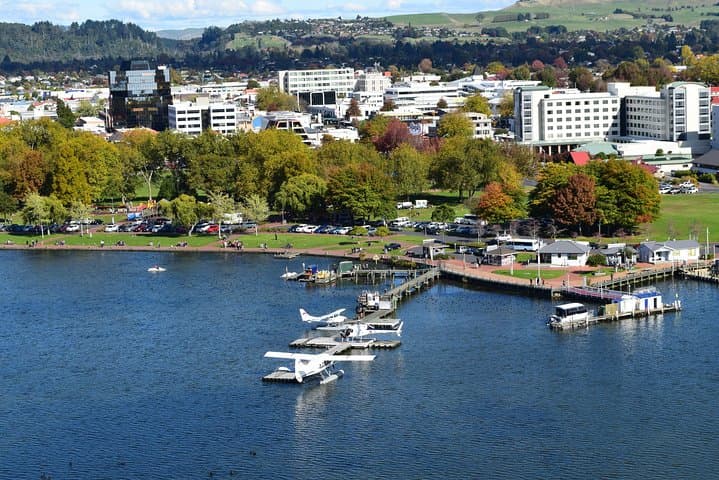
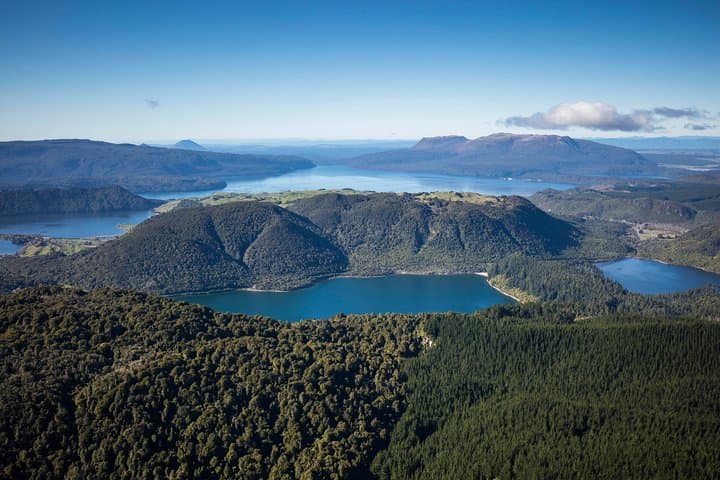
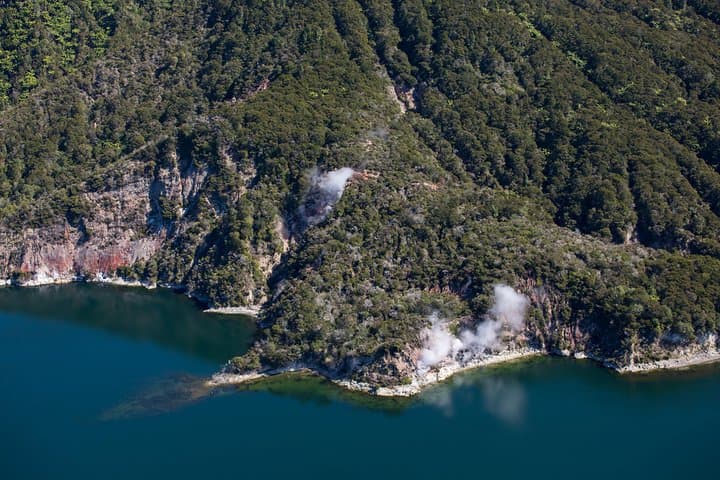
The floatplane lifts you over a glassy patch of Pacific and the island grows out of the ocean like a living, breathing feature — steam pluming, crater rims sharp against the sky. From the right-hand window Whakaari (White Island) shows its crater lake and recent vents; to the west Mount Tarawera’s scarred slopes and urn-shaped valleys reveal the aftermath of the 1886 eruption.
The floatplane lifts you over a glassy patch of Pacific and the island grows out of the ocean like a living, breathing feature — steam pluming, crater rims sharp against the sky. From the right-hand window Whakaari (White Island) shows its crater lake and recent vents; to the west Mount Tarawera’s scarred slopes and urn-shaped valleys reveal the aftermath of the 1886 eruption.
Geology here is immediate: an active offshore volcano set on a submarine cone, and inland, a rift zone that unleashed one of New Zealand’s most dramatic historical eruptions. Māori history and oral tradition frame both sites — Whakaari is sacred and watched closely by iwi and scientists. The flight offers a compact lens on tectonics, steam-driven hydrothermal systems, and the processes that keep the Bay of Plenty reshaping itself.
Expect 80–90 minutes in the air with a professional pilot-guide and headsets for commentary. The ride is accessible for most fitness levels but sensitive to motion; infants must sit on laps. Weather and safety protocols govern departures — flights can be cancelled if conditions are unsafe.
Practical pointers: arrive early at the Volcanic Air office in Rotorua, carry photo ID, and secure loose gear in the floatplane. Window-side seating maximizes views, and a mid-morning slot often catches the best light and calmer winds. Respect exclusion zones — pilots and operators work under strict consent and conservation rules to minimize disturbance to wildlife and culturally sensitive sites. This is a short, high-impact way to see both an active marine volcano and the inland scar of Tarawera without a multi-day trek.