THE ADVENTURE COLLECTIVE® · Independent discovery and booking for outdoor travel

Float in a warm pool while bowls and gongs fill the air — a soundbath in East Mesa blends buoyant silence with vibrational therapy. This accessible 60-minute session is designed for relaxation and sensory reset in the Sonoran Desert foothills.
Float in a warm pool while bowls and gongs fill the air — a soundbath in East Mesa blends buoyant silence with vibrational therapy. This accessible 60-minute session is designed for relaxation and sensory reset in the Sonoran Desert foothills.
You arrive to the low, even hum of a treatment room that smells faintly of clean water and palo verde pollen. Lighting is dimmed; a shallow warm pool rocks with the ripple of other participants. As the practitioner strikes a gong and crystal bowls unfurl, the water carries sound across your body, buoying you until breath and wave lock into the same slow rhythm.
Verified experiences and guided adventures in the surrounding area.
You arrive to the low, even hum of a treatment room that smells faintly of clean water and palo verde pollen. Lighting is dimmed; a shallow warm pool rocks with the ripple of other participants. As the practitioner strikes a gong and crystal bowls unfurl, the water carries sound across your body, buoying you until breath and wave lock into the same slow rhythm.
The East Mesa sits on the southern edge of the Salt River Valley, framed to the east by the Superstition foothills and shaped over millennia by alluvial fans and desert wash. Indigenous Hohokam people engineered early canals here, a reminder that water in the desert has always been managed, treasured and ritualized — a cultural context that modern float and sound practices borrow from in their focus on restoration.
A floating soundbath combines sensory isolation with vibrational therapy: the pool reduces proprioceptive input while bowls and gongs create low-frequency waves that seem to move through the water. Expect a quiet communal environment with guided opening and closing, plus a focus on breathwork.
Practical guidance: arrive hydrated and without heavy lotions or oils that affect pool chemistry. Wear a swimsuit and layer robes or cover-ups for the short transition between dry spaces and the pool. Sessions are typically an hour; the best times for outdoor comfort are mornings in summer and late afternoons in winter. If you have claustrophobia, open-water unease, or certain medical conditions (pregnancy, epilepsy), check with the provider and your physician beforehand. Leave jewelry and electronics in a locker — the point is to disconnect and let the desert’s stillness, and the sound, push you toward calm.
easy.
1 hour.
Minimal fitness required; suitable for most adults comfortable in water but requires basic mobility to step into and out of a pool.
Sessions are usually 60 minutes including a short introduction and closing; flotation and sound portion is often about 45–50 minutes.
Most adults can attend, but people who are pregnant, have epilepsy, infectious skin conditions, or recent major surgery should consult staff and a physician first.
Wear a swimsuit; most people also bring a robe or cover-up to stay warm while moving between locker rooms and the pool.
Facilities vary—many use warm, gently heated pools and maintain water with standard pool sanitation; check the operator for specifics on temperature and salinity.
The Salt River Valley has long been shaped by irrigation from Hohokam canals; modern Mesa grew from agricultural roots into a suburban grid edged by desert mountain ridgelines.
Water is a sensitive resource in the Sonoran Desert—choose operators that use efficient filtration and conservative water-management practices to reduce environmental impact.
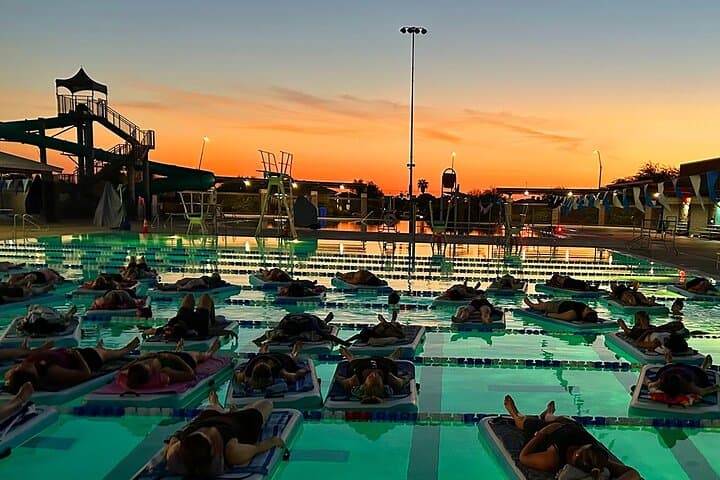
You arrive to the low, even hum of a treatment room that smells faintly of clean water and palo verde pollen. Lighting is dimmed; a shallow warm pool rocks with the ripple of other participants. As the practitioner strikes a gong and crystal bowls unfurl, the water carries sound across your body, buoying you until breath and wave lock into the same slow rhythm.
You arrive to the low, even hum of a treatment room that smells faintly of clean water and palo verde pollen. Lighting is dimmed; a shallow warm pool rocks with the ripple of other participants. As the practitioner strikes a gong and crystal bowls unfurl, the water carries sound across your body, buoying you until breath and wave lock into the same slow rhythm.
The East Mesa sits on the southern edge of the Salt River Valley, framed to the east by the Superstition foothills and shaped over millennia by alluvial fans and desert wash. Indigenous Hohokam people engineered early canals here, a reminder that water in the desert has always been managed, treasured and ritualized — a cultural context that modern float and sound practices borrow from in their focus on restoration.
A floating soundbath combines sensory isolation with vibrational therapy: the pool reduces proprioceptive input while bowls and gongs create low-frequency waves that seem to move through the water. Expect a quiet communal environment with guided opening and closing, plus a focus on breathwork.
Practical guidance: arrive hydrated and without heavy lotions or oils that affect pool chemistry. Wear a swimsuit and layer robes or cover-ups for the short transition between dry spaces and the pool. Sessions are typically an hour; the best times for outdoor comfort are mornings in summer and late afternoons in winter. If you have claustrophobia, open-water unease, or certain medical conditions (pregnancy, epilepsy), check with the provider and your physician beforehand. Leave jewelry and electronics in a locker — the point is to disconnect and let the desert’s stillness, and the sound, push you toward calm.