THE ADVENTURE COLLECTIVE® · Independent discovery and booking for outdoor travel

Explore Baixa, Chiado and Alfama in two hours without tackling Lisbon’s famous hills. This easy, elevator-assisted route covers key squares, an iron elevator ascent and Alfama’s oldest lanes with a knowledgeable local guide.
Explore Baixa, Chiado and Alfama in two hours without tackling Lisbon’s famous hills. This easy, elevator-assisted route covers key squares, an iron elevator ascent and Alfama’s oldest lanes with a knowledgeable local guide.
You step off a cobbled street and the city's incline seems politely absent: tile patterns underfoot, the occasional tram bell sounding from a distance, and a sympathetic local guide pointing out a narrow elevator that will save you a climb. This two-hour walk threads Baixa’s grid, Chiado’s café-lined lanes and the winding alleys of Alfama while keeping elevation minimal by using historic lifts and shortcuts.
Verified experiences and guided adventures in the surrounding area.
Operated by Follow Me - Portugal Tours · Lisbon, Lisbon
You step off a cobbled street and the city's incline seems politely absent: tile patterns underfoot, the occasional tram bell sounding from a distance, and a sympathetic local guide pointing out a narrow elevator that will save you a climb. This two-hour walk threads Baixa’s grid, Chiado’s café-lined lanes and the winding alleys of Alfama while keeping elevation minimal by using historic lifts and shortcuts.
These neighborhoods tell Lisbon’s story. Baixa rises from the ashes of the 1755 earthquake as a rational, Pombaline rebuild of wide avenues and uniform façades. Chiado reflects 19th- and early-20th-century salons and shops, while Alfama is the city’s oldest quarter, with Moorish roots and a maze of streets shaped by the Tagus and centuries of human habitation. The Santa Justa Elevator—an iron structure from the early 1900s—links low and high ground and is a practical focal point on a low-effort route.
Expect largely paved streets, short stair steps rarely unavoidable, and well-worn pedestrian flow. The walk is cultural more than strenuous; your guide will pause at Carmo Square, the Roman theatre ruins and Baixa’s grand squares, offering context on architecture, local businesses and fado’s presence in Alfama.
Practical guidance: wear comfortable walking shoes with good grip for cobbles, bring a small water bottle, and carry a contactless transport card if you plan to continue exploring after the tour. Morning or late-afternoon start times avoid the hottest hours and allow softer light for photos. If mobility is a concern, notify the operator—this route intentionally minimizes climbs but uses elevators and short slopes that staff can help with.
easy.
2 hours.
Suitable for most fitness levels—comfortable mobility and the ability to walk 1.5–3 miles at a relaxed pace recommended.
The tour lasts about two hours and covers a compact stretch of central Lisbon—typically 1.5–3 miles—using elevators and flat routes to minimize climbs.
Yes; the route is stroller-accessible and intentionally avoids steep climbs, though some narrow sidewalks and short steps may occur.
No; this is a walking orientation focused on neighborhoods and viewpoints—entrance fees to attractions are not included.
Notify the operator in advance. The route minimizes elevation and uses elevators, but some short slopes may still require assistance.
Baixa was rebuilt after the 1755 earthquake under the Marquis of Pombal; Alfama preserves street patterns from Lisbon’s Moorish and medieval past.
Tourism concentrates in historic streets—respect local businesses, avoid littering, and favor refillable water and locally run cafés to reduce environmental impact.
Follow Me - Portugal Tours operates guided outdoor trips and adventures with an emphasis on safety, stewardship, and memorable experiences.
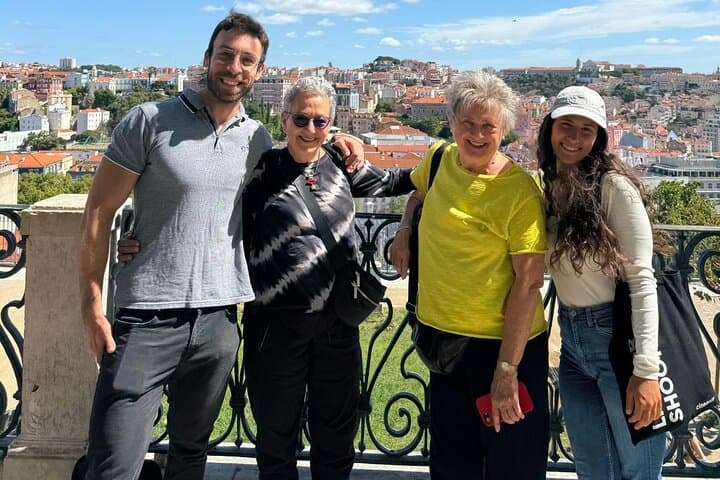
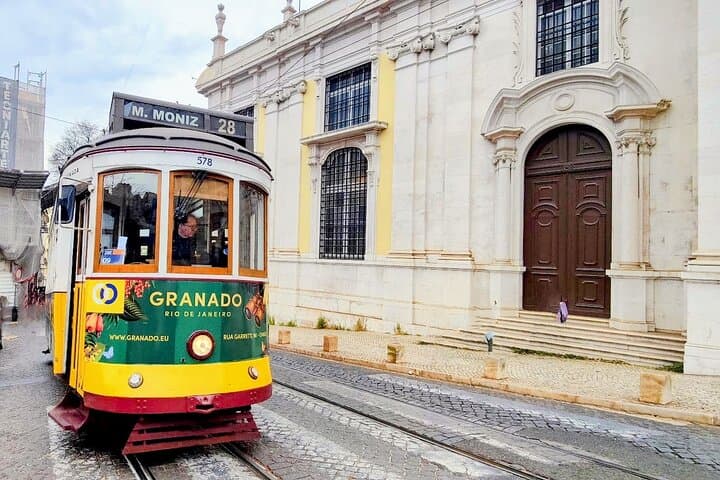
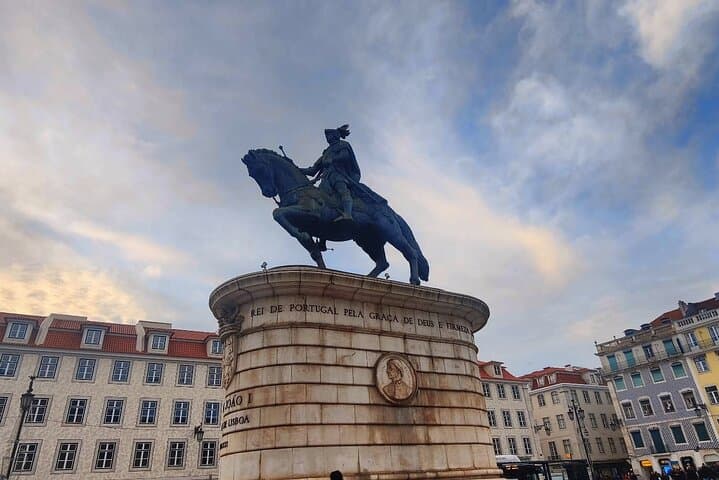
You step off a cobbled street and the city's incline seems politely absent: tile patterns underfoot, the occasional tram bell sounding from a distance, and a sympathetic local guide pointing out a narrow elevator that will save you a climb. This two-hour walk threads Baixa’s grid, Chiado’s café-lined lanes and the winding alleys of Alfama while keeping elevation minimal by using historic lifts and shortcuts.
You step off a cobbled street and the city's incline seems politely absent: tile patterns underfoot, the occasional tram bell sounding from a distance, and a sympathetic local guide pointing out a narrow elevator that will save you a climb. This two-hour walk threads Baixa’s grid, Chiado’s café-lined lanes and the winding alleys of Alfama while keeping elevation minimal by using historic lifts and shortcuts.
These neighborhoods tell Lisbon’s story. Baixa rises from the ashes of the 1755 earthquake as a rational, Pombaline rebuild of wide avenues and uniform façades. Chiado reflects 19th- and early-20th-century salons and shops, while Alfama is the city’s oldest quarter, with Moorish roots and a maze of streets shaped by the Tagus and centuries of human habitation. The Santa Justa Elevator—an iron structure from the early 1900s—links low and high ground and is a practical focal point on a low-effort route.
Expect largely paved streets, short stair steps rarely unavoidable, and well-worn pedestrian flow. The walk is cultural more than strenuous; your guide will pause at Carmo Square, the Roman theatre ruins and Baixa’s grand squares, offering context on architecture, local businesses and fado’s presence in Alfama.
Practical guidance: wear comfortable walking shoes with good grip for cobbles, bring a small water bottle, and carry a contactless transport card if you plan to continue exploring after the tour. Morning or late-afternoon start times avoid the hottest hours and allow softer light for photos. If mobility is a concern, notify the operator—this route intentionally minimizes climbs but uses elevators and short slopes that staff can help with.