THE ADVENTURE COLLECTIVE® · Independent discovery and booking for outdoor travel

Clip in at the giant green chair and climb into a three‑hour aerial course framed by Ponderosa pines and high desert sky. This Fort Tuthill ropes course mixes color‑coded circuits, ziplines and technical obstacles for a challenging, safety‑forward day above the forest floor.
Clip in at the giant green chair and climb into a three‑hour aerial course framed by Ponderosa pines and high desert sky. This Fort Tuthill ropes course mixes color‑coded circuits, ziplines and technical obstacles for a challenging, safety‑forward day above the forest floor.
You step out of your car and the first thing you notice is a giant green chair propped outside the office — a playful landmark that announces this is no ordinary park. Above you, a lattice of cables and platforms threads through Ponderosa pines; the course hums with clipped harnesses, the click of carabiners and the occasional whoop as someone commits to a high-line.
Verified experiences and guided adventures in the surrounding area.
Operated by FLG X Adventure Course - New Jersey · Flagstaff, Arizona
You step out of your car and the first thing you notice is a giant green chair propped outside the office — a playful landmark that announces this is no ordinary park. Above you, a lattice of cables and platforms threads through Ponderosa pines; the course hums with clipped harnesses, the click of carabiners and the occasional whoop as someone commits to a high-line.
The ropes course at Fort Tuthill traces a modern spin on an old military training ground: Fort Tuthill served as a National Guard encampment before becoming a public park. Geologically, the site sits on the Colorado Plateau’s edge, where volcanic basalt and sandy soils support resilient Ponderosa stands and wide, sunlit clearings. The setting feels Western — tall, dry air that sharpens every footfall, and skies that change fast as storms roll over the San Francisco Peaks.
Culturally, Flagstaff is a trail town: hikers, mountain bikers and skiers mix at coffee shops and gear stores, and staff at the course will reflect that practical outdoor ethic. Expect circuits color-coded by height and difficulty, each with 10–19 elements — wobbly bridges, hanging nets, scrambling walls and zippy lines — led by a safety briefing and guided demonstrations.
Practical guidance: arrive early to acclimate to Flagstaff’s 7,000-foot elevation, wear sturdy closed-toe shoes and dress in breathable layers; the full adult experience takes about three hours, including check-in, harnessing and briefings. Hydrate before you go, listen to instructors during transitions, and plan lower-exertion activities for the rest of the day as your muscles recover.
challenging.
3 hours.
Expect high exertion: good balance, core strength and no serious cardiovascular limits; regular hikers or gym‑goers will be comfortable.
Many adult courses accept children from about 12 years old with parental consent; operators may enforce weight or height limits — check directly with the provider before booking.
The park facilities and check‑in area are accessible, but the aerial circuits themselves require mobility and are not accessible for wheelchairs.
High wind, lightning or heavy snow will pause or cancel courses; the operator may reschedule or offer refunds per their policy — confirm the 24‑hour cancellation window when you book.
No formal experience required; staff provide harnessing, safety briefings and guided demos — basic comfort with heights and balance is helpful.
Fort Tuthill began as a National Guard training site and later became a county park, repurposed for recreation while retaining its open, military‑scale fields.
Stay on designated approaches and pack out trash; the operator maintains gear hygiene and staff‑led inspections to limit environmental impact and keep the forest healthy.
FLG X Adventure Course - New Jersey operates guided outdoor trips and adventures with an emphasis on safety, stewardship, and memorable experiences.
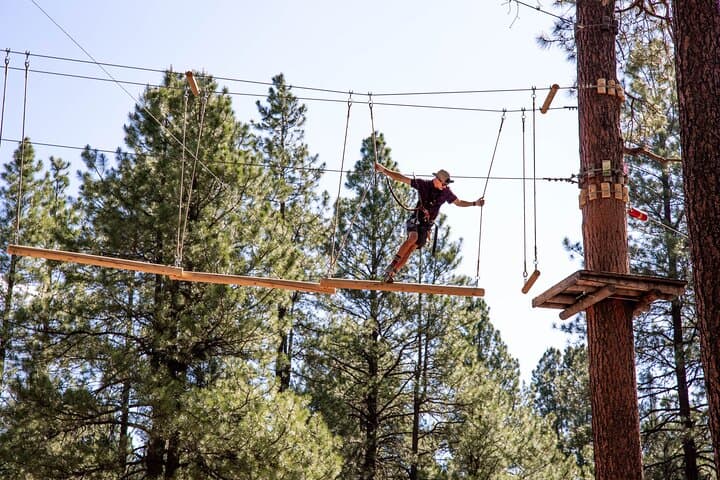
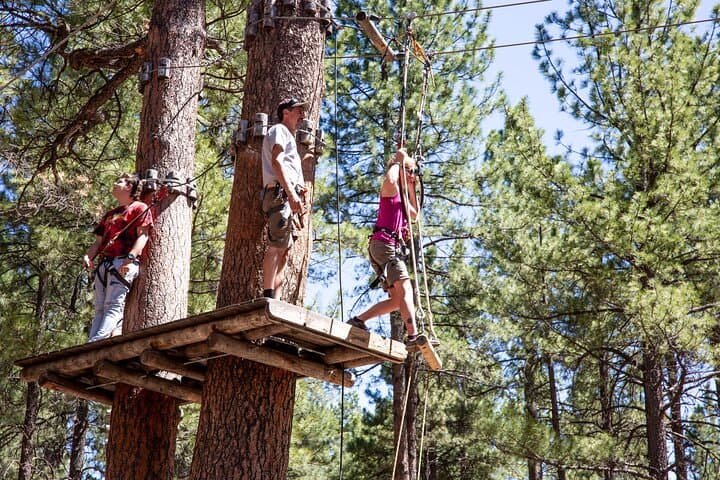
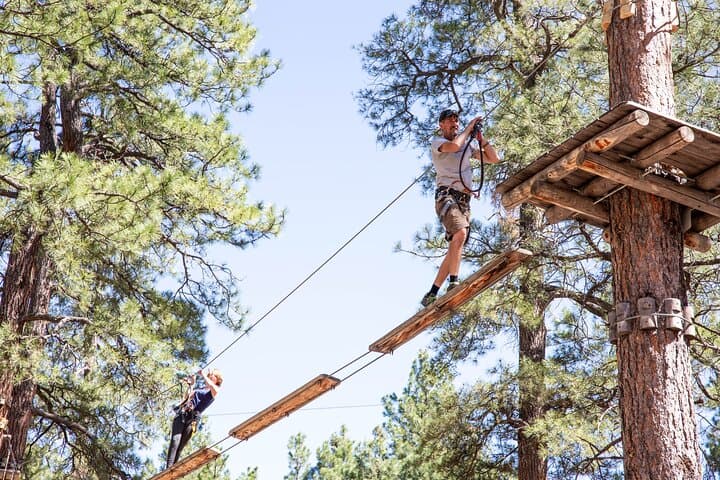
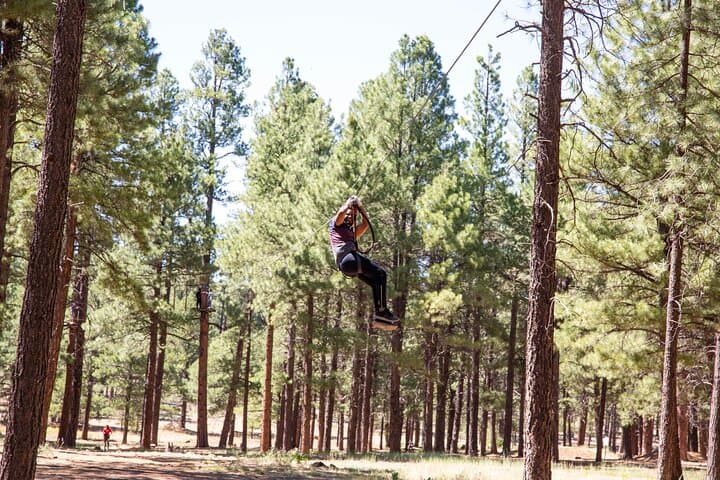
You step out of your car and the first thing you notice is a giant green chair propped outside the office — a playful landmark that announces this is no ordinary park. Above you, a lattice of cables and platforms threads through Ponderosa pines; the course hums with clipped harnesses, the click of carabiners and the occasional whoop as someone commits to a high-line.
You step out of your car and the first thing you notice is a giant green chair propped outside the office — a playful landmark that announces this is no ordinary park. Above you, a lattice of cables and platforms threads through Ponderosa pines; the course hums with clipped harnesses, the click of carabiners and the occasional whoop as someone commits to a high-line.
The ropes course at Fort Tuthill traces a modern spin on an old military training ground: Fort Tuthill served as a National Guard encampment before becoming a public park. Geologically, the site sits on the Colorado Plateau’s edge, where volcanic basalt and sandy soils support resilient Ponderosa stands and wide, sunlit clearings. The setting feels Western — tall, dry air that sharpens every footfall, and skies that change fast as storms roll over the San Francisco Peaks.
Culturally, Flagstaff is a trail town: hikers, mountain bikers and skiers mix at coffee shops and gear stores, and staff at the course will reflect that practical outdoor ethic. Expect circuits color-coded by height and difficulty, each with 10–19 elements — wobbly bridges, hanging nets, scrambling walls and zippy lines — led by a safety briefing and guided demonstrations.
Practical guidance: arrive early to acclimate to Flagstaff’s 7,000-foot elevation, wear sturdy closed-toe shoes and dress in breathable layers; the full adult experience takes about three hours, including check-in, harnessing and briefings. Hydrate before you go, listen to instructors during transitions, and plan lower-exertion activities for the rest of the day as your muscles recover.