THE ADVENTURE COLLECTIVE® · Independent discovery and booking for outdoor travel

Learn to kite on Flag Beach outside Corralejo in a focused two-day course that moves from land drills to supervised boat sessions. Small groups, all gear included, and reliable trade winds make this a practical introduction to kitesurfing.
Learn to kite on Flag Beach outside Corralejo in a focused two-day course that moves from land drills to supervised boat sessions. Small groups, all gear included, and reliable trade winds make this a practical introduction to kitesurfing.
The wind arrives like an appointment at Flag Beach — steady, predictable, and eager to push you off shore. On day one you stand on the wide sand strip outside Corralejo, kit laid out, instructor at your side. An hour of theory covers safety, wind windows, and self-rescue; then you pump up and practice beach flying for roughly three hours, learning kite control, crashing and relaunching.
Verified experiences and guided adventures in the surrounding area.
Operated by Flag Beach · Corralejo, Las Palmas
The wind arrives like an appointment at Flag Beach — steady, predictable, and eager to push you off shore. On day one you stand on the wide sand strip outside Corralejo, kit laid out, instructor at your side. An hour of theory covers safety, wind windows, and self-rescue; then you pump up and practice beach flying for roughly three hours, learning kite control, crashing and relaunching.
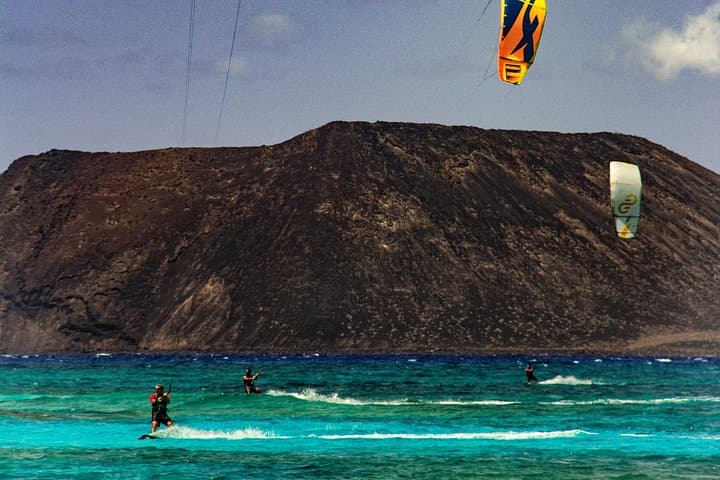
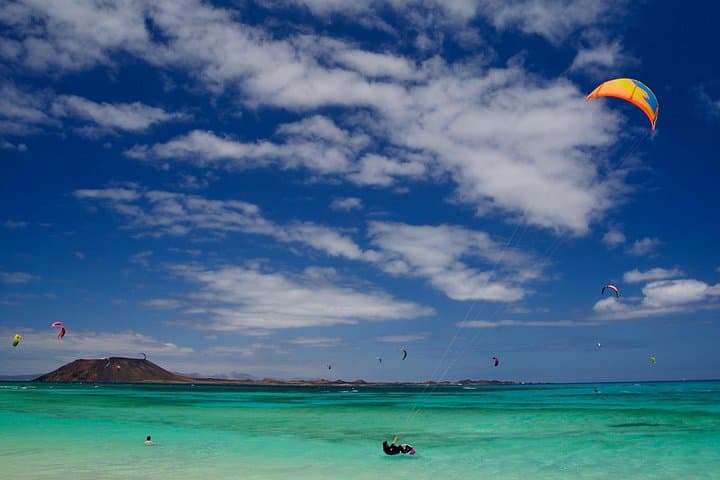
Flag Beach sits on the northern tip of Fuerteventura, a landscape of volcanic rock, pale sand and Atlantic swell shaped by Canary Island trade winds. Corralejo was a fishing port turned surf town; the local surfing and kiting culture values wind awareness and respect for fellow beach users. Geologically the shoreline is young volcanic terrain, with sand blown from offshore reefs and dunes that shift with each season.
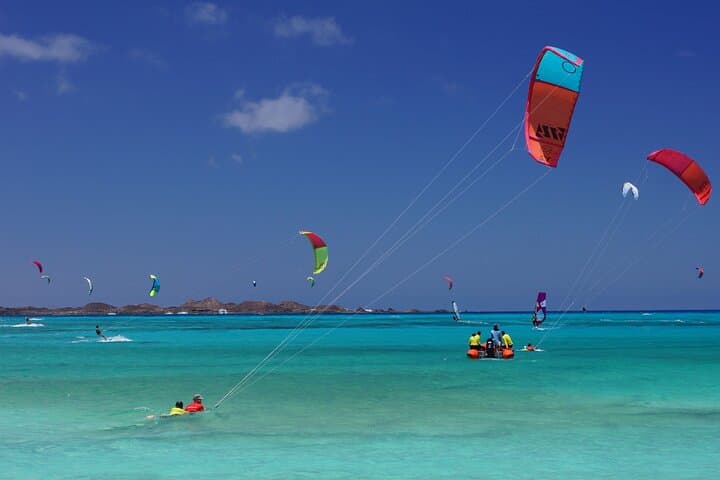
On day two the course moves offshore by boat for supervised water-time. You’ll learn body-dragging, water relaunchs and, when ready, board starts — the moment the board bites and the wind pulls is the practical payoff of the drills.
Practical guide: courses run in small groups (max 4 students per instructor), include equipment and wetsuit, and require basic swimming ability and moderate fitness. Expect side-onshore winds, changing tide lines and sun exposure; plan for layered sun protection and a durable leash for the board. Arrive hydrated, with a light breakfast, and be prepared to repeat drills — progress is incremental and safety always dictates the pace.
For first-timers Flag Beach is efficient: predictable wind, experienced instructors, and a clear progression from land drills to your first rides.
moderate.
7 hours (two-day course).
Moderate — able to swim and tolerate repeated short bursts of paddling and body-dragging
No — this course is designed for beginners; instructors start with theory and land-based kite control before moving to the water.
Yes — the course includes kites, harnesses, wetsuits and safety gear as stated in the trip inclusions.
Operators will cancel for unsafe conditions; the policy typically allows a full refund if canceled at least 24 hours before the start.
Groups are kept small (maximum four students per instructor) to accelerate learning and maintain safety.
Corralejo grew from a fishing village into a wind-sports hub; the island’s volcanic geology and colonial-era salt trade shaped the coastline visitors use today.
Respect dune vegetation and marked pathways; operators minimize beach impact by using designated launch zones and briefings on wildlife disturbance.
Flag Beach operates guided outdoor trips and adventures with an emphasis on safety, stewardship, and memorable experiences.
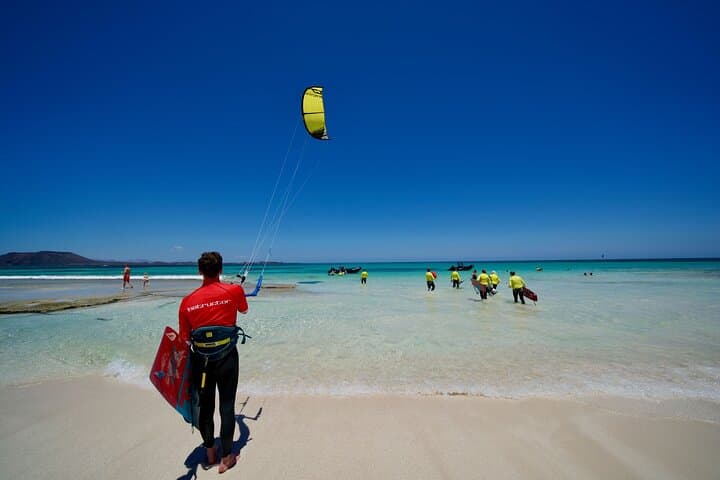
The wind arrives like an appointment at Flag Beach — steady, predictable, and eager to push you off shore. On day one you stand on the wide sand strip outside Corralejo, kit laid out, instructor at your side. An hour of theory covers safety, wind windows, and self-rescue; then you pump up and practice beach flying for roughly three hours, learning kite control, crashing and relaunching.
The wind arrives like an appointment at Flag Beach — steady, predictable, and eager to push you off shore. On day one you stand on the wide sand strip outside Corralejo, kit laid out, instructor at your side. An hour of theory covers safety, wind windows, and self-rescue; then you pump up and practice beach flying for roughly three hours, learning kite control, crashing and relaunching.
Flag Beach sits on the northern tip of Fuerteventura, a landscape of volcanic rock, pale sand and Atlantic swell shaped by Canary Island trade winds. Corralejo was a fishing port turned surf town; the local surfing and kiting culture values wind awareness and respect for fellow beach users. Geologically the shoreline is young volcanic terrain, with sand blown from offshore reefs and dunes that shift with each season.
On day two the course moves offshore by boat for supervised water-time. You’ll learn body-dragging, water relaunchs and, when ready, board starts — the moment the board bites and the wind pulls is the practical payoff of the drills.
Practical guide: courses run in small groups (max 4 students per instructor), include equipment and wetsuit, and require basic swimming ability and moderate fitness. Expect side-onshore winds, changing tide lines and sun exposure; plan for layered sun protection and a durable leash for the board. Arrive hydrated, with a light breakfast, and be prepared to repeat drills — progress is incremental and safety always dictates the pace.
For first-timers Flag Beach is efficient: predictable wind, experienced instructors, and a clear progression from land drills to your first rides.