THE ADVENTURE COLLECTIVE® · Independent discovery and booking for outdoor travel

Trace Cambodia’s arc from Angkor’s stone faces to Phnom Penh’s riverside markets on this five-day private tour. Early sunrises, Kulen’s waterfalls, Tonle Sap’s floating villages and the city’s historical sites combine cultural depth with outdoor exploration.
Trace Cambodia’s arc from Angkor’s stone faces to Phnom Penh’s riverside markets on this five-day private tour. Early sunrises, Kulen’s waterfalls, Tonle Sap’s floating villages and the city’s historical sites combine cultural depth with outdoor exploration.
You step from the minivan into the cool shadow of a stone causeway and the first carved face of Bayon watches you consider the day. The air here is humid, pierced by incense and the distant calls of kingfishers on the moat; this is Angkor in the soft morning light, and the tour stretches five days between temple plains, waterfalls and the broad ribbon of the Tonle Sap.
Verified experiences and guided adventures in the surrounding area.
Operated by Sightseeing Cambodia · Siem Reap, Siem Reap Province
You step from the minivan into the cool shadow of a stone causeway and the first carved face of Bayon watches you consider the day. The air here is humid, pierced by incense and the distant calls of kingfishers on the moat; this is Angkor in the soft morning light, and the tour stretches five days between temple plains, waterfalls and the broad ribbon of the Tonle Sap.
The route threads two chapters of Cambodia’s past: the 9th–13th century Khmer empire that raised Angkor Wat and Banteay Srei, and the more recent, somber history visible at Tuol Sleng and Choeung Ek in Phnom Penh. Geologically the region sits on flat Mekong alluvial plains with sandstone temples sculpted from quarried blocks; to the north, Phnom Kulen is an uplifted sandstone plateau with streams and cascades.
Culturally the itinerary mixes ritual sites, rural floating villages on Asia’s largest freshwater lake, and Phnom Penh’s riverside markets. Local guides translate not just language but context: why bas-reliefs show naval scenes, or how the Tonle Sap’s seasonal pulse drives fisheries and livelihoods.
Practical guidance: expect daily walking on uneven stone and boardwalks—bring closed-toe shoes, sun protection and a light rain layer. Start temple days early for cooler light and smaller crowds; exchange small bills in Siem Reap for vendors and boat fares. Respect dress codes at religious sites (shoulders and knees covered). Stay hydrated; bottled water and towels are typically provided on the private vehicle. With a private guide and driver, the route is a paced blend of archaeology, local life, and reflective history—designed to cover distance without rushing the moments that matter.
easy.
5 days.
Suitable for travelers who can walk 1–3 hours per day on uneven surfaces and climb short temple staircases
The standard Angkor Pass is usually purchased separately on arrival; confirm with your operator whether it is included in your booking.
Many nationalities can obtain an e‑visa or visa on arrival; check current requirements and carry passport photos if needed.
Tours commonly include some meals and bottled water in the vehicle, but confirm which lunches or dinners are covered and bring snacks for long travel days.
Private tours typically can accommodate dietary requests and tailor pacing for mobility limitations—notify at booking for arrangements.
The itinerary connects the classical power of the Khmer empire (Angkor, 9th–13th centuries) with 20th-century history preserved at Phnom Penh’s museums and memorials.
Tonle Sap’s seasonal flood pulse supports fisheries but faces pressure from overfishing and development; responsible tourism and local donations support conservation and community livelihoods.
Sightseeing Cambodia operates guided outdoor trips and adventures with an emphasis on safety, stewardship, and memorable experiences.
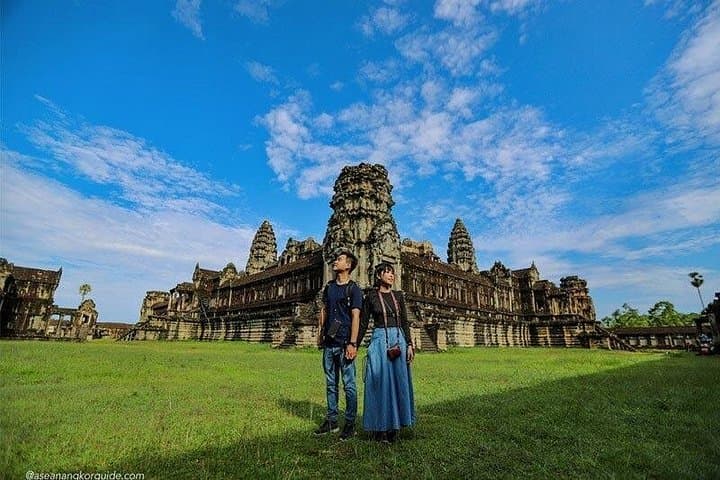
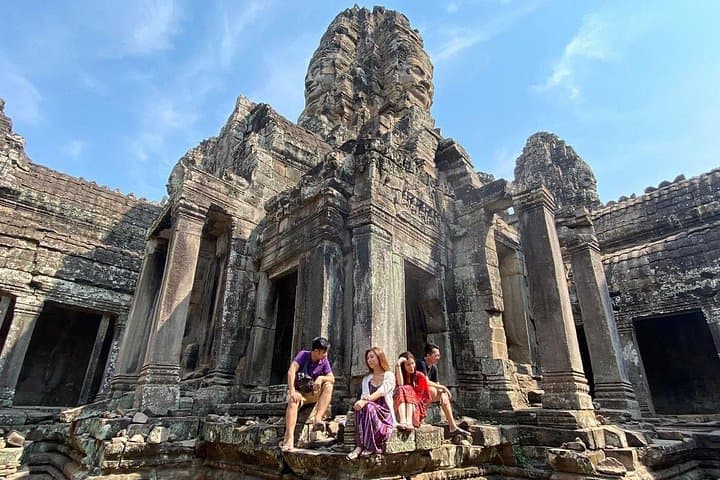
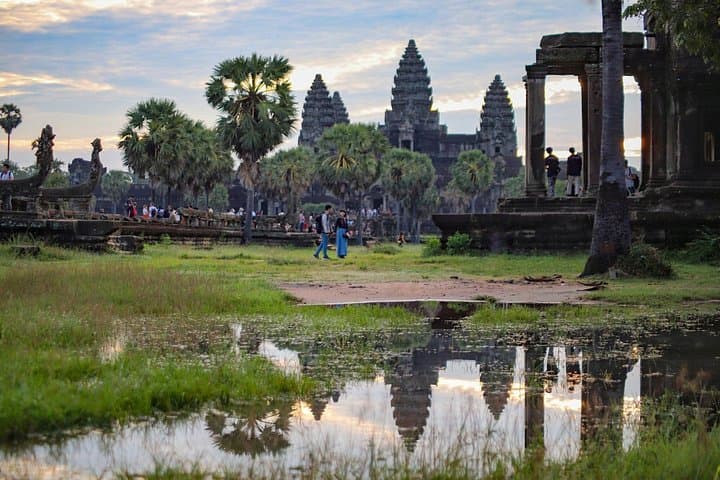
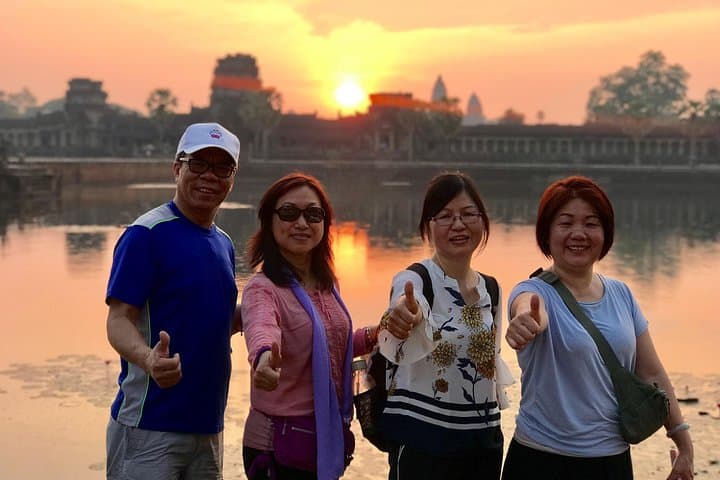
You step from the minivan into the cool shadow of a stone causeway and the first carved face of Bayon watches you consider the day. The air here is humid, pierced by incense and the distant calls of kingfishers on the moat; this is Angkor in the soft morning light, and the tour stretches five days between temple plains, waterfalls and the broad ribbon of the Tonle Sap.
You step from the minivan into the cool shadow of a stone causeway and the first carved face of Bayon watches you consider the day. The air here is humid, pierced by incense and the distant calls of kingfishers on the moat; this is Angkor in the soft morning light, and the tour stretches five days between temple plains, waterfalls and the broad ribbon of the Tonle Sap.
The route threads two chapters of Cambodia’s past: the 9th–13th century Khmer empire that raised Angkor Wat and Banteay Srei, and the more recent, somber history visible at Tuol Sleng and Choeung Ek in Phnom Penh. Geologically the region sits on flat Mekong alluvial plains with sandstone temples sculpted from quarried blocks; to the north, Phnom Kulen is an uplifted sandstone plateau with streams and cascades.
Culturally the itinerary mixes ritual sites, rural floating villages on Asia’s largest freshwater lake, and Phnom Penh’s riverside markets. Local guides translate not just language but context: why bas-reliefs show naval scenes, or how the Tonle Sap’s seasonal pulse drives fisheries and livelihoods.
Practical guidance: expect daily walking on uneven stone and boardwalks—bring closed-toe shoes, sun protection and a light rain layer. Start temple days early for cooler light and smaller crowds; exchange small bills in Siem Reap for vendors and boat fares. Respect dress codes at religious sites (shoulders and knees covered). Stay hydrated; bottled water and towels are typically provided on the private vehicle. With a private guide and driver, the route is a paced blend of archaeology, local life, and reflective history—designed to cover distance without rushing the moments that matter.