THE ADVENTURE COLLECTIVE® · Independent discovery and booking for outdoor travel

Cross the High Atlas, walk an ancient kasbah and sleep beneath Saharan stars on a five‑day circuit from Casablanca. This itinerary blends cultural towns, dramatic gorges and Erg Chebbi’s towering dunes.
Cross the High Atlas, walk an ancient kasbah and sleep beneath Saharan stars on a five‑day circuit from Casablanca. This itinerary blends cultural towns, dramatic gorges and Erg Chebbi’s towering dunes.
You arrive on the sand as the sun drops behind a wall of gold; Erg Chebbi’s dunes breathe heat and silence, daring you to climb. This five-day loop stitches Atlantic Casablanca to the atlas-high passes, mud-brick kasbahs and the star-lit camps of Merzouga.
Verified experiences and guided adventures in the surrounding area.
Operated by Morocco Best Experience · Merzouga, Drâa-Tafilalet
You arrive on the sand as the sun drops behind a wall of gold; Erg Chebbi’s dunes breathe heat and silence, daring you to climb. This five-day loop stitches Atlantic Casablanca to the atlas-high passes, mud-brick kasbahs and the star-lit camps of Merzouga.
The route threads history and geology: Marrakech’s medina and souks grew where caravan routes fed spice trade; Ait Benhaddou stands as a UNESCO kasbah with earthen towers that recall ancient caravan logistics. The High Atlas chews at the sky—Tizi n’Tichka rises to about 2,260 m—where folded rock and terraced fields show a younger mountain range’s force. Erg Chebbi itself is aeolian sculpture: crescent dunes, some reaching 100–150 m, formed by relentless Sahara winds.
Culture is immediate—Berber villages, roadside tea rituals, and evenings in camp with Gnawa rhythms. Todra Gorge offers a sudden geology lesson, canyon walls flanking a narrow river and short, scenic walks. Ziz Valley’s palm groves switch the palette from sand to green before cedars and Berber macaques in the Middle Atlas.
Practical edge: plan for long driving days and short hikes—camel treks are gentle but expect uneven sand; camps provide basic to luxe options. Bring layered clothing for temperature swings, sun protection, and sturdy shoes for rocky gorges. Travel spring or fall to avoid extreme heat; travel insurance and water on hand are smart. With preparation, this itinerary delivers a compact cross-section of Moroccan landscapes, culture and desert night skies.
moderate.
Approximately 5 days.
Suitable for travelers with basic fitness: able to walk short distances, climb dunes and board camels; not technically demanding.
Camel treks are gentle and short—typically 1–2 hours to reach camp—though mounting and dismounting can be awkward for some; guides assist.
The tour includes 4 nights—mix of riads/hotels in cities and a desert camp (standard or luxury options) for the overnight in Merzouga.
Spring (March–May) and fall (September–November) offer moderate temperatures; summer can be extremely hot, winter nights in the desert are very cold.
Yes—the itinerary involves multi-hour drives between cities and through the Atlas; comfortable, air‑conditioned transport and breaks are provided.
This corridor traces historical caravan routes connecting sub‑Saharan trade to Atlantic ports; kasbahs served as fortified merchant hubs.
The Sahara’s dunes and oases are fragile—minimize campfire impact, pack out waste and use local guides who follow sustainable camp practices.
Morocco Best Experience operates guided outdoor trips and adventures with an emphasis on safety, stewardship, and memorable experiences.
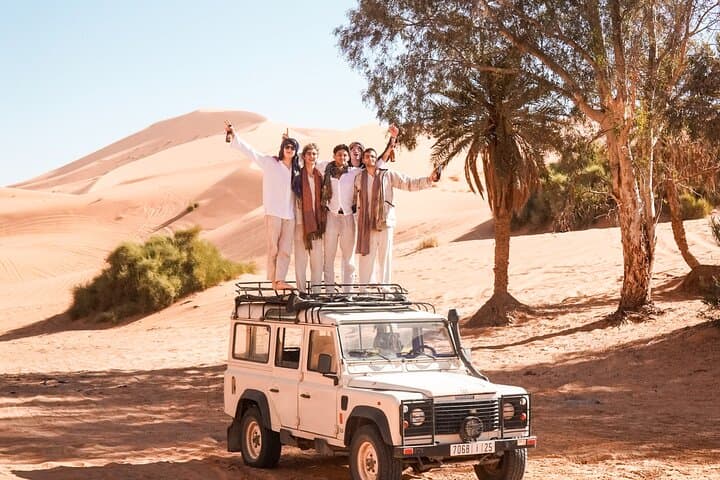
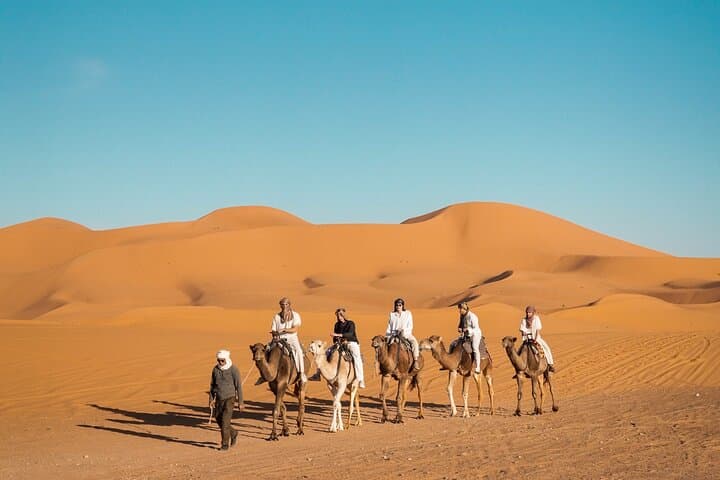
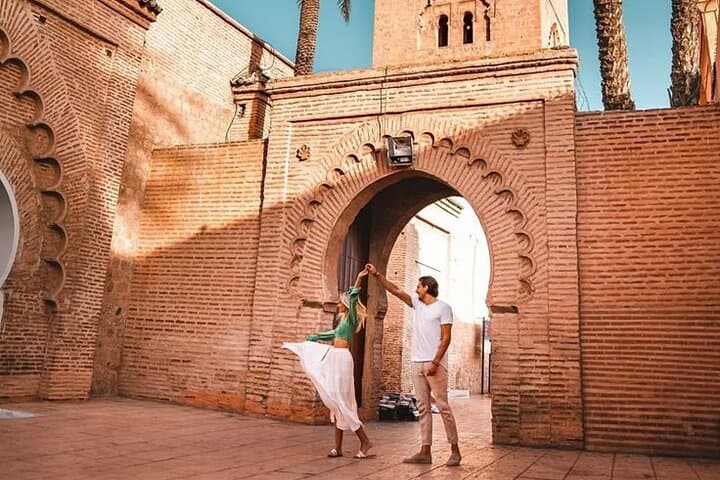
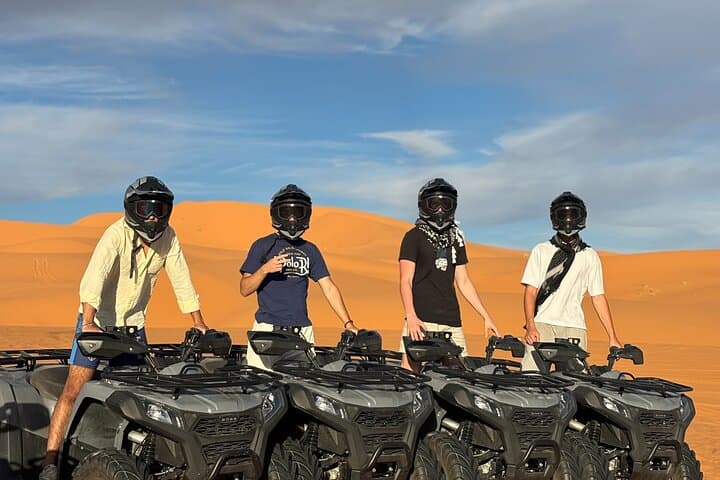
You arrive on the sand as the sun drops behind a wall of gold; Erg Chebbi’s dunes breathe heat and silence, daring you to climb. This five-day loop stitches Atlantic Casablanca to the atlas-high passes, mud-brick kasbahs and the star-lit camps of Merzouga.
You arrive on the sand as the sun drops behind a wall of gold; Erg Chebbi’s dunes breathe heat and silence, daring you to climb. This five-day loop stitches Atlantic Casablanca to the atlas-high passes, mud-brick kasbahs and the star-lit camps of Merzouga.
The route threads history and geology: Marrakech’s medina and souks grew where caravan routes fed spice trade; Ait Benhaddou stands as a UNESCO kasbah with earthen towers that recall ancient caravan logistics. The High Atlas chews at the sky—Tizi n’Tichka rises to about 2,260 m—where folded rock and terraced fields show a younger mountain range’s force. Erg Chebbi itself is aeolian sculpture: crescent dunes, some reaching 100–150 m, formed by relentless Sahara winds.
Culture is immediate—Berber villages, roadside tea rituals, and evenings in camp with Gnawa rhythms. Todra Gorge offers a sudden geology lesson, canyon walls flanking a narrow river and short, scenic walks. Ziz Valley’s palm groves switch the palette from sand to green before cedars and Berber macaques in the Middle Atlas.
Practical edge: plan for long driving days and short hikes—camel treks are gentle but expect uneven sand; camps provide basic to luxe options. Bring layered clothing for temperature swings, sun protection, and sturdy shoes for rocky gorges. Travel spring or fall to avoid extreme heat; travel insurance and water on hand are smart. With preparation, this itinerary delivers a compact cross-section of Moroccan landscapes, culture and desert night skies.