THE ADVENTURE COLLECTIVE® · Independent discovery and booking for outdoor travel

Traverse the High Atlas to Erg Chebbi on a private 5-day luxury tour that pairs UNESCO heritage, dramatic gorges and a night under desert stars. Expect long drives, cultural stops and a sunrise camel ride across golden dunes.
Traverse the High Atlas to Erg Chebbi on a private 5-day luxury tour that pairs UNESCO heritage, dramatic gorges and a night under desert stars. Expect long drives, cultural stops and a sunrise camel ride across golden dunes.
The road leaves Marrakech in a slow ribbon of asphalt, climbs the Tizi-n-Tichka pass (2,260 m) and drops into a landscape that feels engineered by wind and rock. Along the way, high-Atlas villages peer down like watchful hosts; by late afternoon the sun softens the mud-brick walls of Aït Ben Haddou into ochre reliefs.
Verified experiences and guided adventures in the surrounding area.
Operated by RMT Tours · Merzouga, Drâa-Tafilalet
The road leaves Marrakech in a slow ribbon of asphalt, climbs the Tizi-n-Tichka pass (2,260 m) and drops into a landscape that feels engineered by wind and rock. Along the way, high-Atlas villages peer down like watchful hosts; by late afternoon the sun softens the mud-brick walls of Aït Ben Haddou into ochre reliefs.
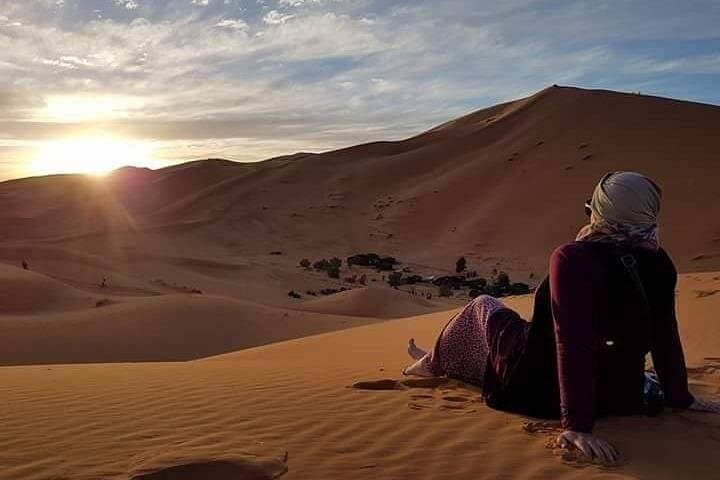
This private five-day itinerary threads history and geology: Aït Ben Haddou’s ksar (a UNESCO site) marks ancient caravan routes, Ouarzazate’s studios echo a modern filmic history, and the Todra Gorge cuts limestone walls up to 300 m high where a river still dares a narrow route. Eastward, Erg Chebbi’s dunes — some rising roughly 100–150 m — are shaped daily by mistral winds and seasonal floods that feed temporary lakes such as Dayet Srji.
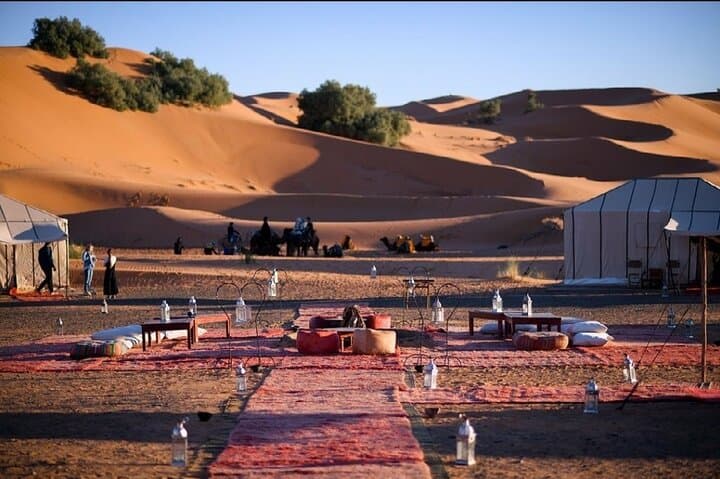
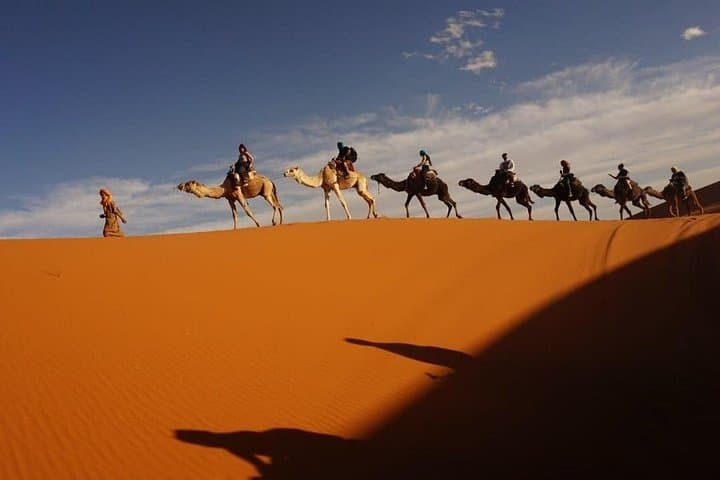
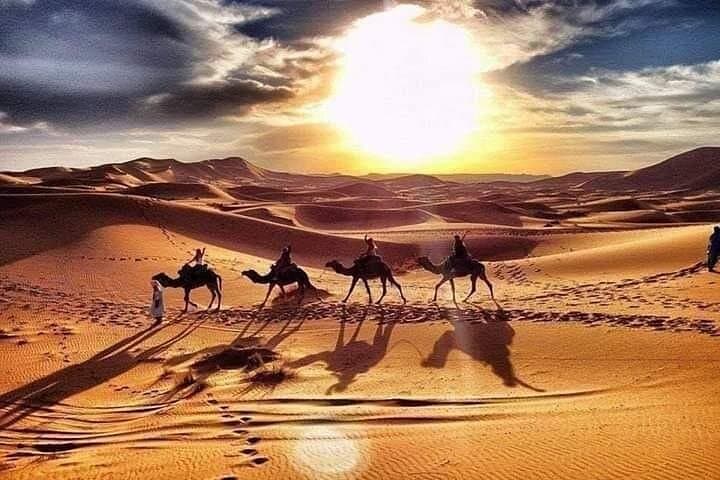
Cultural notes matter: meet Gnawa musicians in Khamlia, watch fossil workshops in Erfoud, and learn about the irrigation canals that support desert oases. The overnight in a luxury desert camp combines simple comforts with a raw sky; camel rides at sunset and sunrise are slow, steady, and best enjoyed with a scarf and steady footing.
Practical guidance: expect long driving stretches (several days with 4–8 hour transfers), mixed terrain from paved mountain passes to sandy tracks, and large temperature swings—hot days and cool nights. Bring layered clothing, strong sun protection, closed-toe shoes for dunes and gorges, and a small bag for the camel trip (larger luggage stays in the vehicle). Cash and modest tipping are customary; respect fragile dune areas and follow camp guidance to minimize impact.
moderate.
5 days.
Good mobility for short walks, able to mount a camel and handle multi-hour vehicle transfers; not technically demanding but requires endurance for travel days.
Daily driving varies—some transfer days are 4–6 hours with stops; the overall route includes longer stretches, so expect multi-hour drives between major stops.
Yes—desert nights can be quite cool, especially in shoulder seasons and winter, so bring a warm layer and insulated sleepwear for camp.
Camel rides require reasonable mobility to mount and dismount; the tour notes accessibility for many travelers but check with the operator about specific needs and alternatives like 4x4 options.
The itinerary indicates four nights’ accommodation (hotels/riads and a luxury desert camp) plus breakfasts and most dinners; confirm specific inclusions and dietary requirements when booking.
The route follows parts of ancient caravan corridors; Aït Ben Haddou’s ksar exemplifies mudbrick fortified villages that controlled trans-Saharan trade routes.
Dune ecosystems and seasonal wetlands are fragile—use minimal-plastic practices, stay on designated tracks and follow camp rules to reduce erosion and water strain.
RMT Tours operates guided outdoor trips and adventures with an emphasis on safety, stewardship, and memorable experiences.
The road leaves Marrakech in a slow ribbon of asphalt, climbs the Tizi-n-Tichka pass (2,260 m) and drops into a landscape that feels engineered by wind and rock. Along the way, high-Atlas villages peer down like watchful hosts; by late afternoon the sun softens the mud-brick walls of Aït Ben Haddou into ochre reliefs.
The road leaves Marrakech in a slow ribbon of asphalt, climbs the Tizi-n-Tichka pass (2,260 m) and drops into a landscape that feels engineered by wind and rock. Along the way, high-Atlas villages peer down like watchful hosts; by late afternoon the sun softens the mud-brick walls of Aït Ben Haddou into ochre reliefs.
This private five-day itinerary threads history and geology: Aït Ben Haddou’s ksar (a UNESCO site) marks ancient caravan routes, Ouarzazate’s studios echo a modern filmic history, and the Todra Gorge cuts limestone walls up to 300 m high where a river still dares a narrow route. Eastward, Erg Chebbi’s dunes — some rising roughly 100–150 m — are shaped daily by mistral winds and seasonal floods that feed temporary lakes such as Dayet Srji.
Cultural notes matter: meet Gnawa musicians in Khamlia, watch fossil workshops in Erfoud, and learn about the irrigation canals that support desert oases. The overnight in a luxury desert camp combines simple comforts with a raw sky; camel rides at sunset and sunrise are slow, steady, and best enjoyed with a scarf and steady footing.
Practical guidance: expect long driving stretches (several days with 4–8 hour transfers), mixed terrain from paved mountain passes to sandy tracks, and large temperature swings—hot days and cool nights. Bring layered clothing, strong sun protection, closed-toe shoes for dunes and gorges, and a small bag for the camel trip (larger luggage stays in the vehicle). Cash and modest tipping are customary; respect fragile dune areas and follow camp guidance to minimize impact.