THE ADVENTURE COLLECTIVE® · Independent discovery and booking for outdoor travel

A compact 5-day loop through Jordan’s highlights—from Amman’s ruins to Petra’s carved façades, the alien sands of Wadi Rum and floating at the Dead Sea. Expect long walking days, desert jeep rides and an overnight Bedouin camp inside the Wadi Rum protected area.
A compact 5-day loop through Jordan’s highlights—from Amman’s ruins to Petra’s carved façades, the alien sands of Wadi Rum and floating at the Dead Sea. Expect long walking days, desert jeep rides and an overnight Bedouin camp inside the Wadi Rum protected area.
Morning light washes over Amman’s limestone houses and you climb aboard for a route that reads like Jordan’s who’s-who of landscapes: Roman columns in Jerash, the mosaic maps of Madaba, the cliff-edge hush of Mount Nebo, the crumbling strength of Shobak, the rose-red canyons of Petra, and the open-stone wilderness of Wadi Rum before the briny calm of the Dead Sea.
Verified experiences and guided adventures in the surrounding area.
Operated by Jordan Private Tours and Travel · Amman, Amman Governorate
Morning light washes over Amman’s limestone houses and you climb aboard for a route that reads like Jordan’s who’s-who of landscapes: Roman columns in Jerash, the mosaic maps of Madaba, the cliff-edge hush of Mount Nebo, the crumbling strength of Shobak, the rose-red canyons of Petra, and the open-stone wilderness of Wadi Rum before the briny calm of the Dead Sea.
This circuit stitches together eras—Roman colonnades, Byzantine mosaics, Crusader fortifications and Nabatean city-planning—and geology that shifts from uplifted limestone hills to softer sandstone carved by millennia of wind and flash floods. Bedouin culture remains visible in Wadi Rum where traditional camps sit well inside the protected reserve, and in Petra you’ll trace routes that traders once used across the Arabian interior.
Expect full walking days: Petra’s main trails (the Siq to the Treasury, the Theater, and the Monastery) can take 6–7 hours on uneven stone and sand. Wadi Rum exploration is best by jeep, with short hikes to viewpoints and desert alcoves. Temperatures vary dramatically—early starts and shade breaks matter.
Practical notes: purchase a Jordan Pass to handle entrance fees and visa waiver, carry 3–4 liters of water per person for hot days, wear grippy walking shoes and sun protection, and plan to move early in Petra and Wadi Rum to avoid peak heat. Local guides and gate fees aren’t included in many packages—budget accordingly. The itinerary rewards stamina with a compact, high-impact survey of Jordan’s natural and historic highlights.
moderate.
5 days.
Suitable for travelers with moderate fitness—able to walk 6–7 hours in a day on uneven terrain and tolerate heat.
It’s not required but strongly recommended; the Jordan Pass waives visa entry fees for many nationalities and includes entry to Petra and other sites, saving time and money.
Yes—the itinerary schedules a full day in Petra; expect 6–7 hours to cover the Siq, Treasury, Theater and hike up to the Monastery at a steady pace.
Yes—this tour sleeps inside the Wadi Rum Protected Area and the camp is located roughly 8 km from the nearest roads and other camps, offering a remote desert experience.
Aqaba beach visits are typically skipped in winter (November–March) due to cooler weather; the tour states Aqaba is omitted in that period.
The route follows ancient trade and pilgrimage corridors: Nabatean Petra controlled incense routes, Romans built Jerash as a provincial powerhouse, and Crusader castles like Shobak mark medieval strategic points.
Wadi Rum is a protected reserve—camping and jeep routes are regulated to reduce impact; visitors should stick to marked areas, avoid littering and support local Bedouin-run camps.
Jordan Private Tours and Travel operates guided outdoor trips and adventures with an emphasis on safety, stewardship, and memorable experiences.
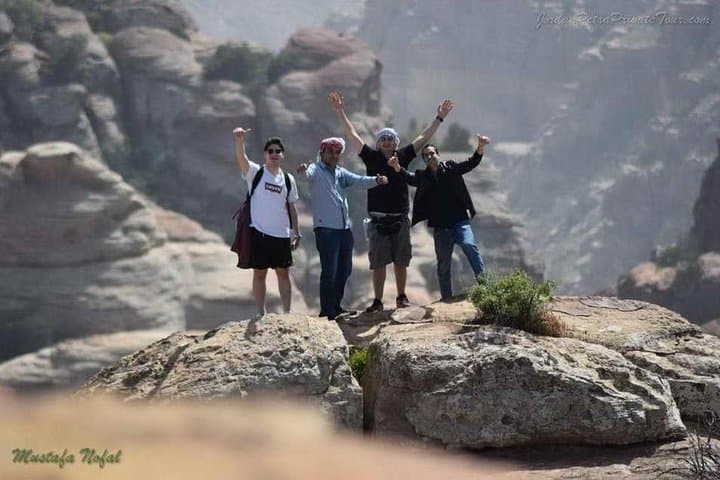
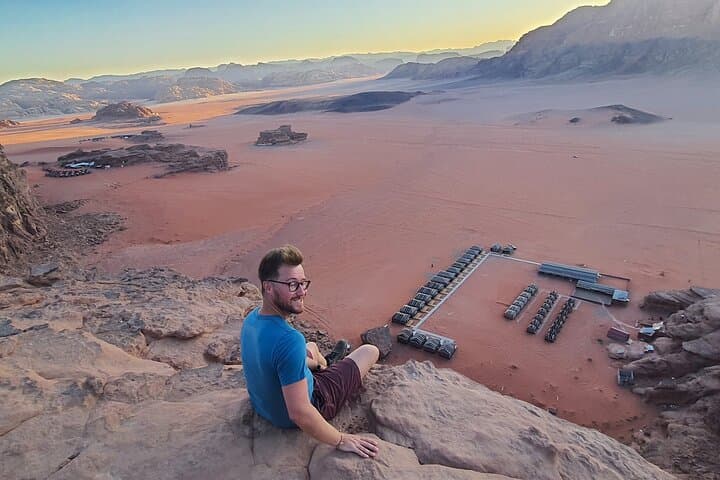
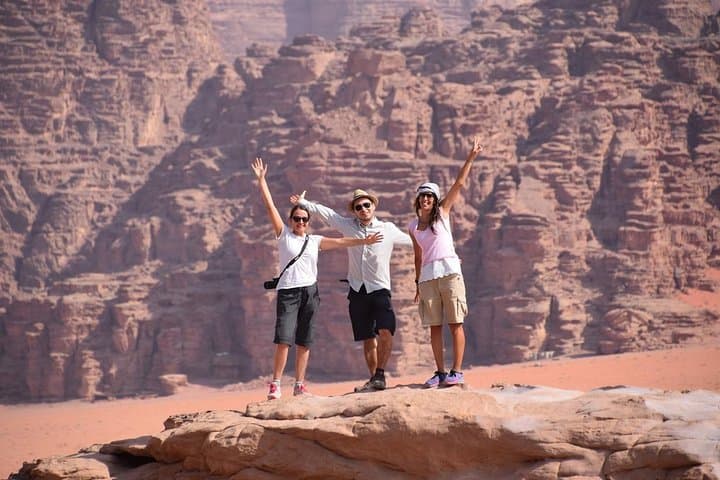
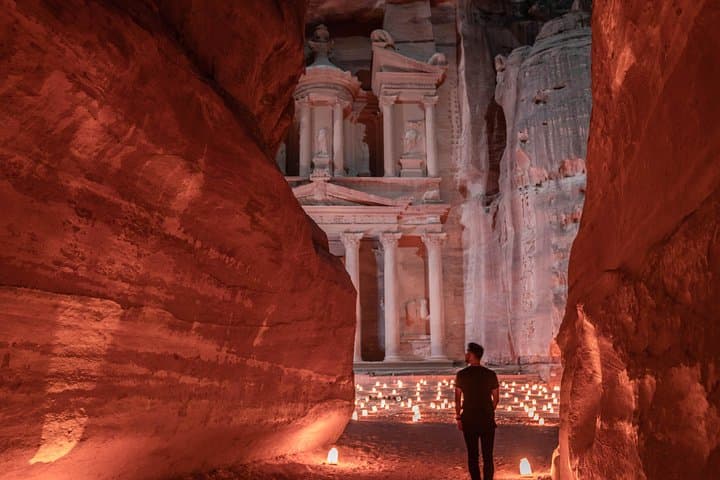
Morning light washes over Amman’s limestone houses and you climb aboard for a route that reads like Jordan’s who’s-who of landscapes: Roman columns in Jerash, the mosaic maps of Madaba, the cliff-edge hush of Mount Nebo, the crumbling strength of Shobak, the rose-red canyons of Petra, and the open-stone wilderness of Wadi Rum before the briny calm of the Dead Sea.
Morning light washes over Amman’s limestone houses and you climb aboard for a route that reads like Jordan’s who’s-who of landscapes: Roman columns in Jerash, the mosaic maps of Madaba, the cliff-edge hush of Mount Nebo, the crumbling strength of Shobak, the rose-red canyons of Petra, and the open-stone wilderness of Wadi Rum before the briny calm of the Dead Sea.
This circuit stitches together eras—Roman colonnades, Byzantine mosaics, Crusader fortifications and Nabatean city-planning—and geology that shifts from uplifted limestone hills to softer sandstone carved by millennia of wind and flash floods. Bedouin culture remains visible in Wadi Rum where traditional camps sit well inside the protected reserve, and in Petra you’ll trace routes that traders once used across the Arabian interior.
Expect full walking days: Petra’s main trails (the Siq to the Treasury, the Theater, and the Monastery) can take 6–7 hours on uneven stone and sand. Wadi Rum exploration is best by jeep, with short hikes to viewpoints and desert alcoves. Temperatures vary dramatically—early starts and shade breaks matter.
Practical notes: purchase a Jordan Pass to handle entrance fees and visa waiver, carry 3–4 liters of water per person for hot days, wear grippy walking shoes and sun protection, and plan to move early in Petra and Wadi Rum to avoid peak heat. Local guides and gate fees aren’t included in many packages—budget accordingly. The itinerary rewards stamina with a compact, high-impact survey of Jordan’s natural and historic highlights.