THE ADVENTURE COLLECTIVE® · Independent discovery and booking for outdoor travel

Trace five days across South Punjab from Multan’s blue-tiled shrines to the wind-swept Cholistan and UNESCO-listed tombs of Uch Sharif. This compact cultural route blends Sufi history, Indus Valley archaeology, and desert adventure with practical tips for timing, dress, and travel.
Trace five days across South Punjab from Multan’s blue-tiled shrines to the wind-swept Cholistan and UNESCO-listed tombs of Uch Sharif. This compact cultural route blends Sufi history, Indus Valley archaeology, and desert adventure with practical tips for timing, dress, and travel.
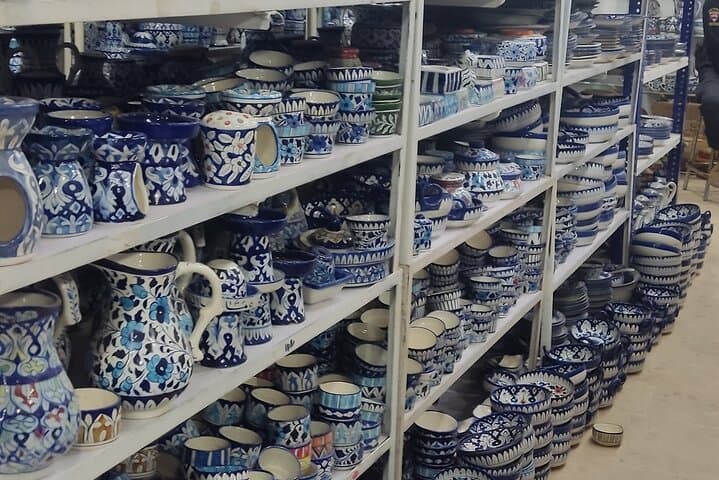
You arrive in Multan before dawn and the city's blue-tiled shrines sit like waiting lanterns, their domes warming in the first light. Markets unfurl around the Ghanta Ghar; spice smoke and the smell of frying halwa pull you into alleys where artisans shape cobalt pottery with steady hands.
Verified experiences and guided adventures in the surrounding area.
Operated by Pakistan Tours N Guides · Multan, Punjab
You arrive in Multan before dawn and the city's blue-tiled shrines sit like waiting lanterns, their domes warming in the first light. Markets unfurl around the Ghanta Ghar; spice smoke and the smell of frying halwa pull you into alleys where artisans shape cobalt pottery with steady hands.
Across five days the itinerary moves from living Sufi shrines to the broad, quiet of the Cholistan. Multan's mausoleums—Shah Rukn-e-Alam and Shah Shamas—declare the city's medieval role as a spiritual crossroads. Bahawalpur follows with its Nawabi palaces: Noor Mahal's Italianate rooms and the museum's archaeological collections that anchor regional stories of trade and empire. Harappa interrupts modern time with 5,000-year-old urban planning—streets, seals and fired bricks that predate recorded history.
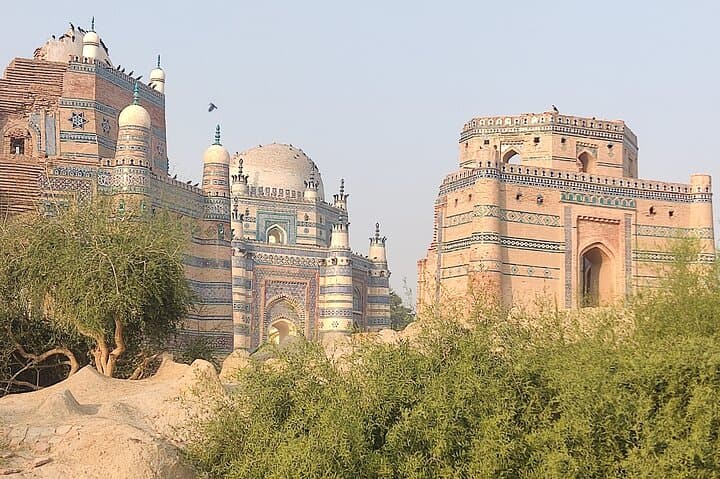
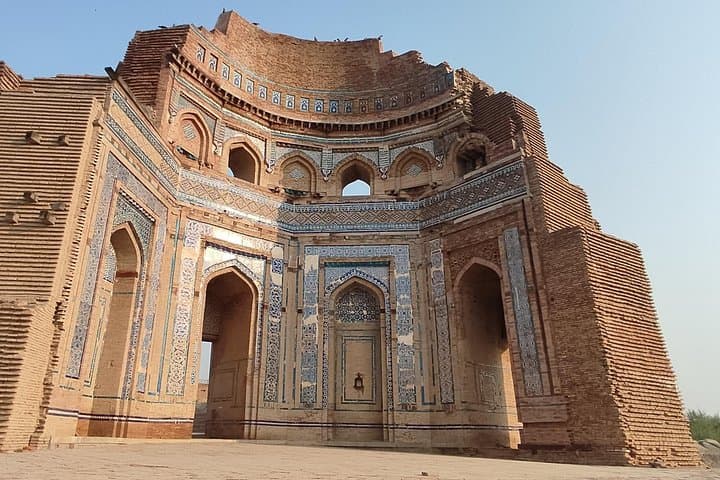
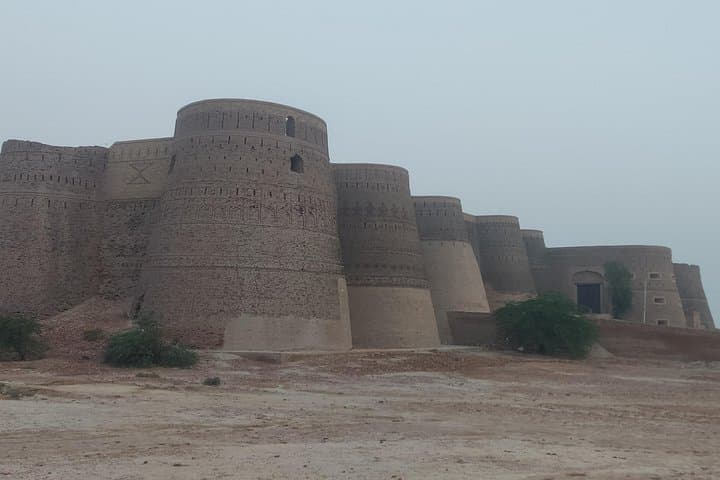
The Cholistan desert opens as a different chapter: a low, sun-dried landscape where Derawar Fort's clay bastions loom and camels trace a slow highway across sand. Uch Sharif offers another tempo—clustered tombs and ornate tile-work that mark centuries of pilgrimage and learning.
Practical guidance: travel in an air-conditioned vehicle between towns, expect light-to-moderate walking on uneven ground, and carry cash for bazaars. Mornings are best for outdoor monuments to avoid midday heat; plan layered clothing for cool desert nights. Be respectful at shrines—cover shoulders and remove shoes where required—and avoid touching archaeological finds. Hydrate frequently, use sun protection, and allow time to linger in markets and pottery studios: the region's texture lives in its crafts, not just its sights.
easy.
5 days.
Suitable for travelers in average health; involves short walks on uneven surfaces and long drives between towns.
No special permits are required for general tourism; entrance fees may apply at museums and some monuments—your guide will handle local tickets when included.
Yes—the itinerary is categorized as physically easy; long vehicle transfers are included, but check age and safety guidance for camel rides and desert activities.
Urdu and Punjabi are widely spoken; English is commonly used in hotels and with licensed guides in tourist areas.
Ask permission before photographing people and follow local signage—some shrines prohibit photos inside mausoleum interiors.
South Punjab blends layers of history: Indus‑Valley urbanism at Harappa, medieval Sufi networks centered in Multan and Uch, and the 19th‑century Abbasi princely state in Bahawalpur.
Archaeological sites are vulnerable to looting and erosion, and desert margins face overgrazing and water stress; stick to trails, don’t collect artifacts, and support local conservation-friendly businesses.
Pakistan Tours N Guides operates guided outdoor trips and adventures with an emphasis on safety, stewardship, and memorable experiences.
You arrive in Multan before dawn and the city's blue-tiled shrines sit like waiting lanterns, their domes warming in the first light. Markets unfurl around the Ghanta Ghar; spice smoke and the smell of frying halwa pull you into alleys where artisans shape cobalt pottery with steady hands.
You arrive in Multan before dawn and the city's blue-tiled shrines sit like waiting lanterns, their domes warming in the first light. Markets unfurl around the Ghanta Ghar; spice smoke and the smell of frying halwa pull you into alleys where artisans shape cobalt pottery with steady hands.
Across five days the itinerary moves from living Sufi shrines to the broad, quiet of the Cholistan. Multan's mausoleums—Shah Rukn-e-Alam and Shah Shamas—declare the city's medieval role as a spiritual crossroads. Bahawalpur follows with its Nawabi palaces: Noor Mahal's Italianate rooms and the museum's archaeological collections that anchor regional stories of trade and empire. Harappa interrupts modern time with 5,000-year-old urban planning—streets, seals and fired bricks that predate recorded history.
The Cholistan desert opens as a different chapter: a low, sun-dried landscape where Derawar Fort's clay bastions loom and camels trace a slow highway across sand. Uch Sharif offers another tempo—clustered tombs and ornate tile-work that mark centuries of pilgrimage and learning.
Practical guidance: travel in an air-conditioned vehicle between towns, expect light-to-moderate walking on uneven ground, and carry cash for bazaars. Mornings are best for outdoor monuments to avoid midday heat; plan layered clothing for cool desert nights. Be respectful at shrines—cover shoulders and remove shoes where required—and avoid touching archaeological finds. Hydrate frequently, use sun protection, and allow time to linger in markets and pottery studios: the region's texture lives in its crafts, not just its sights.