THE ADVENTURE COLLECTIVE® · Independent discovery and booking for outdoor travel

Trade Marrakech’s bustle for five days of high-desert climbs, village trails and rocky descents through the High Atlas. This guided mountain-bike itinerary links lesser-known valleys—Ouirgane, Imlil and Ourika—into a single challenging loop.
Trade Marrakech’s bustle for five days of high-desert climbs, village trails and rocky descents through the High Atlas. This guided mountain-bike itinerary links lesser-known valleys—Ouirgane, Imlil and Ourika—into a single challenging loop.
The first pedal stroke out of Marrakech drops you from heated city streets into the cool, rocky lungs of the High Atlas. Dust thins, cedar-scented wind picks up, and the trail climbs past terraced fields and low stone berber houses; valleys open and close like pages in a travelogue.
Verified experiences and guided adventures in the surrounding area.
Operated by Morocco Tours With Locals · Marrakech, Marrakech-Safi
The first pedal stroke out of Marrakech drops you from heated city streets into the cool, rocky lungs of the High Atlas. Dust thins, cedar-scented wind picks up, and the trail climbs past terraced fields and low stone berber houses; valleys open and close like pages in a travelogue.
This five-day route follows established mule tracks and seasonal ridgelines that have guided Berber shepherds and traders for centuries. Geologically the High Atlas is young and rugged—folded limestone and volcanic intrusions carved by winter snowmelt—so expect sharp scree, compact dirt, and sudden granite outcrops. Cultural life here is village-first: centuries-old kasbahs, irrigation terracing (khettaras), and communal olive groves reveal how people shaped and read the land.
Riding days alternate sustained climbs and technical descents, moving from Takerkoust and Ouirgane up through the Azaden and Imlil valleys, then high past Tachedirt to Tansghart before a final run into the Ourika. Nights are spent at local guesthouses; meals feature tagine, flatbread and strong mint tea.
Practical edge: altitude tops around 2,200–2,500 m on some passes—pace climbs, hydrate deliberately, and expect variable traction on scree slopes. Bring a robust mountain bike with good brakes and a dropper post if you have one, plus spare tubes and a compact tool kit. Start rides in the cool morning, carry layered clothing for fast weather shifts, and book with a guide familiar with village logistics. Follow local etiquette, support village businesses, and stay on designated tracks to limit erosion.
challenging.
5 days (daily rides 4–7 hours).
Riders should have strong endurance, regular hill-climbing experience, and the ability to handle technical descents.
Tours vary—confirm with the operator; many offer either a rental package or allow you to bring your own bike.
You need strong aerobic fitness and off-road experience; riders should be comfortable climbing several hundred meters daily and managing technical descents.
Most riders do fine; mild symptoms can appear above 2,000 m—hydrate, ascend gradually, and communicate any issues to guides.
Expect simple guesthouses or riads in villages with shared facilities; meals are local and hearty, but standards vary by village.
The High Atlas has long been home to Berber communities whose transhumant patterns and stone terraces define local settlement and agriculture.
Trails are vulnerable to erosion and seasonal overuse; stick to marked routes, use local guides, and favor village businesses to support sustainable tourism.
Morocco Tours With Locals operates guided outdoor trips and adventures with an emphasis on safety, stewardship, and memorable experiences.
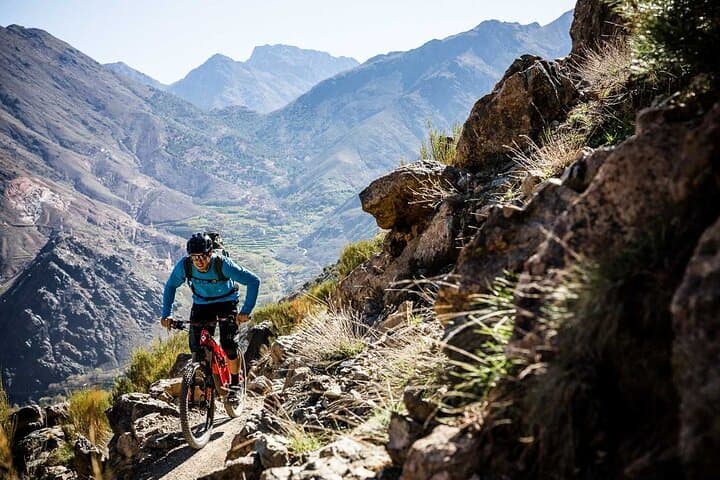
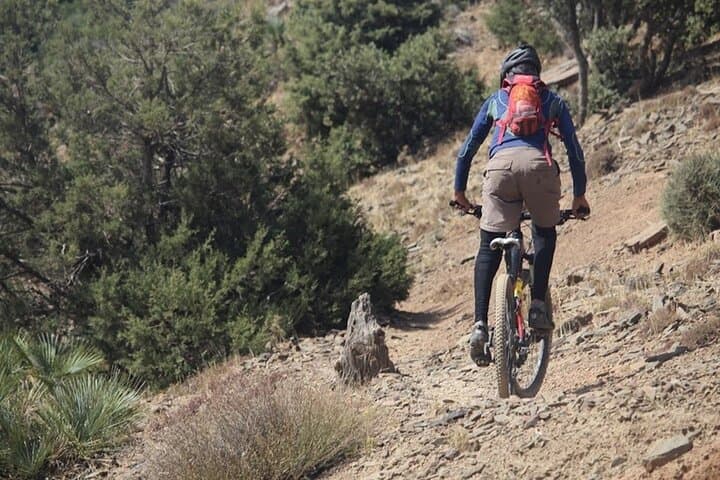
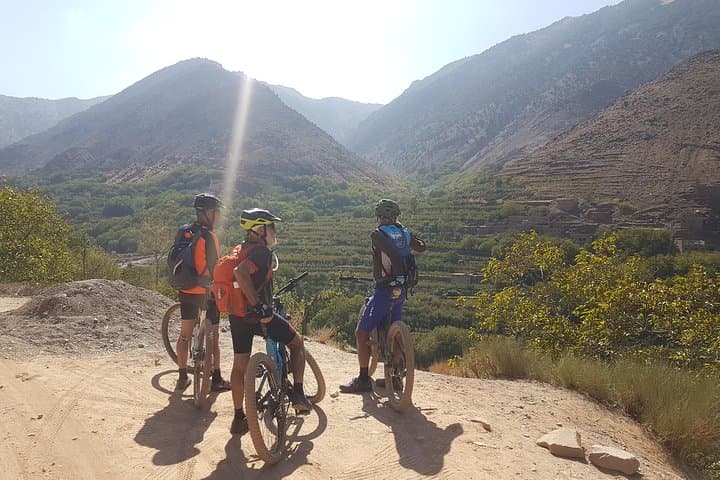
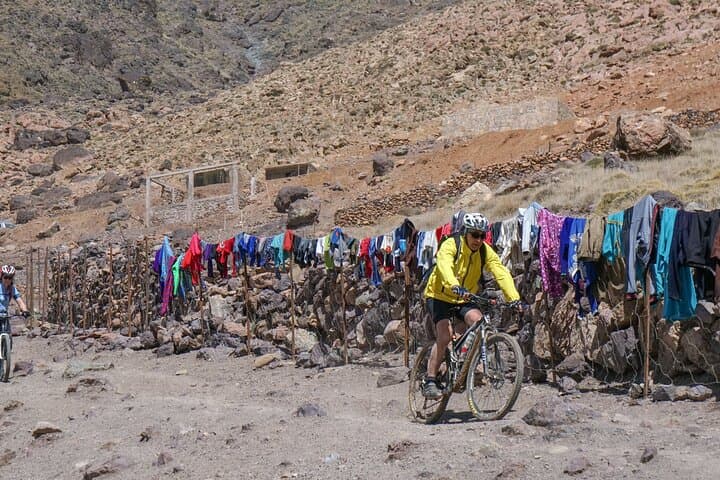
The first pedal stroke out of Marrakech drops you from heated city streets into the cool, rocky lungs of the High Atlas. Dust thins, cedar-scented wind picks up, and the trail climbs past terraced fields and low stone berber houses; valleys open and close like pages in a travelogue.
The first pedal stroke out of Marrakech drops you from heated city streets into the cool, rocky lungs of the High Atlas. Dust thins, cedar-scented wind picks up, and the trail climbs past terraced fields and low stone berber houses; valleys open and close like pages in a travelogue.
This five-day route follows established mule tracks and seasonal ridgelines that have guided Berber shepherds and traders for centuries. Geologically the High Atlas is young and rugged—folded limestone and volcanic intrusions carved by winter snowmelt—so expect sharp scree, compact dirt, and sudden granite outcrops. Cultural life here is village-first: centuries-old kasbahs, irrigation terracing (khettaras), and communal olive groves reveal how people shaped and read the land.
Riding days alternate sustained climbs and technical descents, moving from Takerkoust and Ouirgane up through the Azaden and Imlil valleys, then high past Tachedirt to Tansghart before a final run into the Ourika. Nights are spent at local guesthouses; meals feature tagine, flatbread and strong mint tea.
Practical edge: altitude tops around 2,200–2,500 m on some passes—pace climbs, hydrate deliberately, and expect variable traction on scree slopes. Bring a robust mountain bike with good brakes and a dropper post if you have one, plus spare tubes and a compact tool kit. Start rides in the cool morning, carry layered clothing for fast weather shifts, and book with a guide familiar with village logistics. Follow local etiquette, support village businesses, and stay on designated tracks to limit erosion.