THE ADVENTURE COLLECTIVE® · Independent discovery and booking for outdoor travel

Learn to breathe underwater off Tenerife’s volcanic shore with certified instructors, small groups, and photos included. Ideal for first-time divers seeking a safe, guided introduction to Atlantic reefs.
Learn to breathe underwater off Tenerife’s volcanic shore with certified instructors, small groups, and photos included. Ideal for first-time divers seeking a safe, guided introduction to Atlantic reefs.
You step off the rubber dinghy and the Atlantic immediately feels like a living thing—cool, buoyant, and insistently present. In south Tenerife the waves calm around volcanic outcrops; instructors run a final equipment check, and the reef waits below, dark rock punctured by waving fronds of algae and darting fish.
Verified experiences and guided adventures in the surrounding area.
Operated by Squatina Sub · Los Cristianos, Santa Cruz de Tenerife
You step off the rubber dinghy and the Atlantic immediately feels like a living thing—cool, buoyant, and insistently present. In south Tenerife the waves calm around volcanic outcrops; instructors run a final equipment check, and the reef waits below, dark rock punctured by waving fronds of algae and darting fish.
Tenerife is volcanic: black basalt shelves drop into blue depths carved by lava flows and the steady work of the sea. The island’s maritime history blends Canarian fishing traditions with modern dive culture, and many centers teach conservation alongside skills so visitors leave with respect as well as memories. Expect shallow coastal dives typical for first-timers—often around 6–12 meters—over rocky pinnacles and small reef sectors populated by parrotfish, morays and occasional rays.
This experience is built for beginners. Small groups (up to ten), certified instructors, and full equipment use make entry-level scuba accessible and safe; photos and video are included so you don’t need to carry a camera. The session runs roughly 2–3 hours from check-in to return, with a guided briefing, surface transit and a calm supervised dive.
Practical notes: notify medical issues ahead of time (pregnancy and heart conditions are contraindications), wear swimwear under a shorty or provided wetsuit, and plan for morning slots when visibility is best. Public transport and accessible options are common at southern ports; operators often cancel for bad weather with full refund if you cancel 24 hours prior. Surface intervals and slow ascent are emphasized—currents here can tease and then push you along, so listen to your guide and enjoy the ocean on its terms.
easy.
2–3 hours.
Suitable for most people with basic mobility; you should be comfortable in the water and able to swim short distances.
No — this introductory dive accepts first-time divers and includes a full briefing, equipment use and close instructor supervision.
Intro dives for beginners are typically shallow—around 6–12 meters—kept within no-decompression limits and under direct guide supervision.
Yes — the operator includes photos and videos of your dive so you can keep visual memories without bringing a camera.
Operators often cancel if conditions are unsafe; this activity’s policy offers a full refund if you cancel at least 24 hours before departure and typically cancels for poor weather.
Tenerife’s coastline is shaped by volcanic eruptions; maritime life and modern dive schools have developed alongside historic Canarian fishing communities.
Many local centers emphasize ecosystem-friendly practices and brief guests on reef etiquette; using reef-safe sunscreen and avoiding contact with life helps protect these volcanic reefs.
Squatina Sub operates guided outdoor trips and adventures with an emphasis on safety, stewardship, and memorable experiences.
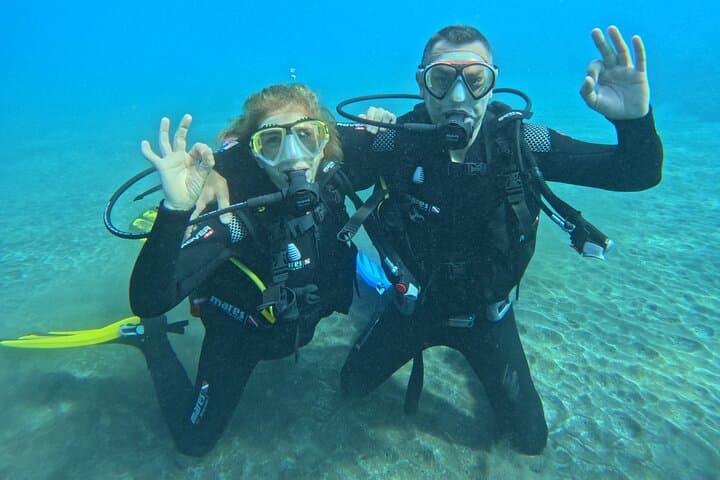
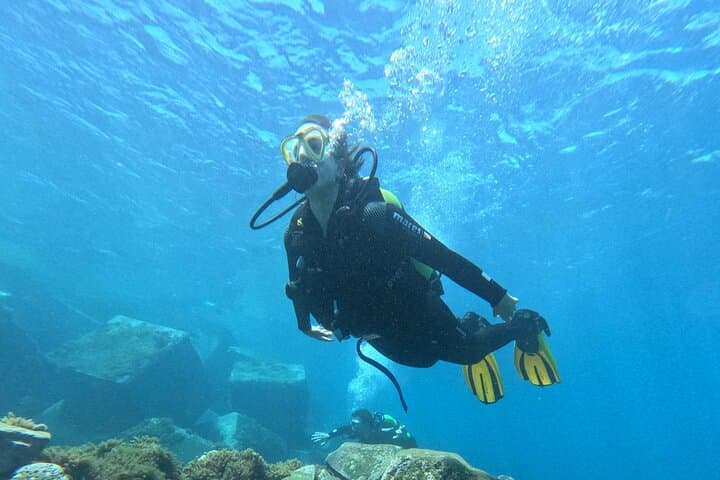
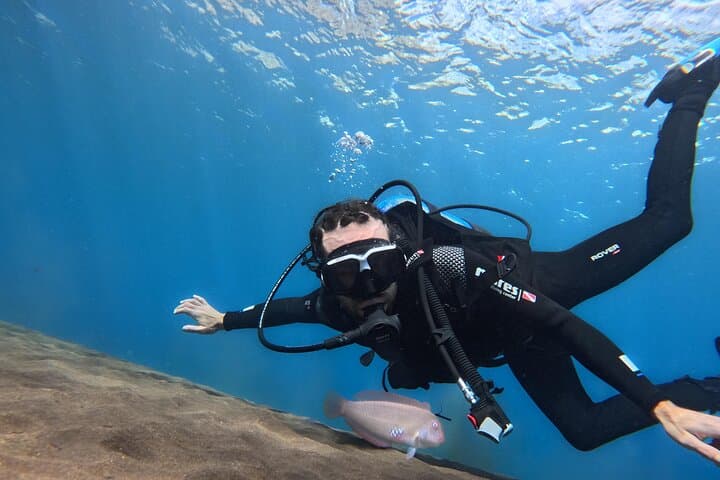
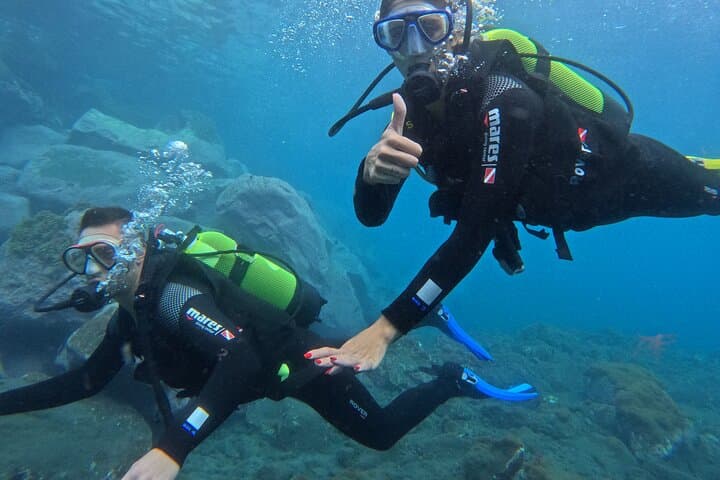
You step off the rubber dinghy and the Atlantic immediately feels like a living thing—cool, buoyant, and insistently present. In south Tenerife the waves calm around volcanic outcrops; instructors run a final equipment check, and the reef waits below, dark rock punctured by waving fronds of algae and darting fish.
You step off the rubber dinghy and the Atlantic immediately feels like a living thing—cool, buoyant, and insistently present. In south Tenerife the waves calm around volcanic outcrops; instructors run a final equipment check, and the reef waits below, dark rock punctured by waving fronds of algae and darting fish.
Tenerife is volcanic: black basalt shelves drop into blue depths carved by lava flows and the steady work of the sea. The island’s maritime history blends Canarian fishing traditions with modern dive culture, and many centers teach conservation alongside skills so visitors leave with respect as well as memories. Expect shallow coastal dives typical for first-timers—often around 6–12 meters—over rocky pinnacles and small reef sectors populated by parrotfish, morays and occasional rays.
This experience is built for beginners. Small groups (up to ten), certified instructors, and full equipment use make entry-level scuba accessible and safe; photos and video are included so you don’t need to carry a camera. The session runs roughly 2–3 hours from check-in to return, with a guided briefing, surface transit and a calm supervised dive.
Practical notes: notify medical issues ahead of time (pregnancy and heart conditions are contraindications), wear swimwear under a shorty or provided wetsuit, and plan for morning slots when visibility is best. Public transport and accessible options are common at southern ports; operators often cancel for bad weather with full refund if you cancel 24 hours prior. Surface intervals and slow ascent are emphasized—currents here can tease and then push you along, so listen to your guide and enjoy the ocean on its terms.