THE ADVENTURE COLLECTIVE® · Independent discovery and booking for outdoor travel

A short, private aurora chase timed around your arrival or departure in Fairbanks. This three-hour, vehicle-based tour targets the closest clear viewing spots with photography help and snacks included.
A short, private aurora chase timed around your arrival or departure in Fairbanks. This three-hour, vehicle-based tour targets the closest clear viewing spots with photography help and snacks included.
A cold windshield parts the night as the van eases off the airport lot and into the Alaskan dark. In Fairbanks the sky is the main stage; on this short, private chase the lights are the performers and the vehicle your brief, mobile theater. The guide skims weather models and magnetometer feeds, steering toward the nearest clear patch under a sky that may flare without warning.
Verified experiences and guided adventures in the surrounding area.
Operated by Wandering Alaska LLC · Fairbanks, Alaska
A cold windshield parts the night as the van eases off the airport lot and into the Alaskan dark. In Fairbanks the sky is the main stage; on this short, private chase the lights are the performers and the vehicle your brief, mobile theater. The guide skims weather models and magnetometer feeds, steering toward the nearest clear patch under a sky that may flare without warning.
Fairbanks sits on the Tanana River floodplain, founded in the gold era of the early 1900s and surrounded by low spruce ridges and tundra flats that provide broad horizons for aurora viewing. The aurora itself is solar wind made visible — charged particles striking the upper atmosphere — and locals pair folk knowledge with NOAA and NASA indices to time their chases.
Culturally, this is Athabascan territory with long winter nights baked into subsistence rhythms; the aurora has featured in oral history and modern tourism alike. Geologically the region is flat river delta and gentle domes, so the chase favors short drives to road-accessible clearings rather than alpine climbs.
Practical guidance: expect three hours total, dress in winter-rated layers, and plan for roadside stops with limited facilities. Photography help and a few edited portraits are commonly provided, but the aurora is never guaranteed — clouds and solar activity decide. The tour is ideal for travelers arriving or departing odd hours, offering a compact, low-footprint chance to see the lights without committing to an overnight expedition. Pack warm footwear, spare batteries, and patience; the sky may reward you in minutes or remain coy until another night.
easy.
3 hours.
Minimal fitness required; mostly seated vehicle travel with short, flat walks at stops
No — the aurora is a natural phenomenon and sightings depend on solar activity and cloud cover; reputable operators monitor real-time indices but cannot guarantee displays.
This mini chase offers pick up from Fairbanks Airport or the train stations within 25 miles; confirm exact pickup during booking.
The tour is rated easy and works for most ages, but ground can be icy and the vehicle is low to the ground; advise the operator of mobility needs so they can accommodate where possible.
Bring charged batteries, a tripod or phone stabilizer, snacks, and a thermos; the guide supplies simple snacks and hot cocoa or instant coffee.
Fairbanks grew from a 1901 gold discovery and lies within traditional Tanana Athabascan lands; long winter nights shaped local livelihoods and storytelling about the northern lights.
Minimize light pollution by using dim, red lights when photographing; respect private land and avoid off-road driving—operators stick to public pullouts to reduce habitat disturbance.
Wandering Alaska LLC operates guided outdoor trips and adventures with an emphasis on safety, stewardship, and memorable experiences.
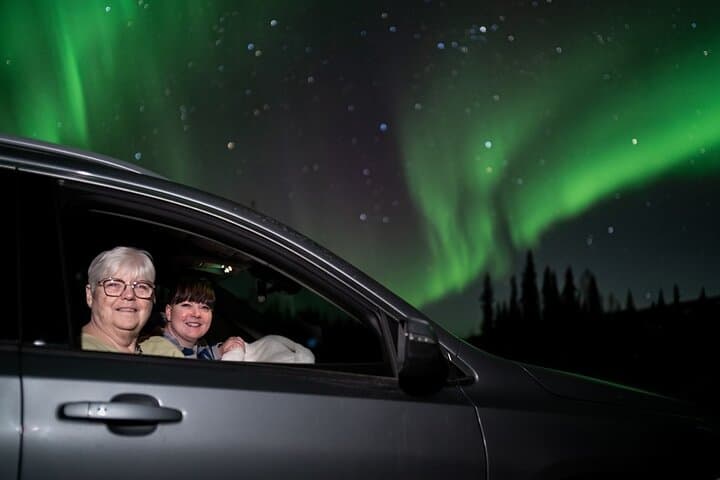
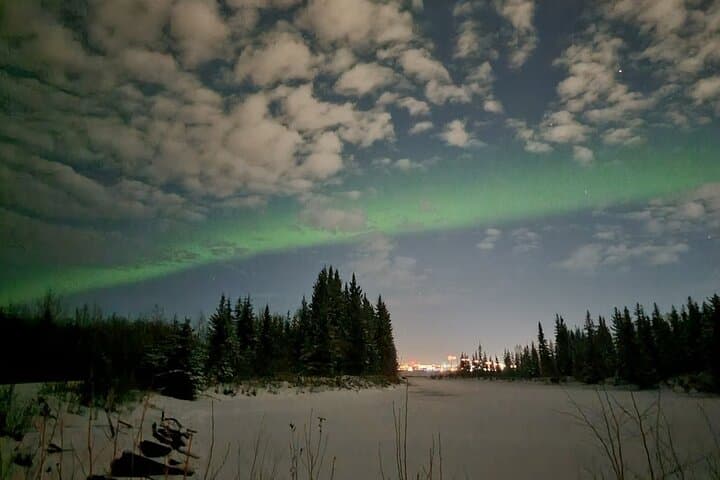
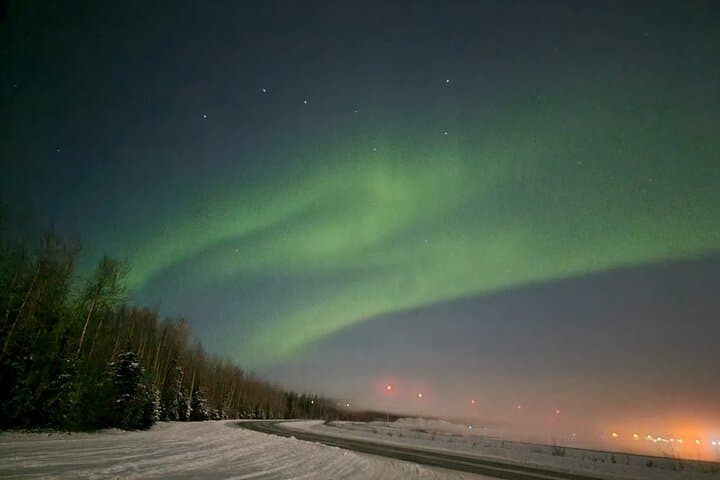
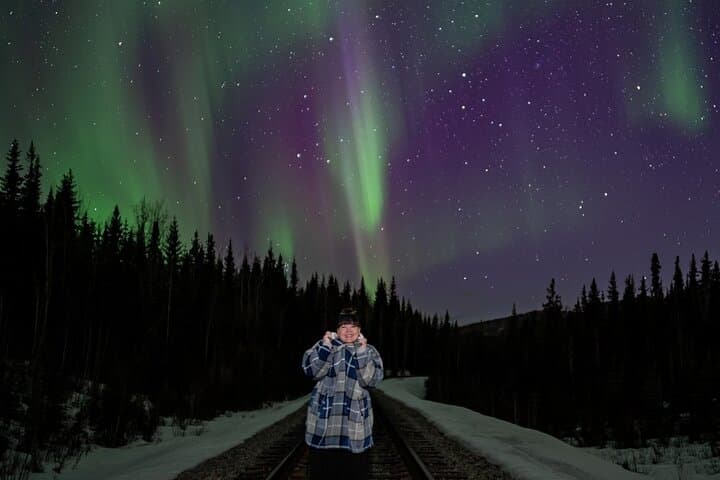
A cold windshield parts the night as the van eases off the airport lot and into the Alaskan dark. In Fairbanks the sky is the main stage; on this short, private chase the lights are the performers and the vehicle your brief, mobile theater. The guide skims weather models and magnetometer feeds, steering toward the nearest clear patch under a sky that may flare without warning.
A cold windshield parts the night as the van eases off the airport lot and into the Alaskan dark. In Fairbanks the sky is the main stage; on this short, private chase the lights are the performers and the vehicle your brief, mobile theater. The guide skims weather models and magnetometer feeds, steering toward the nearest clear patch under a sky that may flare without warning.
Fairbanks sits on the Tanana River floodplain, founded in the gold era of the early 1900s and surrounded by low spruce ridges and tundra flats that provide broad horizons for aurora viewing. The aurora itself is solar wind made visible — charged particles striking the upper atmosphere — and locals pair folk knowledge with NOAA and NASA indices to time their chases.
Culturally, this is Athabascan territory with long winter nights baked into subsistence rhythms; the aurora has featured in oral history and modern tourism alike. Geologically the region is flat river delta and gentle domes, so the chase favors short drives to road-accessible clearings rather than alpine climbs.
Practical guidance: expect three hours total, dress in winter-rated layers, and plan for roadside stops with limited facilities. Photography help and a few edited portraits are commonly provided, but the aurora is never guaranteed — clouds and solar activity decide. The tour is ideal for travelers arriving or departing odd hours, offering a compact, low-footprint chance to see the lights without committing to an overnight expedition. Pack warm footwear, spare batteries, and patience; the sky may reward you in minutes or remain coy until another night.