THE ADVENTURE COLLECTIVE® · Independent discovery and booking for outdoor travel

Spend five hours moving from colonial plazas to Inca fortresses on this concise Cusco introduction. Expect sharp stonework, market energy, high-altitude adjustments, and a practical overview of the city’s top archaeological sites.
Spend five hours moving from colonial plazas to Inca fortresses on this concise Cusco introduction. Expect sharp stonework, market energy, high-altitude adjustments, and a practical overview of the city’s top archaeological sites.
You step onto the Plaza de Armas and the city exhales centuries: church bells cut through thin air while stone walls hold the memory of an empire. The five-hour City Tour Cusco threads through narrow cobbled streets, across Inca masonry that refuses to bow to time, and up to Sacsayhuamán where ramparts command the valley like a watchful guardian.
Verified experiences and guided adventures in the surrounding area.
Operated by Grand America · Cusco, Cusco
You step onto the Plaza de Armas and the city exhales centuries: church bells cut through thin air while stone walls hold the memory of an empire. The five-hour City Tour Cusco threads through narrow cobbled streets, across Inca masonry that refuses to bow to time, and up to Sacsayhuamán where ramparts command the valley like a watchful guardian.
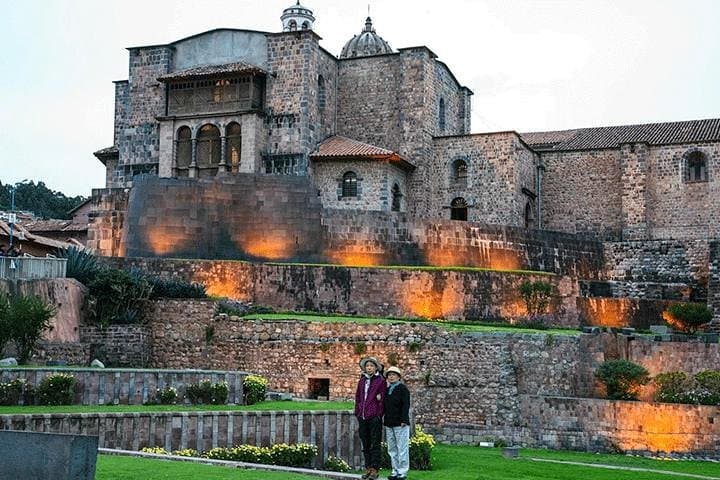
Cusco was the administrative heart of the Inca state and later a focal point of Spanish colonial power; that layered history is visible in Qorikancha’s precise stonework shadowed by a baroque convent, and in the cathedral’s Cusqueñan school paintings that blend Andean iconography with Catholic subject matter. Geologically, the city sits on uplifted Andean plates and volcanic sediments—expect steep streets and terraces that follow natural contours.
Culturally, local markets hum with chatter in Quechua and Spanish; vendors sell roasted corn and ornate textiles embroidered with regional patterns. Guides often explain the Boleto Turístico system that bundles access to several sites—useful if you plan to visit interiors.
Practically, the tour lasts about five hours with short walks and several stops; altitude (3,400 m / 11,150 ft) is the main physical factor—move slowly, drink water, and avoid heavy exertion on the first day. Comfortable walking shoes, layered clothing for sun and sudden wind, sunscreen, and a light rain layer cover most conditions. The loop starts and ends at Plaza de Armas, includes transport in an air-conditioned minivan and a professional guide, and is suitable as an introductory orientation to Cusco before deeper exploration.
easy.
5 hours.
Suitable for most fitness levels but requires basic mobility and the ability to handle short uphill walks at high altitude.
Yes—a current valid passport is required on the day of travel and for some site admissions.
Possibly—Cusco sits around 3,400 m (11,150 ft); allow time to acclimatize, hydrate, avoid alcohol, and consider coca tea or consultation with a physician if concerned.
The tour includes transport and guide; some sites are covered while several require the Boleto Turístico or separate tickets—confirm which admissions are included when booking.
Transportation and many central sites are wheelchair accessible, but cobblestone streets and some archaeological terraces can be uneven—notify the operator about accessibility needs.
Cusco served as the capital of the Inca Empire and later became a colonial administrative center; many buildings combine Inca foundations with Spanish colonial structures.
Tourism pressure and erosion risk at archaeological sites require visitors to stay on marked paths and respect boundaries; support local guides and small vendors to keep benefits local.
Grand America operates guided outdoor trips and adventures with an emphasis on safety, stewardship, and memorable experiences.
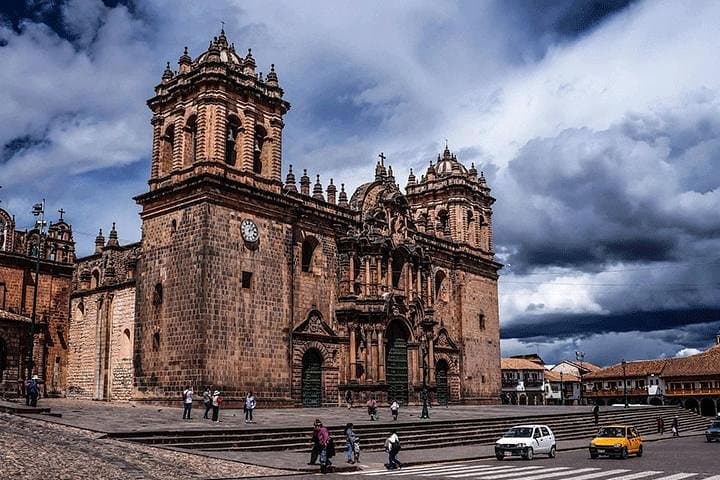
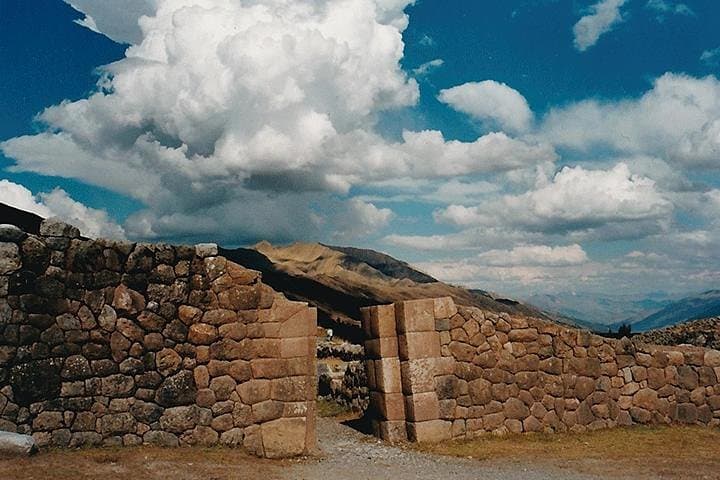
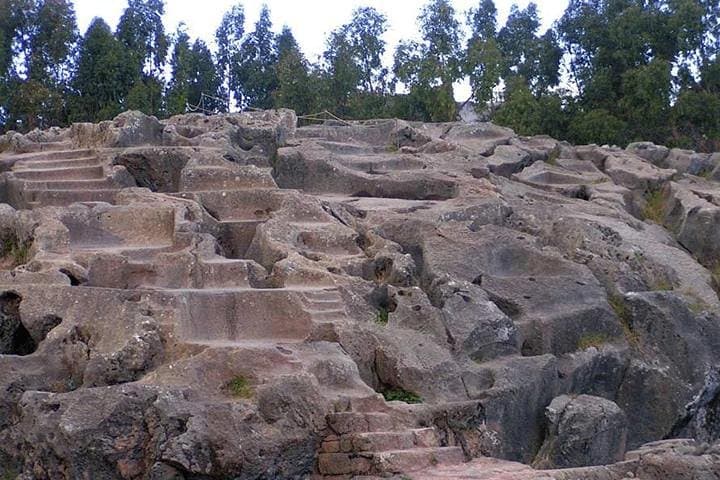
You step onto the Plaza de Armas and the city exhales centuries: church bells cut through thin air while stone walls hold the memory of an empire. The five-hour City Tour Cusco threads through narrow cobbled streets, across Inca masonry that refuses to bow to time, and up to Sacsayhuamán where ramparts command the valley like a watchful guardian.
You step onto the Plaza de Armas and the city exhales centuries: church bells cut through thin air while stone walls hold the memory of an empire. The five-hour City Tour Cusco threads through narrow cobbled streets, across Inca masonry that refuses to bow to time, and up to Sacsayhuamán where ramparts command the valley like a watchful guardian.
Cusco was the administrative heart of the Inca state and later a focal point of Spanish colonial power; that layered history is visible in Qorikancha’s precise stonework shadowed by a baroque convent, and in the cathedral’s Cusqueñan school paintings that blend Andean iconography with Catholic subject matter. Geologically, the city sits on uplifted Andean plates and volcanic sediments—expect steep streets and terraces that follow natural contours.
Culturally, local markets hum with chatter in Quechua and Spanish; vendors sell roasted corn and ornate textiles embroidered with regional patterns. Guides often explain the Boleto Turístico system that bundles access to several sites—useful if you plan to visit interiors.
Practically, the tour lasts about five hours with short walks and several stops; altitude (3,400 m / 11,150 ft) is the main physical factor—move slowly, drink water, and avoid heavy exertion on the first day. Comfortable walking shoes, layered clothing for sun and sudden wind, sunscreen, and a light rain layer cover most conditions. The loop starts and ends at Plaza de Armas, includes transport in an air-conditioned minivan and a professional guide, and is suitable as an introductory orientation to Cusco before deeper exploration.