THE ADVENTURE COLLECTIVE® · Independent discovery and booking for outdoor travel

Spend a focused four hours learning knots, belays and your first outdoor climbs on Castle Rock’s textured sandstone. Small groups, professional guides, and short approaches make this the Bay Area’s easiest real-world gateway from gym to crag.
Spend a focused four hours learning knots, belays and your first outdoor climbs on Castle Rock’s textured sandstone. Small groups, professional guides, and short approaches make this the Bay Area’s easiest real-world gateway from gym to crag.
The morning air in the Santa Cruz Mountains bites with a cool clarity as a small group gathers at the top of Castle Rock State Park’s parking lot. Guides check harnesses and double-check knots while the ridge opens beneath a silvered sky — pine-scented and wide. Within minutes the sound of rubber on stone replaces city noise: a rhythm of shoes finding holds, ropes whispering through belays, and instructors calling concise commands that turn strangers into a climbing team.
Verified experiences and guided adventures in the surrounding area.
Operated by Adventure Out LLC · Los Gatos, CA
The morning air in the Santa Cruz Mountains bites with a cool clarity as a small group gathers at the top of Castle Rock State Park’s parking lot. Guides check harnesses and double-check knots while the ridge opens beneath a silvered sky — pine-scented and wide. Within minutes the sound of rubber on stone replaces city noise: a rhythm of shoes finding holds, ropes whispering through belays, and instructors calling concise commands that turn strangers into a climbing team.
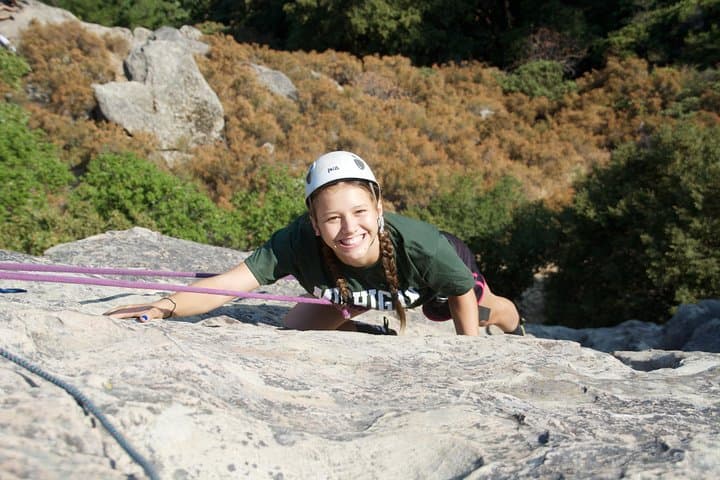
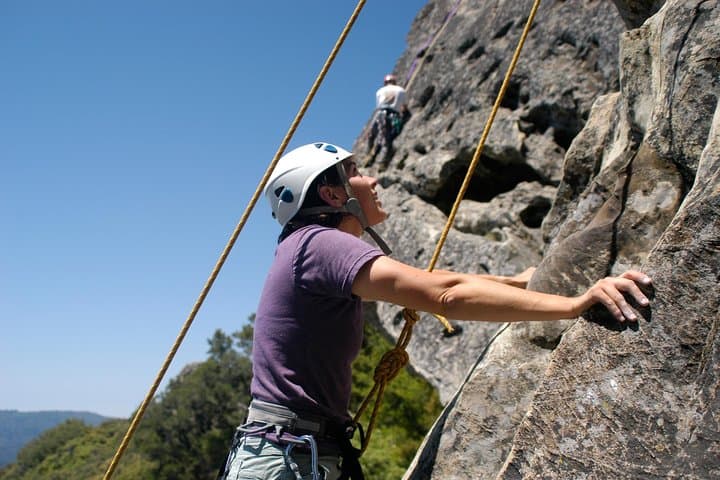
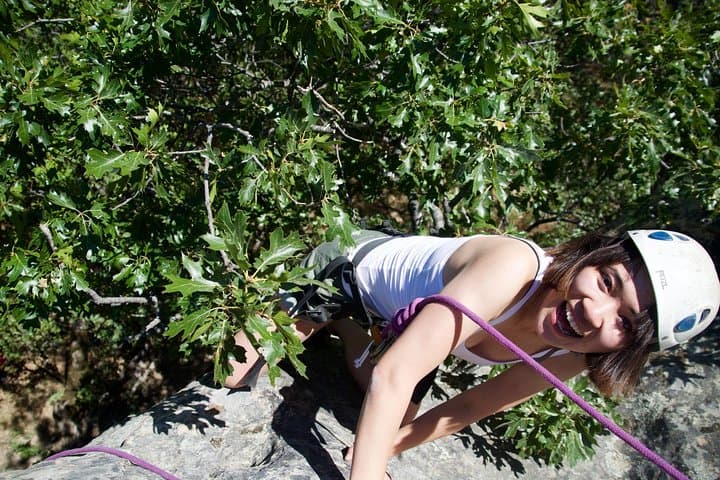
Castle Rock’s slabby faces and short, featured routes give new climbers the textbook first day: low-angle top ropes, textured sandstone, and pockets that feel made for beginner fingers. Geologically, the park sits on uplifted sedimentary rock from an ancient coastal environment; the result is conglomerate and sandstone with rounded boulders and clean edges — forgiving for first lead steps but real enough to teach respect for friction, foot placement, and body position.
The human history here is quiet but layered. Ohlone people traversed these ridges long before summits were measured in grade systems, and 19th–20th century logging roads later opened the area to recreation. Today Castle Rock is a beloved training ground for Bay Area climbers — a place where guides translate technical rope work into practical skills while pointing out native madrone and Douglas fir between climbs.
Practicality rules the day: the clinic is four hours long, capped at small groups so instructors can coach each climber through tie-in knots, basic commands, and belaying technique before moving to the rock. Expect short approaches — usually five to twenty minutes over variable dirt and rock — and single-pitch routes from roughly 20 to 50 feet. The aim is tangible: get you up your first outdoor climbs with safe, repeated practice under guide supervision.
What to bring and how to prepare matters. Wear sturdy, broken-in shoes (climbing shoes can be rented; walk-in shoes for the approach), layer for a cool forest microclimate, and pack water and a light lunch—four hours of climbing is deceptively tiring. Hydration and electrolytes keep focus sharp; your fingers and forearms will thank you.
Logistics are straightforward but firm: book online and immediately confirm by email to secure your spot; arrival is at the ranger office area of the main parking lot. Guides provide harnesses, helmets, and ropes; gratuity is not included. Physically, this clinic asks for a moderate fitness level — stair-climbing, scrambling, and repeated pulling on arms and core — but no prior technical skills. For city-dwellers seeking a first real-step into outdoor rock, these four hours at Castle Rock stitch practical instruction to the honest thrill of moving on stone.
moderate.
4 hours.
Moderate — ability to hike short uphill approaches, climb using arms and core for repeated efforts, and tolerate heights.
No — the clinic is designed for first-time outdoor climbers and those with gym experience who want to move outside.
Guides provide harnesses, helmets, ropes and hardware; bring personal items like shoes, water, and sun protection.
It’s moderate: expect repeated short climbs that tax forearms, plus brief uphill approaches and standing on ledges.
Participants 13 and older can attend alone; ages 9–12 must be accompanied by an adult; group size is limited (typically up to 5) for individualized coaching.
Meet at the Castle Rock State Park main parking lot in front of the ranger office; there is parking but arrive early on busy days.
The operator cancels in unsafe conditions; cancel at least 24 hours in advance for a full refund under the policy.
The area sits on lands historically used by Ohlone people; later logging and 20th-century recreation shaped the present trail network.
Castle Rock is managed for low-impact recreation—stay on trails, pack out all trash, and avoid chalking routes to protect vegetation and rock patina.
Adventure Out LLC operates guided outdoor trips and adventures with an emphasis on safety, stewardship, and memorable experiences.
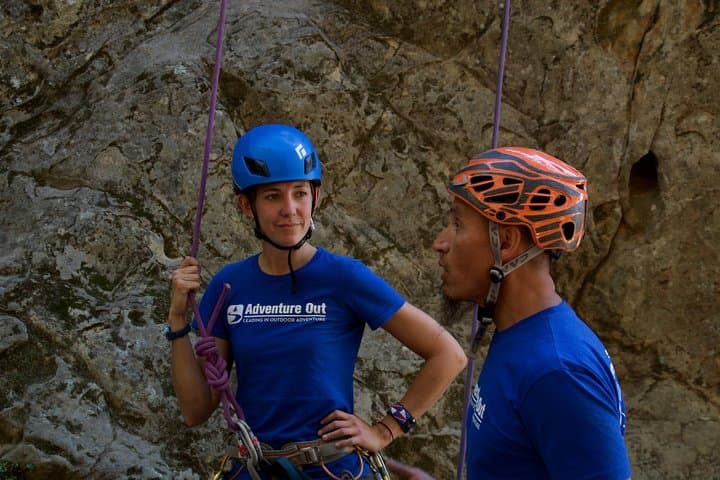
The morning air in the Santa Cruz Mountains bites with a cool clarity as a small group gathers at the top of Castle Rock State Park’s parking lot. Guides check harnesses and double-check knots while the ridge opens beneath a silvered sky — pine-scented and wide. Within minutes the sound of rubber on stone replaces city noise: a rhythm of shoes finding holds, ropes whispering through belays, and instructors calling concise commands that turn strangers into a climbing team.
The morning air in the Santa Cruz Mountains bites with a cool clarity as a small group gathers at the top of Castle Rock State Park’s parking lot. Guides check harnesses and double-check knots while the ridge opens beneath a silvered sky — pine-scented and wide. Within minutes the sound of rubber on stone replaces city noise: a rhythm of shoes finding holds, ropes whispering through belays, and instructors calling concise commands that turn strangers into a climbing team.
Castle Rock’s slabby faces and short, featured routes give new climbers the textbook first day: low-angle top ropes, textured sandstone, and pockets that feel made for beginner fingers. Geologically, the park sits on uplifted sedimentary rock from an ancient coastal environment; the result is conglomerate and sandstone with rounded boulders and clean edges — forgiving for first lead steps but real enough to teach respect for friction, foot placement, and body position.
The human history here is quiet but layered. Ohlone people traversed these ridges long before summits were measured in grade systems, and 19th–20th century logging roads later opened the area to recreation. Today Castle Rock is a beloved training ground for Bay Area climbers — a place where guides translate technical rope work into practical skills while pointing out native madrone and Douglas fir between climbs.
Practicality rules the day: the clinic is four hours long, capped at small groups so instructors can coach each climber through tie-in knots, basic commands, and belaying technique before moving to the rock. Expect short approaches — usually five to twenty minutes over variable dirt and rock — and single-pitch routes from roughly 20 to 50 feet. The aim is tangible: get you up your first outdoor climbs with safe, repeated practice under guide supervision.
What to bring and how to prepare matters. Wear sturdy, broken-in shoes (climbing shoes can be rented; walk-in shoes for the approach), layer for a cool forest microclimate, and pack water and a light lunch—four hours of climbing is deceptively tiring. Hydration and electrolytes keep focus sharp; your fingers and forearms will thank you.
Logistics are straightforward but firm: book online and immediately confirm by email to secure your spot; arrival is at the ranger office area of the main parking lot. Guides provide harnesses, helmets, and ropes; gratuity is not included. Physically, this clinic asks for a moderate fitness level — stair-climbing, scrambling, and repeated pulling on arms and core — but no prior technical skills. For city-dwellers seeking a first real-step into outdoor rock, these four hours at Castle Rock stitch practical instruction to the honest thrill of moving on stone.