THE ADVENTURE COLLECTIVE® · Independent discovery and booking for outdoor travel

Visit Baku’s two famed flame sites—Suraxani Ateshgah and Yanardag—to see human ritual and raw geology meet. This 3–4 hour private tour combines short walks, rich history, and the uncommon sight of ground‑fed fire.
Visit Baku’s two famed flame sites—Suraxani Ateshgah and Yanardag—to see human ritual and raw geology meet. This 3–4 hour private tour combines short walks, rich history, and the uncommon sight of ground‑fed fire.
A low wind carries the smell of warm minerals as you step onto the compacted gravel outside Suraxani—flames licking from stone altars and a courtyard built for pilgrims. The Fire Temple (Ateshgah) sits like a deliberate interruption on the Absheron plain: a square, multi‑cell complex where natural gas once met human ritual. A short drive east takes you to Yanardag (Fire Mountain), where a steady orange seam burns along the hillside, the ground itself daring you to step closer.
Verified experiences and guided adventures in the surrounding area.
Operated by Private Tours Baku · Baku, Baku
A low wind carries the smell of warm minerals as you step onto the compacted gravel outside Suraxani—flames licking from stone altars and a courtyard built for pilgrims. The Fire Temple (Ateshgah) sits like a deliberate interruption on the Absheron plain: a square, multi‑cell complex where natural gas once met human ritual. A short drive east takes you to Yanardag (Fire Mountain), where a steady orange seam burns along the hillside, the ground itself daring you to step closer.
These sites trace a long, layered history. Ateshgah’s visible structure dates to the 17th–18th centuries and reflects a blend of Zoroastrian and Hindu pilgrim architecture; Yanardag is a surface gas seep that local peoples revered long before cartographers wrote it down. Geologically, both features owe their existence to the Absheron Peninsula’s shallow hydrocarbon beds—the same source that lit trade routes and shaped local culture.
Expect easy walking: combined site trails total roughly 1–2 km with under 100 m cumulative elevation gain. Surfaces vary from paved courtyard stones to short, rocky approaches and a raised viewing platform at Yanardag. Light protective footwear, sun protection, and a camera are practical; evenings sharpen the glow of the flames. Guides typically include pickup and drop‑off from Baku, and the whole excursion lasts about 3–4 hours.
Beyond the spectacle, move deliberately: follow posted paths, avoid touching vents, and respect on‑site inscriptions. The flames are enduring but fragile to human impact—visit with curiosity and leave no trace.
easy.
3–4 hours.
Suitable for most fitness levels; requires short, easy walks and standing at viewpoints.
Tours run about 3–4 hours and typically include hotel pickup, guided visits to Ateshgah and Yanardag, and drop‑off in Baku; admissions are usually not included in the base price.
Yes—both sites are natural gas seeps or seeps hardened by historical use; viewing is safe from designated paths but avoid touching vents or getting too close to active flames.
The tour is generally suitable for families and people with limited mobility, though some short uneven sections and steps exist at both sites—check with the operator about vehicle access and assistance.
Yes, both Ateshgah and Yanardag are open to independent visitors with public transport and taxis available, but a guided tour adds context and convenient transfers from central Baku.
Ateshgah records religious use by Zoroastrian and Hindu worshippers in the 17th–18th centuries; Yanardag’s steady burn was a pre‑Islamic sacred flame and later a landmark for traders.
Both sites sit over hydrocarbon-rich ground; visitors should stay on marked paths and avoid disturbing vents to minimize erosion and preserve these fragile features.
Private Tours Baku operates guided outdoor trips and adventures with an emphasis on safety, stewardship, and memorable experiences.
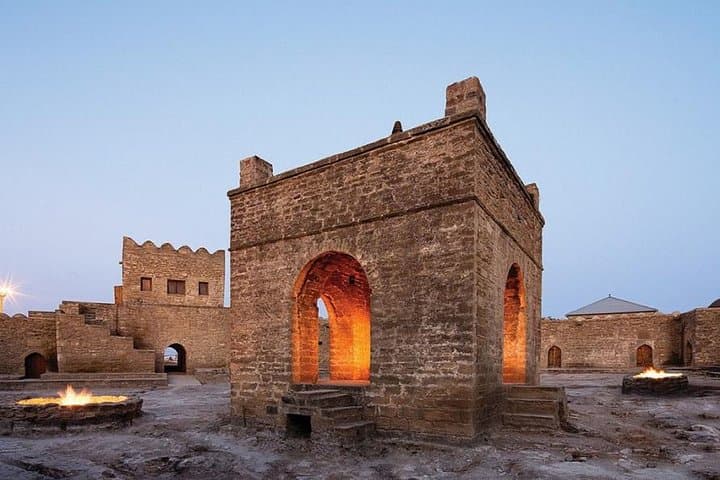
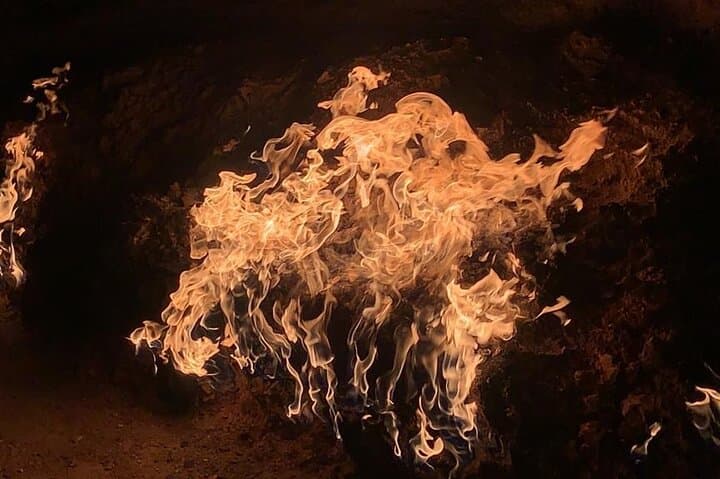
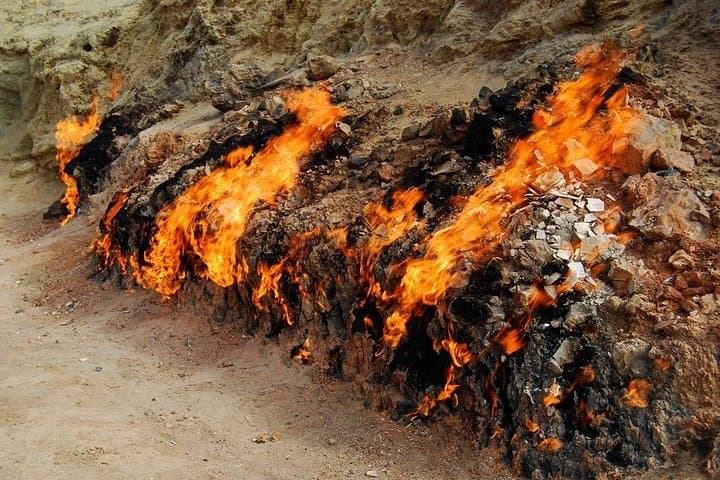
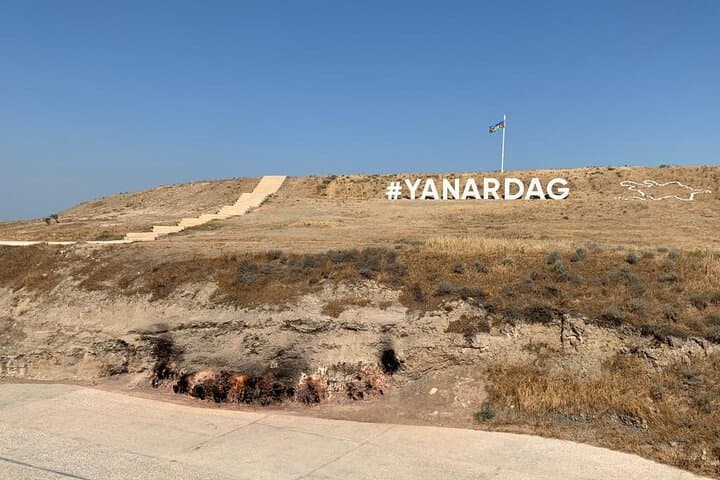
A low wind carries the smell of warm minerals as you step onto the compacted gravel outside Suraxani—flames licking from stone altars and a courtyard built for pilgrims. The Fire Temple (Ateshgah) sits like a deliberate interruption on the Absheron plain: a square, multi‑cell complex where natural gas once met human ritual. A short drive east takes you to Yanardag (Fire Mountain), where a steady orange seam burns along the hillside, the ground itself daring you to step closer.
A low wind carries the smell of warm minerals as you step onto the compacted gravel outside Suraxani—flames licking from stone altars and a courtyard built for pilgrims. The Fire Temple (Ateshgah) sits like a deliberate interruption on the Absheron plain: a square, multi‑cell complex where natural gas once met human ritual. A short drive east takes you to Yanardag (Fire Mountain), where a steady orange seam burns along the hillside, the ground itself daring you to step closer.
These sites trace a long, layered history. Ateshgah’s visible structure dates to the 17th–18th centuries and reflects a blend of Zoroastrian and Hindu pilgrim architecture; Yanardag is a surface gas seep that local peoples revered long before cartographers wrote it down. Geologically, both features owe their existence to the Absheron Peninsula’s shallow hydrocarbon beds—the same source that lit trade routes and shaped local culture.
Expect easy walking: combined site trails total roughly 1–2 km with under 100 m cumulative elevation gain. Surfaces vary from paved courtyard stones to short, rocky approaches and a raised viewing platform at Yanardag. Light protective footwear, sun protection, and a camera are practical; evenings sharpen the glow of the flames. Guides typically include pickup and drop‑off from Baku, and the whole excursion lasts about 3–4 hours.
Beyond the spectacle, move deliberately: follow posted paths, avoid touching vents, and respect on‑site inscriptions. The flames are enduring but fragile to human impact—visit with curiosity and leave no trace.