THE ADVENTURE COLLECTIVE® · Independent discovery and booking for outdoor travel

Cross the High Atlas to Ait Benhaddou’s ancient clay kasbah, spend a night at the secluded Fint Oasis and return via Ouarzazate’s film studios. This two-day trip combines horseback riding, guided hikes and authentic Berber hospitality.
Cross the High Atlas to Ait Benhaddou’s ancient clay kasbah, spend a night at the secluded Fint Oasis and return via Ouarzazate’s film studios. This two-day trip combines horseback riding, guided hikes and authentic Berber hospitality.
You leave Marrakech before dawn, the city’s minarets shrinking behind you while the road climbs into the High Atlas. By midmorning the air thins and the landscape hardens into red earth and folded ridgelines; villages cling to terraces and ancient caravan tracks cut faint scars across the slopes. At Ait Benhaddou the clay walls rise like a city shaped from the earth itself — a UNESCO ksar where mudbrick alleys and watchtowers recall long-distance trade and cinematic epics.
Verified experiences and guided adventures in the surrounding area.
Operated by Morocco Exposure · Ait Benhaddou, Ouarzazate Province
You leave Marrakech before dawn, the city’s minarets shrinking behind you while the road climbs into the High Atlas. By midmorning the air thins and the landscape hardens into red earth and folded ridgelines; villages cling to terraces and ancient caravan tracks cut faint scars across the slopes. At Ait Benhaddou the clay walls rise like a city shaped from the earth itself — a UNESCO ksar where mudbrick alleys and watchtowers recall long-distance trade and cinematic epics.
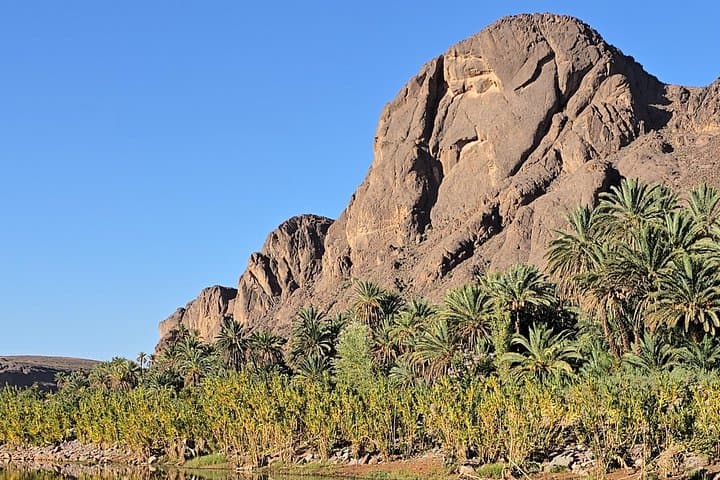
Geology here is raw: uplifted Atlas ranges of schist and sandstone frame broad valleys where date palms find groundwater. The Telouet kasbah along the caravan route hints at the region’s 19th–20th century power plays, while the Ounila Valley preserves vernacular stone and clay architecture. Local Berber families maintain pastoral and oasis lifeways; tea rituals and shared lunches are part of the social geology of place.
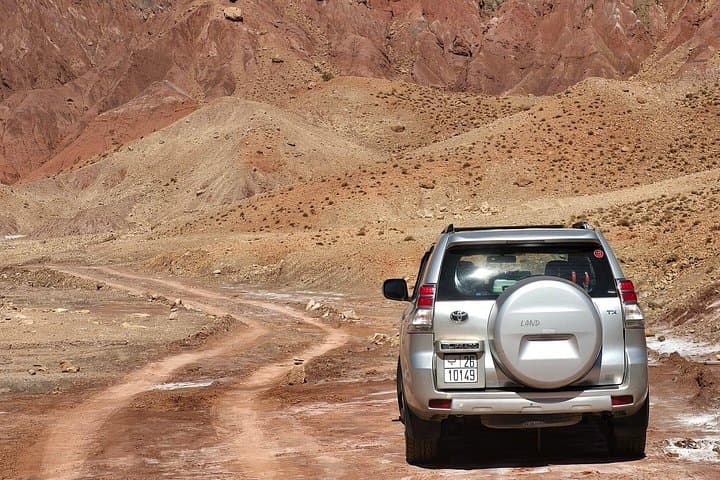
Practically, the experience blends driving, short hikes and a horseback loop through Ait Benhaddou, plus a two-hour guided walk in the Fint Oasis. Expect dusty tracks, intermittent shade, moderate climbs on uneven terrain and long stretches of road in an air-conditioned vehicle. Bring sun protection, layered clothing for cool mountain mornings, sturdy shoes for rocky trails and a refillable water bottle. Plan on early departures and flexible pacing: the route rewards slow stops for photos, tea with locals, and a sunset that flattens the valley into gold. This is a compact, culturally rich two-day immersion into Morocco’s highlands and hidden palm-fed refuge.
moderate.
2 days (approx. 48 hours, guided itinerary).
Moderate fitness—comfortable walking for 1–2 hours at a time, able to manage uneven terrain and short elevation changes.
The guided hike in the oasis is about two hours, over uneven but well-marked trails with some short ascents and viewpoints.
No prior experience is necessary; rides are typically gentle and guided, though basic riding comfort helps.
Mobile coverage is intermittent in the High Atlas and parts of the Ounila Valley; expect limited service in the Fint Oasis.
Yes—meals listed in the itinerary (breakfast, two lunches and dinners) and an overnight guesthouse stay in Fint Oasis are included per the tour details.
Ait Benhaddou sits on a key caravan route between the Sahara and Marrakech; the Glaoui family’s kasbah at Telouet controlled trade and local power into the 20th century.
Fint Oasis depends on limited groundwater and traditional irrigation; travelers should avoid single-use plastics, stick to marked paths and support local guides to minimize erosion and cultural disturbance.
Morocco Exposure operates guided outdoor trips and adventures with an emphasis on safety, stewardship, and memorable experiences.
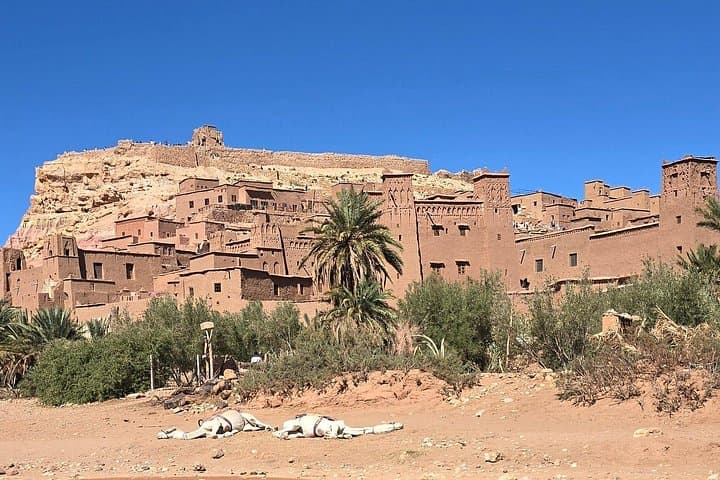
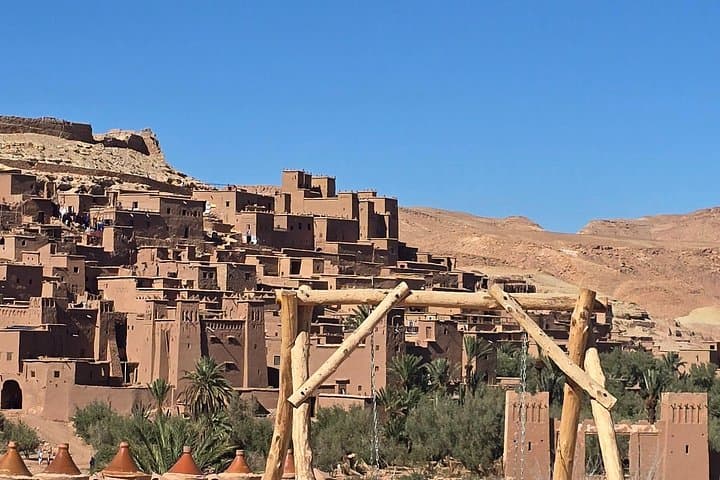
You leave Marrakech before dawn, the city’s minarets shrinking behind you while the road climbs into the High Atlas. By midmorning the air thins and the landscape hardens into red earth and folded ridgelines; villages cling to terraces and ancient caravan tracks cut faint scars across the slopes. At Ait Benhaddou the clay walls rise like a city shaped from the earth itself — a UNESCO ksar where mudbrick alleys and watchtowers recall long-distance trade and cinematic epics.
You leave Marrakech before dawn, the city’s minarets shrinking behind you while the road climbs into the High Atlas. By midmorning the air thins and the landscape hardens into red earth and folded ridgelines; villages cling to terraces and ancient caravan tracks cut faint scars across the slopes. At Ait Benhaddou the clay walls rise like a city shaped from the earth itself — a UNESCO ksar where mudbrick alleys and watchtowers recall long-distance trade and cinematic epics.
Geology here is raw: uplifted Atlas ranges of schist and sandstone frame broad valleys where date palms find groundwater. The Telouet kasbah along the caravan route hints at the region’s 19th–20th century power plays, while the Ounila Valley preserves vernacular stone and clay architecture. Local Berber families maintain pastoral and oasis lifeways; tea rituals and shared lunches are part of the social geology of place.
Practically, the experience blends driving, short hikes and a horseback loop through Ait Benhaddou, plus a two-hour guided walk in the Fint Oasis. Expect dusty tracks, intermittent shade, moderate climbs on uneven terrain and long stretches of road in an air-conditioned vehicle. Bring sun protection, layered clothing for cool mountain mornings, sturdy shoes for rocky trails and a refillable water bottle. Plan on early departures and flexible pacing: the route rewards slow stops for photos, tea with locals, and a sunset that flattens the valley into gold. This is a compact, culturally rich two-day immersion into Morocco’s highlands and hidden palm-fed refuge.