THE ADVENTURE COLLECTIVE® · Independent discovery and booking for outdoor travel

Step off a short gravel track and into a cool, 15°C underworld where 430 million years of limestone have been carved into delicate stalactites, stalagmites and rare stromatolite-like formations. A self-guided Fig Tree Cave tour at Wombeyan rewards steady footing and curiosity.
Step off a short gravel track and into a cool, 15°C underworld where 430 million years of limestone have been carved into delicate stalactites, stalagmites and rare stromatolite-like formations. A self-guided Fig Tree Cave tour at Wombeyan rewards steady footing and curiosity.
You arrive at the visitor centre with dust on your boots and a steady hill ahead: a 500m gravel path pitches up through eucalypt scrub toward a token-operated door. Fifteen minutes later the world shifts—cool, steady 15°C air wraps around you and the cave’s lights pick out drips and ribs of stone; stalactites hang like slow icicles, stalagmites rise from the floor, and narrow passages open into the daylight-washed chamber of Mabel Way and Victoria Arch.
Verified experiences and guided adventures in the surrounding area.
Operated by NSW National Parks and Wildlife Service · Wombeyan Caves, New South Wales
You arrive at the visitor centre with dust on your boots and a steady hill ahead: a 500m gravel path pitches up through eucalypt scrub toward a token-operated door. Fifteen minutes later the world shifts—cool, steady 15°C air wraps around you and the cave’s lights pick out drips and ribs of stone; stalactites hang like slow icicles, stalagmites rise from the floor, and narrow passages open into the daylight-washed chamber of Mabel Way and Victoria Arch.
This is karst at work: 430 million years of limestone sculpted by acid and time into helictites, cave coral and rare stromatolite-like forms. The walk and chambers are straightforward but intimate—fewer than 200 steps inside and some steep sections make the cave a medium-graded experience that rewards steady footing more than speed.
Practical details matter here. Collect your token at the Kui visitor centre, use the public amenities before you head out, and plan to exit the cave by 4:15pm. The access track is unsealed; parking is at the Kui Kiosk. Inside, don’t bring food or prams, and watch for slippery rock. Lighting is installed, but a small headlamp can help on steps.
Expect wildlife at the surface—kangaroos and parrots may watch you leave—while the cave keeps its own slow rhythm. Respect the formations: don’t touch, stay on the paths, and pack out any rubbish. For a short, intense taste of underground NSW geology, Fig Tree Cave delivers a compact, educational, and quietly dramatic experience.
moderate.
30–45 minutes.
Average fitness; able to manage short steep sections and under 200 internal steps.
Yes—collect the token from the Kui Visitor Centre before the 15-minute walk to the token-operated entrance; online tickets still require token pickup.
Children are welcome but must be accompanied by an adult; the cave is not suitable for prams and includes some steep sections and steps.
Public amenities are only at the visitor centre; food and drink are not permitted inside the cave so eat before or after your visit.
Do not touch cave formations—oils from skin damage delicate deposits—and check with the visitor centre before using tripods or professional photography gear.
The Wombeyan Karst Reserve preserves limestone formed around 430 million years ago; the caves reveal slow geological processes rather than rapid human history.
Stay on marked paths, avoid touching formations, and pack out rubbish—the cave environment is fragile and repairs take geological time.
NSW National Parks and Wildlife Service operates guided outdoor trips and adventures with an emphasis on safety, stewardship, and memorable experiences.
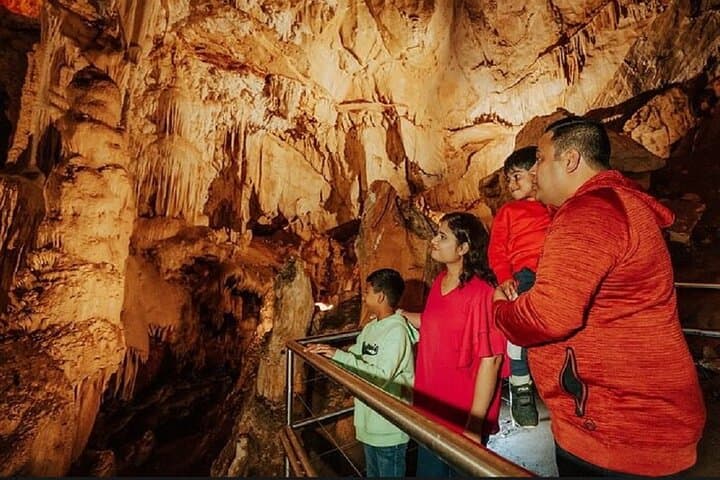
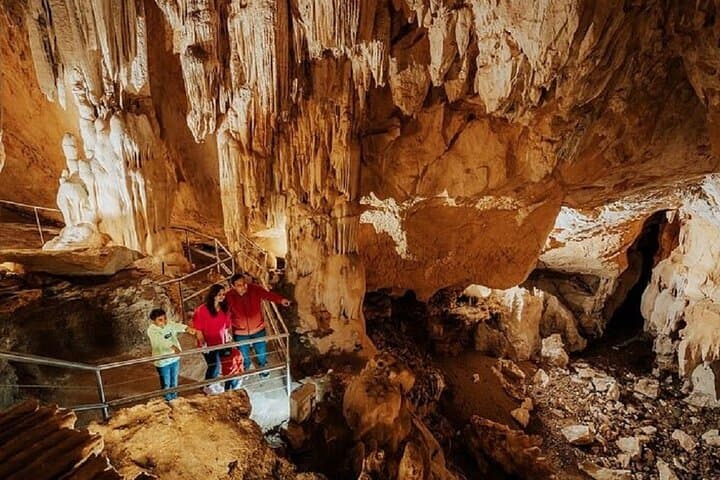
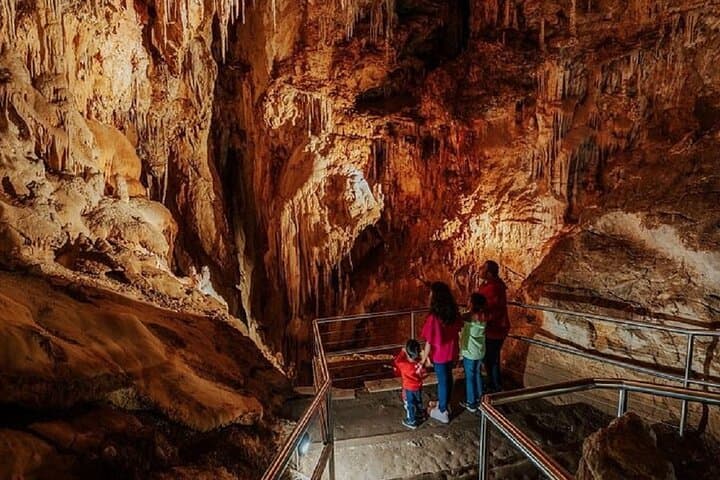
You arrive at the visitor centre with dust on your boots and a steady hill ahead: a 500m gravel path pitches up through eucalypt scrub toward a token-operated door. Fifteen minutes later the world shifts—cool, steady 15°C air wraps around you and the cave’s lights pick out drips and ribs of stone; stalactites hang like slow icicles, stalagmites rise from the floor, and narrow passages open into the daylight-washed chamber of Mabel Way and Victoria Arch.
You arrive at the visitor centre with dust on your boots and a steady hill ahead: a 500m gravel path pitches up through eucalypt scrub toward a token-operated door. Fifteen minutes later the world shifts—cool, steady 15°C air wraps around you and the cave’s lights pick out drips and ribs of stone; stalactites hang like slow icicles, stalagmites rise from the floor, and narrow passages open into the daylight-washed chamber of Mabel Way and Victoria Arch.
This is karst at work: 430 million years of limestone sculpted by acid and time into helictites, cave coral and rare stromatolite-like forms. The walk and chambers are straightforward but intimate—fewer than 200 steps inside and some steep sections make the cave a medium-graded experience that rewards steady footing more than speed.
Practical details matter here. Collect your token at the Kui visitor centre, use the public amenities before you head out, and plan to exit the cave by 4:15pm. The access track is unsealed; parking is at the Kui Kiosk. Inside, don’t bring food or prams, and watch for slippery rock. Lighting is installed, but a small headlamp can help on steps.
Expect wildlife at the surface—kangaroos and parrots may watch you leave—while the cave keeps its own slow rhythm. Respect the formations: don’t touch, stay on the paths, and pack out any rubbish. For a short, intense taste of underground NSW geology, Fig Tree Cave delivers a compact, educational, and quietly dramatic experience.