THE ADVENTURE COLLECTIVE® · Independent discovery and booking for outdoor travel

Walk three hours along Fifth Avenue from Grand Army Plaza to the Empire State Building, stopping at 11 iconic sites. This guided tour mixes Gilded Age history, modern retail landmarks, and practical city tips for first-time and repeat visitors alike.
Walk three hours along Fifth Avenue from Grand Army Plaza to the Empire State Building, stopping at 11 iconic sites. This guided tour mixes Gilded Age history, modern retail landmarks, and practical city tips for first-time and repeat visitors alike.
You step out onto a broad, sun-washed sidewalk and Fifth Avenue immediately sets the pace: polished storefronts, steady traffic, and the distant silhouette of the Empire State Building guiding you south. The guide points out the Sherman Monument at Grand Army Plaza, and the boulevard opens into a sequence of façades — hotel lobbies, flagship stores, and stone-clad institutions — each with a story to tell.
Verified experiences and guided adventures in the surrounding area.
Operated by The Daily Trips · New York, NY
You step out onto a broad, sun-washed sidewalk and Fifth Avenue immediately sets the pace: polished storefronts, steady traffic, and the distant silhouette of the Empire State Building guiding you south. The guide points out the Sherman Monument at Grand Army Plaza, and the boulevard opens into a sequence of façades — hotel lobbies, flagship stores, and stone-clad institutions — each with a story to tell.
Fifth Avenue grew as Manhattan’s spine in the 19th and 20th centuries, its luxury tied to Gilded Age fortunes and later, 20th-century commercialism. Geology plays a quiet role here: Manhattan schist beneath the pavement made vertical construction possible, and that hard bedrock is why those skyscrapers rise without shifting. Culturally, the avenue is both public stage and private showroom — from the literary calm of the New York Public Library to the commercial glitz of Bergdorf Goodman.
The tour moves at an urban walking pace, covering roughly 1.5 miles and about 11 curated stops over three hours. Expect flat, paved sidewalks, multiple photo ops, and brief interior peeks where permitted. Guides weave architecture, anecdotes, and civic history into practical context — where to duck for coffee, public restroom locations, and transit connections.
Practical tips: bring a filled water bottle, wear supportive shoes, and plan for weather changes — Manhattan’s microclimate can turn brisk by late afternoon. If you want fewer crowds, choose a weekday morning. The tour ends at the Empire State Building, where you can extend your visit with an observation-deck ticket if you choose.
easy.
3 hours.
Light to moderate—suitable for most people who can stand and walk for several hours with short breaks.
The route is roughly 1.5 miles with many stops and low elevation change; it’s rated easy but requires standing and walking for about three hours.
Admissions are not included; the tour finishes at the Empire State Building where observation-deck tickets must be bought separately.
The route uses paved sidewalks and public plazas; many sections are wheelchair-accessible but contact the operator in advance for specific accommodations.
This tour does not automatically cancel for light rain; check the operator’s cancellation policy and dress for conditions or reschedule if severe weather is forecast.
Fifth Avenue evolved from a 19th-century carriage route to a symbol of wealth and commerce; many landmark buildings date to the Gilded Age and early 20th century.
High foot traffic strains urban green spaces and waste systems; carry out trash, use refillable bottles, and respect protected interiors like library rooms.
The Daily Trips operates guided outdoor trips and adventures with an emphasis on safety, stewardship, and memorable experiences.


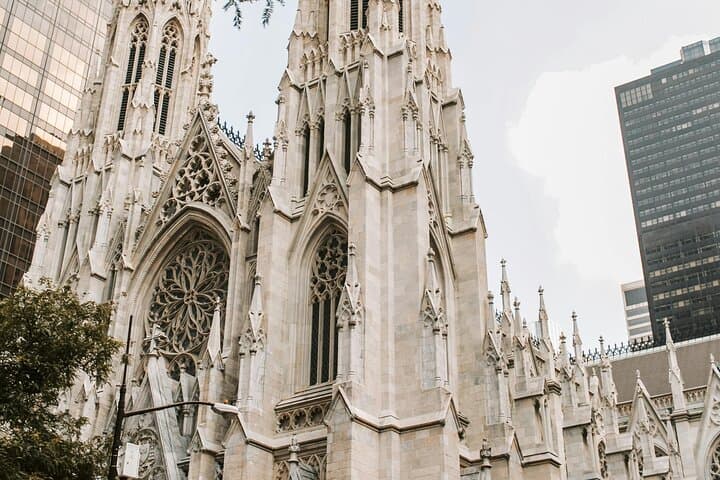
You step out onto a broad, sun-washed sidewalk and Fifth Avenue immediately sets the pace: polished storefronts, steady traffic, and the distant silhouette of the Empire State Building guiding you south. The guide points out the Sherman Monument at Grand Army Plaza, and the boulevard opens into a sequence of façades — hotel lobbies, flagship stores, and stone-clad institutions — each with a story to tell.
You step out onto a broad, sun-washed sidewalk and Fifth Avenue immediately sets the pace: polished storefronts, steady traffic, and the distant silhouette of the Empire State Building guiding you south. The guide points out the Sherman Monument at Grand Army Plaza, and the boulevard opens into a sequence of façades — hotel lobbies, flagship stores, and stone-clad institutions — each with a story to tell.
Fifth Avenue grew as Manhattan’s spine in the 19th and 20th centuries, its luxury tied to Gilded Age fortunes and later, 20th-century commercialism. Geology plays a quiet role here: Manhattan schist beneath the pavement made vertical construction possible, and that hard bedrock is why those skyscrapers rise without shifting. Culturally, the avenue is both public stage and private showroom — from the literary calm of the New York Public Library to the commercial glitz of Bergdorf Goodman.
The tour moves at an urban walking pace, covering roughly 1.5 miles and about 11 curated stops over three hours. Expect flat, paved sidewalks, multiple photo ops, and brief interior peeks where permitted. Guides weave architecture, anecdotes, and civic history into practical context — where to duck for coffee, public restroom locations, and transit connections.
Practical tips: bring a filled water bottle, wear supportive shoes, and plan for weather changes — Manhattan’s microclimate can turn brisk by late afternoon. If you want fewer crowds, choose a weekday morning. The tour ends at the Empire State Building, where you can extend your visit with an observation-deck ticket if you choose.