THE ADVENTURE COLLECTIVE® · Independent discovery and booking for outdoor travel

A compact three-day loop from Ashgabat to the Darvaza Gas Crater and Kunya-Urgench that pairs stark desert geology with centuries of Central Asian history. Expect marble city squares, dune crossings, a night in a yurt camp and the surreal glow of the crater.
A compact three-day loop from Ashgabat to the Darvaza Gas Crater and Kunya-Urgench that pairs stark desert geology with centuries of Central Asian history. Expect marble city squares, dune crossings, a night in a yurt camp and the surreal glow of the crater.
At dusk the Karakum takes on a voice of its own — wind pressing sand into low, relentless drifts while a distant ring of flame throws orange light across the horizon. Travelers arrive in Ashgabat, then push north into a landscape that alternates between white-marble Soviet cityscapes, endless dunes, and the sudden, surreal glare of the Darvaza Gas Crater.
Verified experiences and guided adventures in the surrounding area.
Operated by Mukamly travel · Ashgabat, Ahal Region
At dusk the Karakum takes on a voice of its own — wind pressing sand into low, relentless drifts while a distant ring of flame throws orange light across the horizon. Travelers arrive in Ashgabat, then push north into a landscape that alternates between white-marble Soviet cityscapes, endless dunes, and the sudden, surreal glare of the Darvaza Gas Crater.
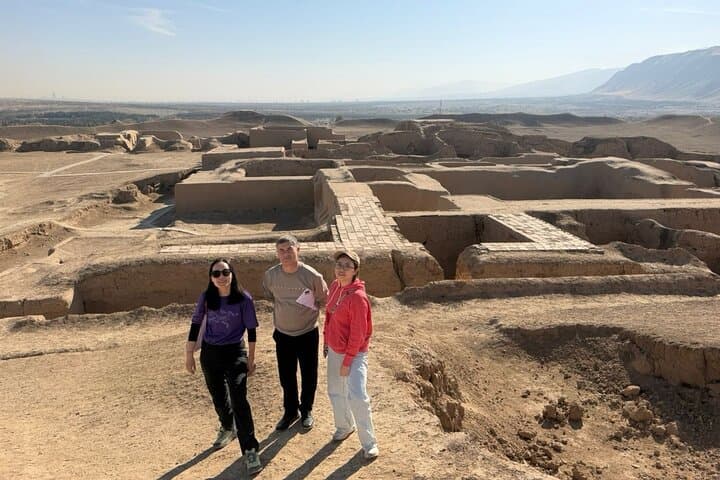
This three-day route threads modern Turkmen pride with deep history. Ashgabat’s grand plazas and Nisa’s Parthian ruins speak to successive empires; Kunya-Urgench preserves the ruined minarets and mausoleums of the medieval Khwarezm capital. Geologically the Karakum is a wind-swept alluvial plain; the crater itself is a collapsed gas field first ignited during Soviet-era drilling in 1971 and has burned intermittently since.
Culturally, the itinerary blends museum stops with encounters at yurt camps — an opportunity to learn about nomadic crafts and traditional Turkmen dishes over low, communal meals. The desert at night is active: sand shifts with hidden energy, and the crater’s glow pushes a rhythm to the hours.
Practical guidance: plan for temperature swings — hot days, cold nights — and limited shade en route. Bring layers, sturdy shoes for uneven ground, and a reliable headlamp for camp logistics. Hydrate proactively; bottled water can be scarce outside cities. Expect basic three‑star hotel nights and one yurt camp under stars; accessibility is generally good, but remote roads can be bumpy. Allow time for passport checks and the tour’s Letter of Invitation process when scheduling flights. With modest preparation, this compact loop delivers geological oddity, living culture, and the stark, immediate beauty of the Turkmen desert.
easy.
3 days (approx. 72 hours).
Suitable for travelers in good general health; most time is in vehicle with short, easy walks at sites
Yes — foreign visitors typically require a visa and a Letter of Invitation (LOI); the tour includes assistance with the LOI but check current embassy requirements well before travel.
Viewing from marked safe distances is common; visitors should avoid steep or unstable edges and follow guide instructions because the ground can be hot and uneven.
Expect two nights in standard three-star hotels (double/twin) and one night in a basic yurt camp with shared facilities and traditional meals.
Parts of the itinerary are vehicle-accessible, but some sites have uneven ground; contact the operator about wheelchair needs and transfer arrangements in advance.
Kunya-Urgench was the medieval capital of the Khwarezm region and resisted Mongol sieges; the Darvaza Crater was formed during Soviet gas exploration in 1971 and has burned intermittently since.
The Karakum’s fragile soils and steppe grasslands recover slowly from vehicle tracks; stick to marked routes, pack out waste, and limit disturbance near archaeological sites.
Mukamly travel operates guided outdoor trips and adventures with an emphasis on safety, stewardship, and memorable experiences.
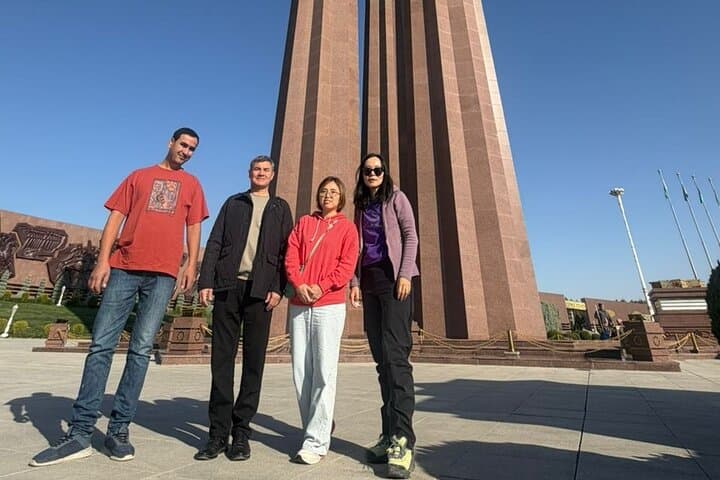
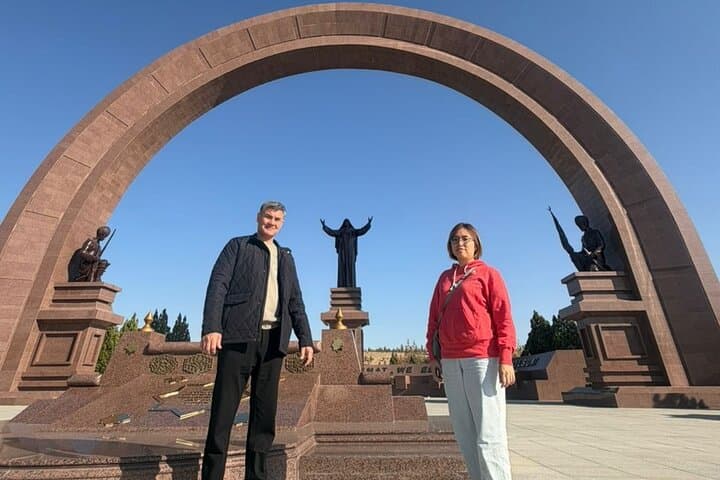
At dusk the Karakum takes on a voice of its own — wind pressing sand into low, relentless drifts while a distant ring of flame throws orange light across the horizon. Travelers arrive in Ashgabat, then push north into a landscape that alternates between white-marble Soviet cityscapes, endless dunes, and the sudden, surreal glare of the Darvaza Gas Crater.
At dusk the Karakum takes on a voice of its own — wind pressing sand into low, relentless drifts while a distant ring of flame throws orange light across the horizon. Travelers arrive in Ashgabat, then push north into a landscape that alternates between white-marble Soviet cityscapes, endless dunes, and the sudden, surreal glare of the Darvaza Gas Crater.
This three-day route threads modern Turkmen pride with deep history. Ashgabat’s grand plazas and Nisa’s Parthian ruins speak to successive empires; Kunya-Urgench preserves the ruined minarets and mausoleums of the medieval Khwarezm capital. Geologically the Karakum is a wind-swept alluvial plain; the crater itself is a collapsed gas field first ignited during Soviet-era drilling in 1971 and has burned intermittently since.
Culturally, the itinerary blends museum stops with encounters at yurt camps — an opportunity to learn about nomadic crafts and traditional Turkmen dishes over low, communal meals. The desert at night is active: sand shifts with hidden energy, and the crater’s glow pushes a rhythm to the hours.
Practical guidance: plan for temperature swings — hot days, cold nights — and limited shade en route. Bring layers, sturdy shoes for uneven ground, and a reliable headlamp for camp logistics. Hydrate proactively; bottled water can be scarce outside cities. Expect basic three‑star hotel nights and one yurt camp under stars; accessibility is generally good, but remote roads can be bumpy. Allow time for passport checks and the tour’s Letter of Invitation process when scheduling flights. With modest preparation, this compact loop delivers geological oddity, living culture, and the stark, immediate beauty of the Turkmen desert.