THE ADVENTURE COLLECTIVE® · Independent discovery and booking for outdoor travel

A brisk two-day loop from Fez to the Merzouga dunes and back, this shared tour combines a long scenic drive through the Middle Atlas with a camel trek and one night in a Berber desert camp under open desert skies. Expect sunrise dunes, drumming, and basic camp comforts.
A brisk two-day loop from Fez to the Merzouga dunes and back, this shared tour combines a long scenic drive through the Middle Atlas with a camel trek and one night in a Berber desert camp under open desert skies. Expect sunrise dunes, drumming, and basic camp comforts.
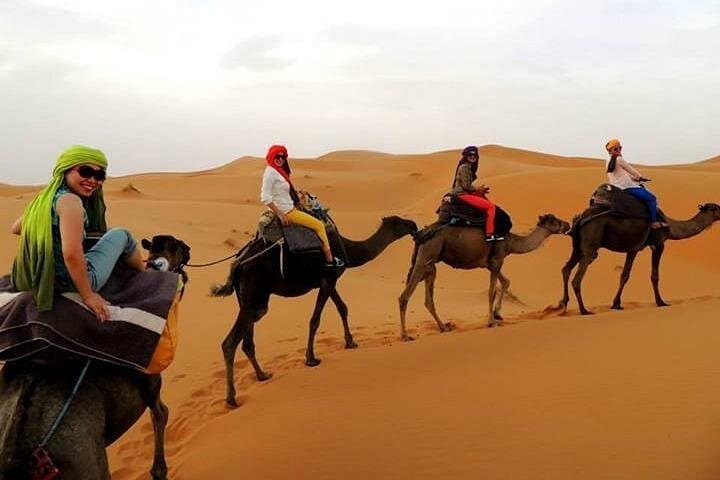
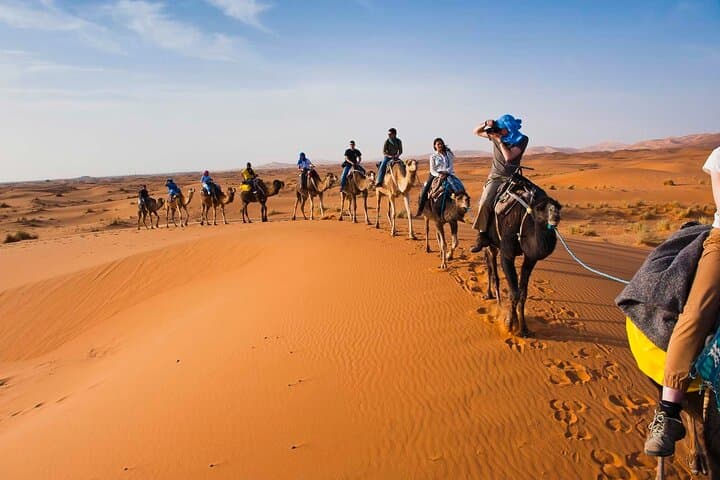
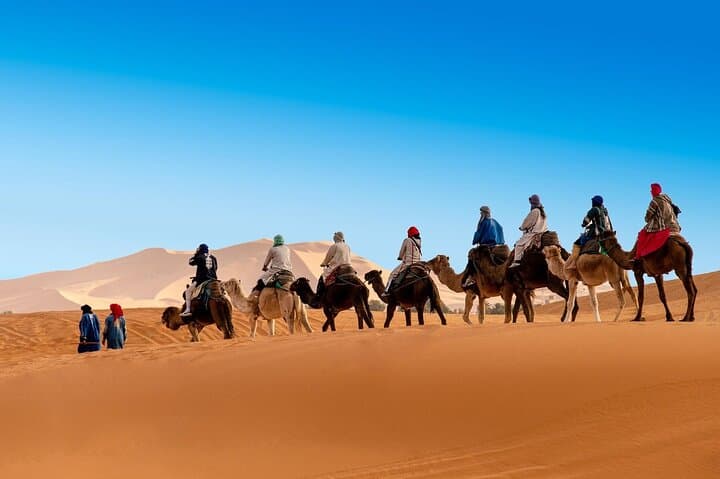
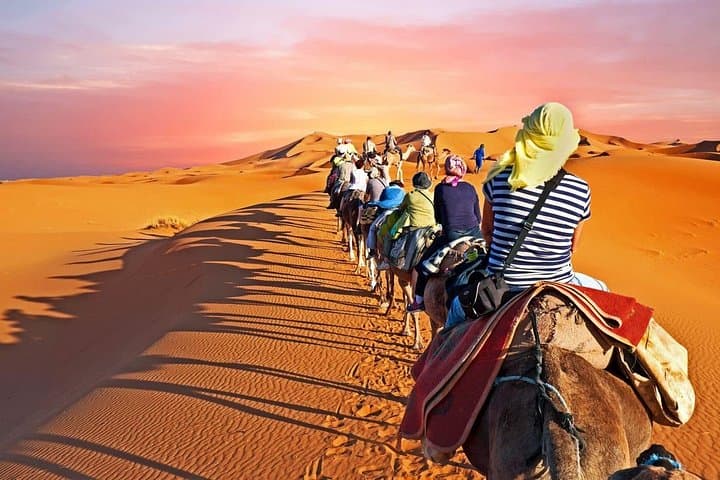
You leave Fez before sunrise and the road eases you out of the city into cedar forests and high, cool air. The drive through Ifrane and Azrou crosses the Middle Atlas—pines give way to sun-baked valleys until the landscape flattens and the first dunes of Erg Chebbi appear like a slow mountain range of sand. Camels wait at the edge of Merzouga as light melts the ridgelines; by evening the camp’s low fires and drummers mark the horizon beneath a sky so clear the Milky Way feels close enough to touch.
Verified experiences and guided adventures in the surrounding area.
Operated by Group Morocco Travel · Merzouga, Drâa-Tafilalet
You leave Fez before sunrise and the road eases you out of the city into cedar forests and high, cool air. The drive through Ifrane and Azrou crosses the Middle Atlas—pines give way to sun-baked valleys until the landscape flattens and the first dunes of Erg Chebbi appear like a slow mountain range of sand. Camels wait at the edge of Merzouga as light melts the ridgelines; by evening the camp’s low fires and drummers mark the horizon beneath a sky so clear the Milky Way feels close enough to touch.
This route traces old caravan connections and the eastern flank of the Rif-Middle Atlas corridor. Geologically, Erg Chebbi is a wind-built sea of quartz and limestone sand with dune crests that can reach roughly 100–150 meters; nearby the Ziz Valley and the Tafilalt oasis have supported settlement and trade for centuries. Rissani’s market and Moulay Ali Sharif’s zawiya are local cultural touchstones—places where Berber hospitality and nomadic traditions remain visible.
Practically, expect two long driving days (roughly 7–8 hours each way with stops), a ~45-minute camel ride to and from camp, a standard desert camp overnight (mattress and basic facilities), sunrise and sunset dune walks, and limited cell service. Pack layered clothing for hot days and cold nights, plenty of water, sun protection, and cash for tips or market purchases. If you’re prone to motion sickness, travel medication helps; bring a small daypack for camera, snacks, and a headlamp. The trip is accessible to most fitness levels but rewards basic preparation.
easy.
2 days.
Suitable for most fitness levels; must be able to mount a camel and walk short dune sections.
Typical camel rides are around 30–45 minutes each way from Merzouga to the camp; mounts are steady and guided by handlers.
Standard desert camps usually provide a mattress in a tent and shared toilets; amenities vary—confirm if you need a private tent or extra bedding.
Yes; the tour is described as physically easy, but children should be supervised on camels and during dune walks and older travelers should be comfortable with long vehicle transfers.
Cell service is limited around Erg Chebbi; expect spotty reception—plan for offline navigation and let contacts know your schedule.
The route follows historic caravan corridors; Rissani and the Tafilalt oasis were important trade and palmeraie centers that helped sustain Saharan commerce for centuries.
Water is scarce and fragile; minimize waste, avoid off-track driving on vegetated interdune areas, and support local guides who practice low-impact camping.
Group Morocco Travel operates guided outdoor trips and adventures with an emphasis on safety, stewardship, and memorable experiences.
You leave Fez before sunrise and the road eases you out of the city into cedar forests and high, cool air. The drive through Ifrane and Azrou crosses the Middle Atlas—pines give way to sun-baked valleys until the landscape flattens and the first dunes of Erg Chebbi appear like a slow mountain range of sand. Camels wait at the edge of Merzouga as light melts the ridgelines; by evening the camp’s low fires and drummers mark the horizon beneath a sky so clear the Milky Way feels close enough to touch.
You leave Fez before sunrise and the road eases you out of the city into cedar forests and high, cool air. The drive through Ifrane and Azrou crosses the Middle Atlas—pines give way to sun-baked valleys until the landscape flattens and the first dunes of Erg Chebbi appear like a slow mountain range of sand. Camels wait at the edge of Merzouga as light melts the ridgelines; by evening the camp’s low fires and drummers mark the horizon beneath a sky so clear the Milky Way feels close enough to touch.
This route traces old caravan connections and the eastern flank of the Rif-Middle Atlas corridor. Geologically, Erg Chebbi is a wind-built sea of quartz and limestone sand with dune crests that can reach roughly 100–150 meters; nearby the Ziz Valley and the Tafilalt oasis have supported settlement and trade for centuries. Rissani’s market and Moulay Ali Sharif’s zawiya are local cultural touchstones—places where Berber hospitality and nomadic traditions remain visible.
Practically, expect two long driving days (roughly 7–8 hours each way with stops), a ~45-minute camel ride to and from camp, a standard desert camp overnight (mattress and basic facilities), sunrise and sunset dune walks, and limited cell service. Pack layered clothing for hot days and cold nights, plenty of water, sun protection, and cash for tips or market purchases. If you’re prone to motion sickness, travel medication helps; bring a small daypack for camera, snacks, and a headlamp. The trip is accessible to most fitness levels but rewards basic preparation.