THE ADVENTURE COLLECTIVE® · Independent discovery and booking for outdoor travel

Swap Fez’s medina for wind-carved dunes on a three-day drive to Merzouga. This loop crosses the Middle Atlas, visits Gnawa music villages, and ends with a night in a Berber tent beneath Erg Chebbi’s dunes.
Swap Fez’s medina for wind-carved dunes on a three-day drive to Merzouga. This loop crosses the Middle Atlas, visits Gnawa music villages, and ends with a night in a Berber tent beneath Erg Chebbi’s dunes.
A pale dawn pulls across the crest of Erg Chebbi as camels file down a ridge and the desert stretches, shifting color with each breath of wind. On this three-day loop from Fez, travelers trade city medinas and cedar forests for the wide light of southeastern Morocco—long highway miles broken by red-rock gorges, palm-lined oases and the sudden silence of sand.
Verified experiences and guided adventures in the surrounding area.
Operated by Farka Tours · Merzouga, Drâa-Tafilalet
A pale dawn pulls across the crest of Erg Chebbi as camels file down a ridge and the desert stretches, shifting color with each breath of wind. On this three-day loop from Fez, travelers trade city medinas and cedar forests for the wide light of southeastern Morocco—long highway miles broken by red-rock gorges, palm-lined oases and the sudden silence of sand.
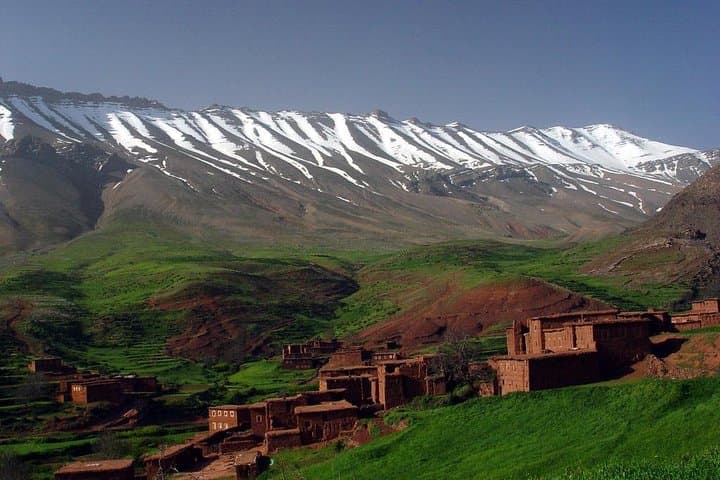
The route moves through the Middle Atlas, where cedar groves host Barbary macaques and Berber villages keep agricultural traditions alive. Geologically, the trip crosses the Ziz Valley—an alluvial corridor that feeds the Sahara edge—and finishes in Erg Chebbi, a field of wind-sculpted dunes that reach well over 100 meters in places and record the region’s aeolian history.
Culturally, stops include Khamlia, home to Gnawa music descended from West African spiritual and rhythmic practices, and Rissani, linked to the Alawite dynasty and historic caravan routes. Accommodation alternates between modest hotels in Merzouga and simple Berber desert camps, where nights are spent under canvas and mornings begin with dune-top sunrises.
Practical notes: expect long drives—much of the experience is travel between landscapes—so break up days with short walks and 4x4 outings. For the dunes, wear closed shoes, sun protection and carry at least 2 liters of water per person during daytime excursions. Camel rides are stable but slow; those with limited mobility should confirm camp and transport options in advance. Cash is useful in small towns, and early-season visitors should layer against cool desert mornings and evenings.
moderate.
3 days.
Suitable for travelers in average physical condition; involves long drives, short hikes on sand, and seated camel rides—core strength helps for dune scrambling.
Expect several hours on day 1 and day 3 between Fez and Merzouga with stops; day 2 focuses on local 4x4 trips and shorter drives around the dunes.
Yes—camel rides are guided, slow and intended for novice riders; inform the operator of mobility issues so they can provide assistance.
Accommodations range from modest hotels on the desert edge to basic Berber tents at camp; verify camp amenities (flush toilets, showers) when booking.
Children can join but infants must sit on laps; some dune and camel activities may be difficult for limited mobility—confirm wheelchair-accessible transport and camp options ahead of time.
This corridor was shaped by caravan routes linking Sub-Saharan trade and Moroccan cities; Rissani served historically as a caravan and political center tied to the Alawite dynasty.
Stick to marked paths and camp rules to protect fragile dune vegetation and oases; water is scarce—minimize waste and pack out trash when possible.
Farka Tours operates guided outdoor trips and adventures with an emphasis on safety, stewardship, and memorable experiences.


A pale dawn pulls across the crest of Erg Chebbi as camels file down a ridge and the desert stretches, shifting color with each breath of wind. On this three-day loop from Fez, travelers trade city medinas and cedar forests for the wide light of southeastern Morocco—long highway miles broken by red-rock gorges, palm-lined oases and the sudden silence of sand.
A pale dawn pulls across the crest of Erg Chebbi as camels file down a ridge and the desert stretches, shifting color with each breath of wind. On this three-day loop from Fez, travelers trade city medinas and cedar forests for the wide light of southeastern Morocco—long highway miles broken by red-rock gorges, palm-lined oases and the sudden silence of sand.
The route moves through the Middle Atlas, where cedar groves host Barbary macaques and Berber villages keep agricultural traditions alive. Geologically, the trip crosses the Ziz Valley—an alluvial corridor that feeds the Sahara edge—and finishes in Erg Chebbi, a field of wind-sculpted dunes that reach well over 100 meters in places and record the region’s aeolian history.
Culturally, stops include Khamlia, home to Gnawa music descended from West African spiritual and rhythmic practices, and Rissani, linked to the Alawite dynasty and historic caravan routes. Accommodation alternates between modest hotels in Merzouga and simple Berber desert camps, where nights are spent under canvas and mornings begin with dune-top sunrises.
Practical notes: expect long drives—much of the experience is travel between landscapes—so break up days with short walks and 4x4 outings. For the dunes, wear closed shoes, sun protection and carry at least 2 liters of water per person during daytime excursions. Camel rides are stable but slow; those with limited mobility should confirm camp and transport options in advance. Cash is useful in small towns, and early-season visitors should layer against cool desert mornings and evenings.