THE ADVENTURE COLLECTIVE® · Independent discovery and booking for outdoor travel

Traverse cedar forests, Middle Atlas passes and the Ziz valley before climbing Erg Chebbi’s golden dunes. This 2-day Fez loop combines camel trekking, a Berber camp night and sunrise views over the Sahara.
Traverse cedar forests, Middle Atlas passes and the Ziz valley before climbing Erg Chebbi’s golden dunes. This 2-day Fez loop combines camel trekking, a Berber camp night and sunrise views over the Sahara.
Dawn spills gold across Erg Chebbi and a line of camels cuts a steady silhouette on the ridge — this is the moment the two-day Fez-to-Fez desert tour is built around. Departing early from Fez, the route climbs into the cool cedar forests of the Middle Atlas, threads through Ifrane’s alpine-like streets, and drops into the wide Ziz valley before the first dunes appear on the horizon.
Verified experiences and guided adventures in the surrounding area.
Operated by Great Morocco Tours · Merzouga, Errachidia Province
Dawn spills gold across Erg Chebbi and a line of camels cuts a steady silhouette on the ridge — this is the moment the two-day Fez-to-Fez desert tour is built around. Departing early from Fez, the route climbs into the cool cedar forests of the Middle Atlas, threads through Ifrane’s alpine-like streets, and drops into the wide Ziz valley before the first dunes appear on the horizon.
The road is a compact history lesson: Roman-era trade routes evolved into Berber caravan tracks, and the geology shifts from volcanic middle-Atlas rock to wind-sculpted sand. Erg Chebbi’s dunes are living structures, reshaped seasonally by Saharan winds; at camp, Berber musicians and a communal dinner introduce local culture and practical desert hospitality.
Practical guidance: travel days are long by vehicle but paced with photo and refreshment stops. Camel treks to and from camp each last roughly an hour and are gentle for most riders; the overnight camp offers simple tents with dinner, breakfast and shower access noted in inclusions. Expect strong sun by day and sharp temperature drops after sunset — layers matter more than luggage space.
Bring a compact daypack, water, and sturdy shoes for dune climbs; plan for early wake-ups to catch sunrise and avoid peak heat on dunes. Respect local customs in camps, tip guides for camel care, and conserve water and light to reduce your footprint in this fragile landscape.
easy.
2 days, 1 night.
Suitable for most fitness levels; able to mount a camel and walk short dune sections is helpful
Yes — pickup from your Fez riad or hotel is included; confirm your pickup point when booking.
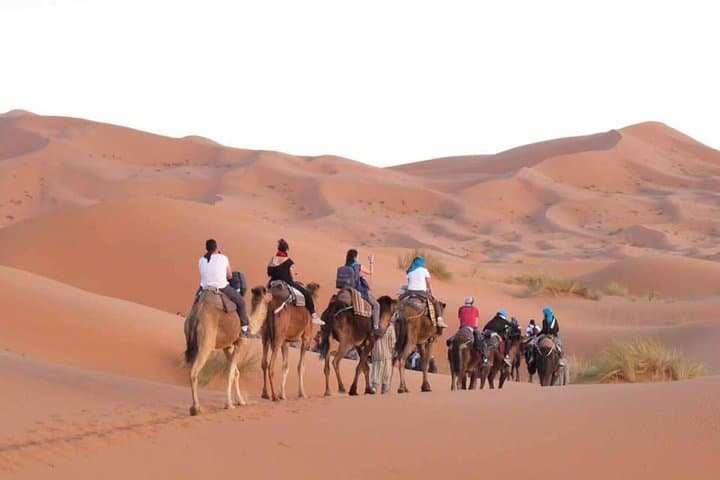
Camel treks to the camp typically last about 45–75 minutes each way, paced for comfort and sunset/sunrise viewing.
You’ll stay in standard nomadic tents with basic bedding; the tour notes dinner, breakfast and shower access in Merzouga.
Yes — the tour lists infant accommodations; infants must sit on laps for transport and infant seats are available on request.
The route follows historic trans-Saharan connections; many Berber families in Merzouga trace nomadic roots to caravan networks across the Sahara.
Stick to established tracks in dunes, avoid driving on vegetation, and pack out waste; local operators increasingly use solar and water-saving measures at camps.
Great Morocco Tours operates guided outdoor trips and adventures with an emphasis on safety, stewardship, and memorable experiences.
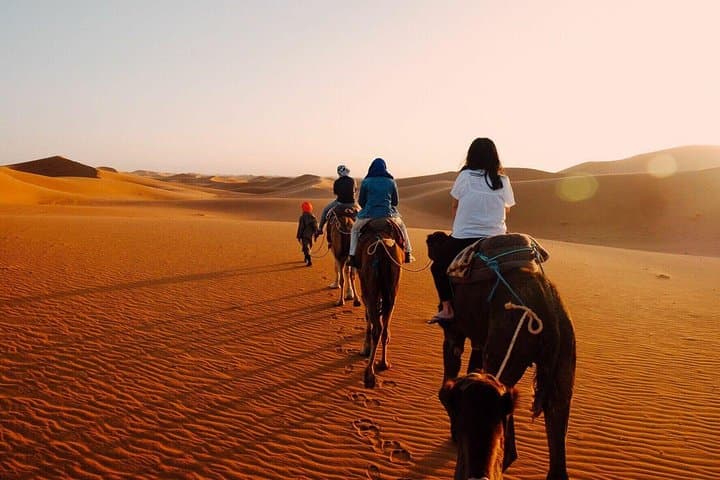
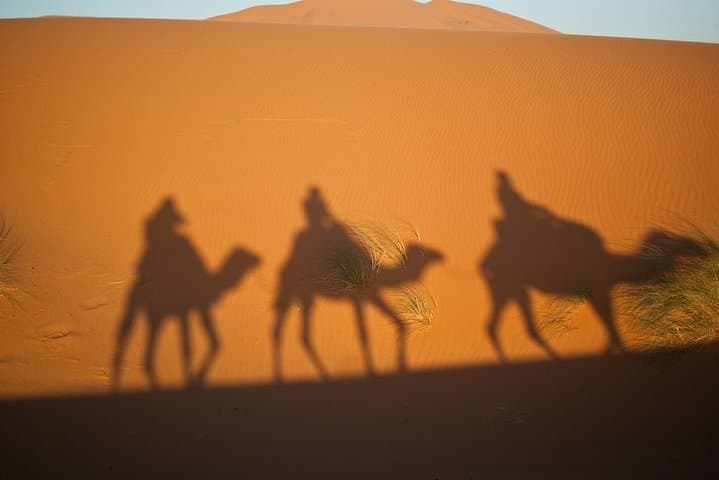
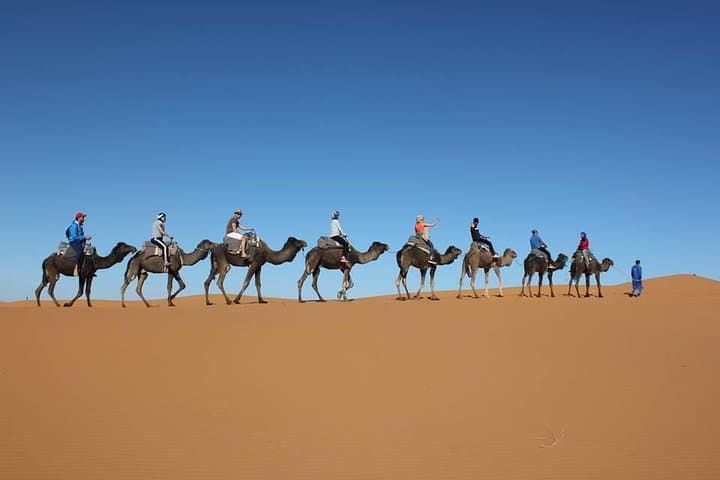
Dawn spills gold across Erg Chebbi and a line of camels cuts a steady silhouette on the ridge — this is the moment the two-day Fez-to-Fez desert tour is built around. Departing early from Fez, the route climbs into the cool cedar forests of the Middle Atlas, threads through Ifrane’s alpine-like streets, and drops into the wide Ziz valley before the first dunes appear on the horizon.
Dawn spills gold across Erg Chebbi and a line of camels cuts a steady silhouette on the ridge — this is the moment the two-day Fez-to-Fez desert tour is built around. Departing early from Fez, the route climbs into the cool cedar forests of the Middle Atlas, threads through Ifrane’s alpine-like streets, and drops into the wide Ziz valley before the first dunes appear on the horizon.
The road is a compact history lesson: Roman-era trade routes evolved into Berber caravan tracks, and the geology shifts from volcanic middle-Atlas rock to wind-sculpted sand. Erg Chebbi’s dunes are living structures, reshaped seasonally by Saharan winds; at camp, Berber musicians and a communal dinner introduce local culture and practical desert hospitality.
Practical guidance: travel days are long by vehicle but paced with photo and refreshment stops. Camel treks to and from camp each last roughly an hour and are gentle for most riders; the overnight camp offers simple tents with dinner, breakfast and shower access noted in inclusions. Expect strong sun by day and sharp temperature drops after sunset — layers matter more than luggage space.
Bring a compact daypack, water, and sturdy shoes for dune climbs; plan for early wake-ups to catch sunrise and avoid peak heat on dunes. Respect local customs in camps, tip guides for camel care, and conserve water and light to reduce your footprint in this fragile landscape.