THE ADVENTURE COLLECTIVE® · Independent discovery and booking for outdoor travel

Two days of desert travel from Fez to Merzouga that pack Atlas passes, the Ziz oasis, a camel trek at sunset, and an overnight in an Erg Chebbi camp. Practical, accessible, and ideal for first-time Sahara travelers.
Two days of desert travel from Fez to Merzouga that pack Atlas passes, the Ziz oasis, a camel trek at sunset, and an overnight in an Erg Chebbi camp. Practical, accessible, and ideal for first-time Sahara travelers.
You climb into an air-conditioned minivan before dawn, the Atlas ridges sliding past like a low, dark wave. By mid-morning the cedar forests around Azrou open, monkeys chattering on the roadside, then the road unspools through Ifrane’s alpine pines and down into the sun-baked Ziz valley. The desert announces itself as a warm breath: wide sky, ribs of sand rising from the plain.
Verified experiences and guided adventures in the surrounding area.
Operated by Morocco Real Tours · Merzouga, Drâa-Tafilalet
You climb into an air-conditioned minivan before dawn, the Atlas ridges sliding past like a low, dark wave. By mid-morning the cedar forests around Azrou open, monkeys chattering on the roadside, then the road unspools through Ifrane’s alpine pines and down into the sun-baked Ziz valley. The desert announces itself as a warm breath: wide sky, ribs of sand rising from the plain.
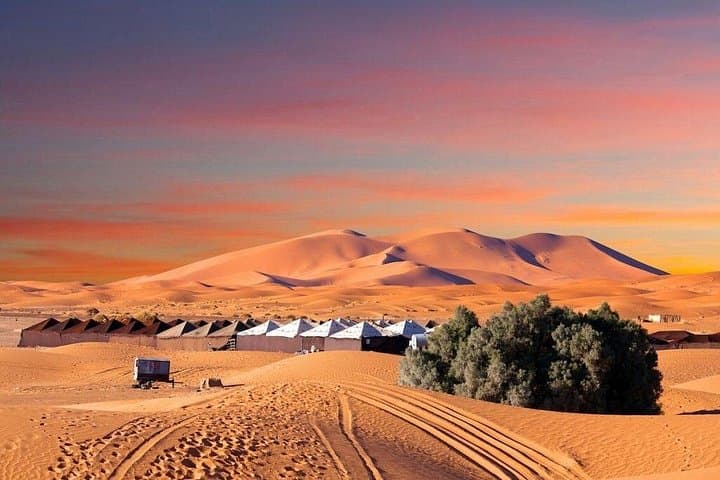
Geology and history are visible in the bends of the Ziz and the pale, wind-sculpted walls of Erg Chebbi. These dunes are fresh sand, pushed north by the Harmattan and shaped nightly by wind; the Tafilelt oasis towns nearby were once caravan hubs on the trans-Saharan gold routes and you can still feel the long trade of people and goods in villages like Rissani.
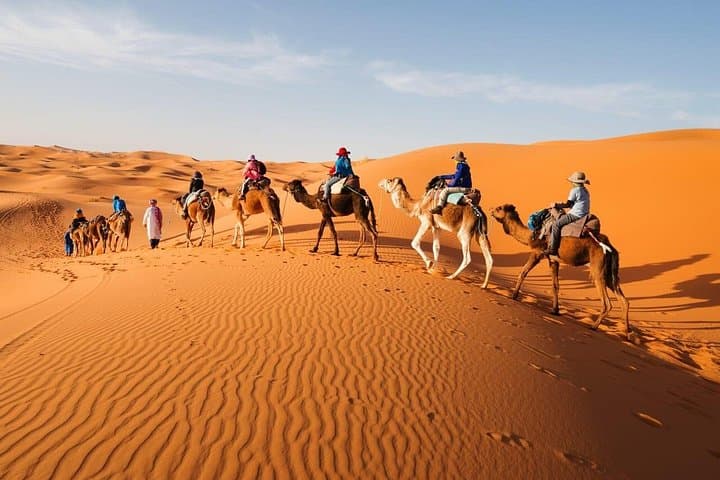
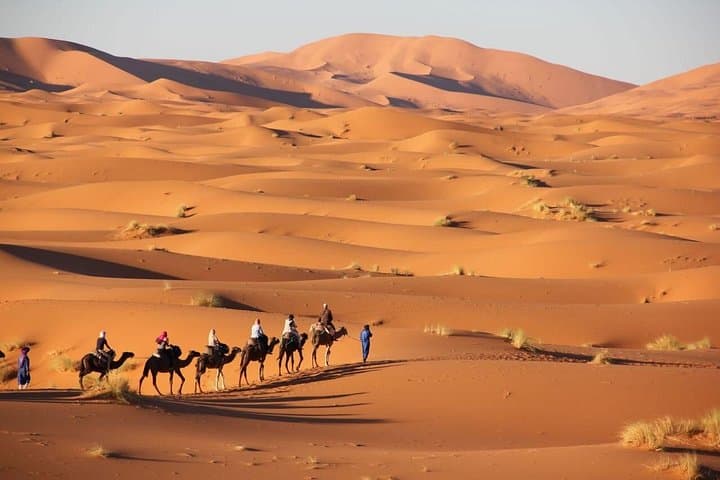
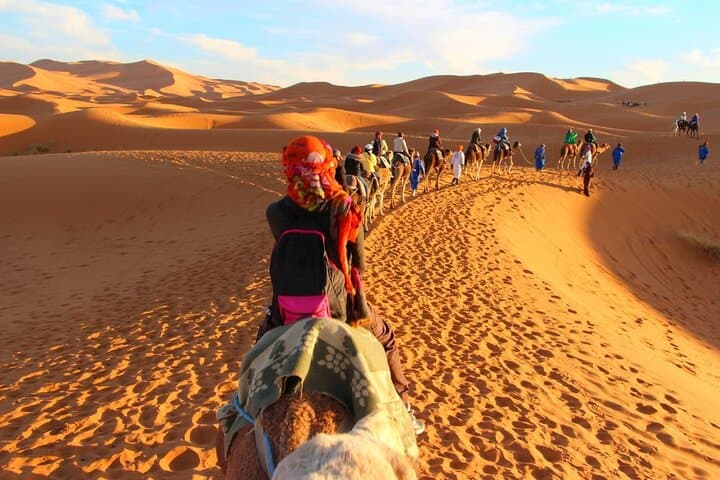
Culture here is Sahrawi and Amazigh-influenced — expect Gnawa music in Khamlia, simple guesthouse hospitality, and camel handlers whose knowledge of the dunes is practical and exact. At sunset you mount a dromedary for a slow, rhythmic trek to the camp; at night the desert sky pushes down a close, glittering ceiling.
Practical guidance: start early from Fez, carry at least 2 liters of water per person, and bring layered clothing — hot days, sharp drop at night. The camel ride is gentle; notify operators of mobility limits in advance. Meals (dinner and breakfast) and one night in camp are included; lunch and drinks en route are usually not. Phone signal is intermittent; bring cash for tips and small purchases. Follow your guide’s route markers to protect fragile dune edges and respect local customs when visiting villages.
easy.
1–2 days.
Minimal fitness required; suitable for most travelers comfortable with several hours in a vehicle and a short camel ride
The sunset camel trek is generally about 1.5–2 hours from the pickup point to the camp, at a slow, steady pace suited to first-time riders.
Dinner and breakfast at the desert camp are included; lunches and drinks during transfers are typically not included and should be budgeted for.
Yes—operators rate it suitable for all fitness levels; inform the tour of mobility or health needs during booking so they can plan pickup and camel arrangements.
Yes—the tour offers endings to Fez or Marrakech but you must confirm your end-city at least 12 hours before departure so logistics can be arranged.
The Ziz valley and Tafilelt region were key links on trans-Saharan caravan routes; nearby Sijilmassa was a medieval trade hub that fed Moroccan dynasties.
Dune ecosystems are fragile — stick to established paths, avoid driving on live dunes, and minimize single-use plastic; local guides work to limit campfootprint and protect oases.
Morocco Real Tours operates guided outdoor trips and adventures with an emphasis on safety, stewardship, and memorable experiences.
You climb into an air-conditioned minivan before dawn, the Atlas ridges sliding past like a low, dark wave. By mid-morning the cedar forests around Azrou open, monkeys chattering on the roadside, then the road unspools through Ifrane’s alpine pines and down into the sun-baked Ziz valley. The desert announces itself as a warm breath: wide sky, ribs of sand rising from the plain.
You climb into an air-conditioned minivan before dawn, the Atlas ridges sliding past like a low, dark wave. By mid-morning the cedar forests around Azrou open, monkeys chattering on the roadside, then the road unspools through Ifrane’s alpine pines and down into the sun-baked Ziz valley. The desert announces itself as a warm breath: wide sky, ribs of sand rising from the plain.
Geology and history are visible in the bends of the Ziz and the pale, wind-sculpted walls of Erg Chebbi. These dunes are fresh sand, pushed north by the Harmattan and shaped nightly by wind; the Tafilelt oasis towns nearby were once caravan hubs on the trans-Saharan gold routes and you can still feel the long trade of people and goods in villages like Rissani.
Culture here is Sahrawi and Amazigh-influenced — expect Gnawa music in Khamlia, simple guesthouse hospitality, and camel handlers whose knowledge of the dunes is practical and exact. At sunset you mount a dromedary for a slow, rhythmic trek to the camp; at night the desert sky pushes down a close, glittering ceiling.
Practical guidance: start early from Fez, carry at least 2 liters of water per person, and bring layered clothing — hot days, sharp drop at night. The camel ride is gentle; notify operators of mobility limits in advance. Meals (dinner and breakfast) and one night in camp are included; lunch and drinks en route are usually not. Phone signal is intermittent; bring cash for tips and small purchases. Follow your guide’s route markers to protect fragile dune edges and respect local customs when visiting villages.