THE ADVENTURE COLLECTIVE® · Independent discovery and booking for outdoor travel

A compact two-day loop from Fez to Merzouga that pairs long scenic drives with a camel ride to Erg Chebbi and an overnight desert camp. Perfect for travelers who want an accessible Sahara experience without sacrificing comfort.
A compact two-day loop from Fez to Merzouga that pairs long scenic drives with a camel ride to Erg Chebbi and an overnight desert camp. Perfect for travelers who want an accessible Sahara experience without sacrificing comfort.
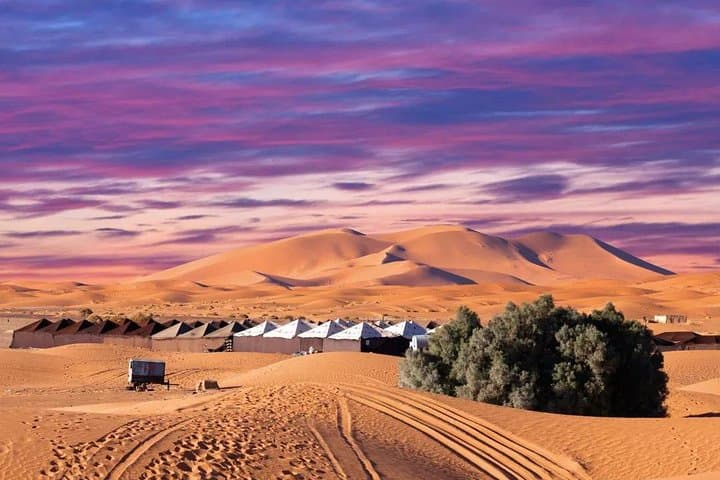
You leave Fez before dawn as the city’s medina shrinks in the rearview, and the road opens into a stitched landscape of cedar forests, basalt ridges and plateaus. The Middle Atlas presses cool air through Ifrane’s alpine-style streets; by midday the trees thin, volcanic rock gives way to ochre plains, and the dunes of Merzouga appear like a moving coastline of sand.
Verified experiences and guided adventures in the surrounding area.
Operated by Fez Sahara Tours · Merzouga, Drâa-Tafilalet
You leave Fez before dawn as the city’s medina shrinks in the rearview, and the road opens into a stitched landscape of cedar forests, basalt ridges and plateaus. The Middle Atlas presses cool air through Ifrane’s alpine-style streets; by midday the trees thin, volcanic rock gives way to ochre plains, and the dunes of Merzouga appear like a moving coastline of sand.
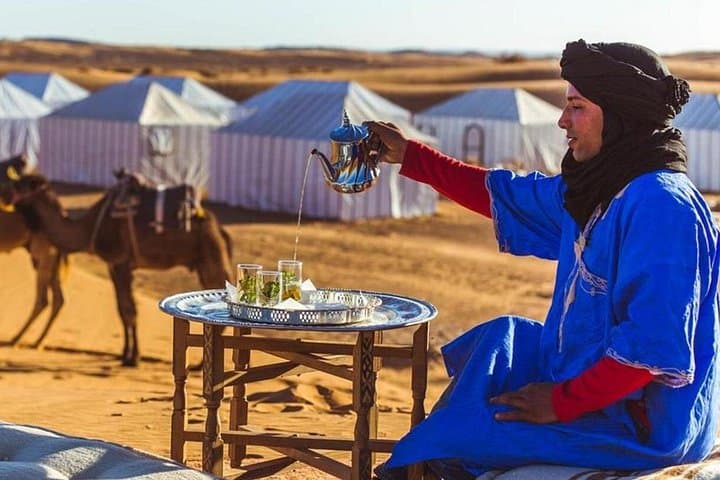
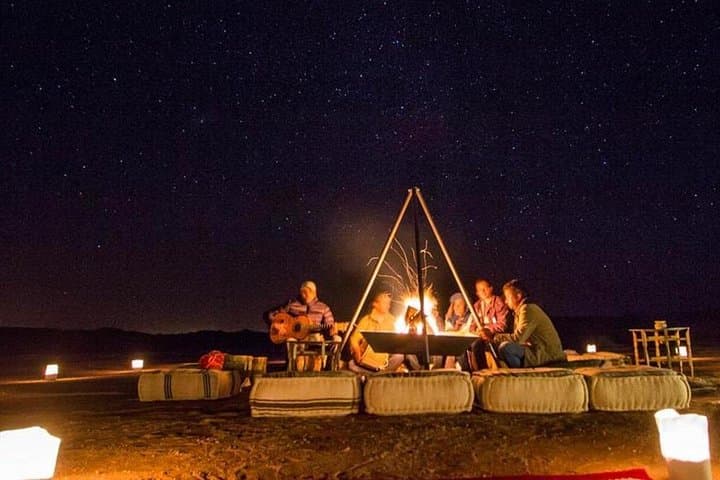
This short loop traces Morocco’s geological and cultural seams: uplifted Middle Atlas ranges that cradle cedar groves and fossil-rich outcrops, then the wind-sculpted Erg Chebbi—dunes that can tower 100–150 meters above the surrounding plain. Human history here is equally layered. Berber communities and nomadic traditions continue to shape hospitality; evening mint tea and live drum rhythms at camp are as integral as the stars.
Expect practical simplicity: a private driver handles long drives (roughly 470–500 km round-trip, 7–9 hours each driving day), a camel transfer across shifting ridgelines, and an overnight in a desert camp under minimal light pollution. The sand moves and the sun commands the schedule—sunset and sunrise are the cinematic moments.
Plan for temperature swings (hot days, cold nights), sturdy footwear for short dune scrambles, and earthen quiet after dark. Hydrate during drives and carry cash for tips and small purchases in villages. This is an accessible introduction to the Sahara—sensory, photographic, and manageable for most travelers who can sit for extended drives and tolerate brief, gentle camel rides.
easy.
2 days (approx. 48 hours).
Suitable for travelers who can sit through long drives and handle short dune walks and a gentle camel ride; no sustained fitness required.
Expect roughly 7–9 hours one way (about 470–500 km) with stops in Ifrane, Azrou, and Midelt for short breaks and sightseeing.
No prior experience is necessary; camel rides on this tour are short and guided, with staff handling saddling and mounting.
You’ll stay in a desert camp—typically private or shared tents with basic bedding, communal dining, and shared wash facilities; some camps offer simple hot showers.
The operator notes it’s suitable for most fitness levels but not recommended for pregnant travelers or those with serious heart conditions; infants may need to sit on laps during transport.
The route follows ancient trans-Saharan corridors; settlements here grew around water sources and seasonal pasture, and Berber culture remains predominant in villages.
This region faces pressure from water scarcity and tourism impacts; minimize footprint by packing out waste, avoiding off-track driving, and supporting locally run camps.
Fez Sahara Tours operates guided outdoor trips and adventures with an emphasis on safety, stewardship, and memorable experiences.

You leave Fez before dawn as the city’s medina shrinks in the rearview, and the road opens into a stitched landscape of cedar forests, basalt ridges and plateaus. The Middle Atlas presses cool air through Ifrane’s alpine-style streets; by midday the trees thin, volcanic rock gives way to ochre plains, and the dunes of Merzouga appear like a moving coastline of sand.
You leave Fez before dawn as the city’s medina shrinks in the rearview, and the road opens into a stitched landscape of cedar forests, basalt ridges and plateaus. The Middle Atlas presses cool air through Ifrane’s alpine-style streets; by midday the trees thin, volcanic rock gives way to ochre plains, and the dunes of Merzouga appear like a moving coastline of sand.
This short loop traces Morocco’s geological and cultural seams: uplifted Middle Atlas ranges that cradle cedar groves and fossil-rich outcrops, then the wind-sculpted Erg Chebbi—dunes that can tower 100–150 meters above the surrounding plain. Human history here is equally layered. Berber communities and nomadic traditions continue to shape hospitality; evening mint tea and live drum rhythms at camp are as integral as the stars.
Expect practical simplicity: a private driver handles long drives (roughly 470–500 km round-trip, 7–9 hours each driving day), a camel transfer across shifting ridgelines, and an overnight in a desert camp under minimal light pollution. The sand moves and the sun commands the schedule—sunset and sunrise are the cinematic moments.
Plan for temperature swings (hot days, cold nights), sturdy footwear for short dune scrambles, and earthen quiet after dark. Hydrate during drives and carry cash for tips and small purchases in villages. This is an accessible introduction to the Sahara—sensory, photographic, and manageable for most travelers who can sit for extended drives and tolerate brief, gentle camel rides.