THE ADVENTURE COLLECTIVE® · Independent discovery and booking for outdoor travel

Cross cedar forests and high mountain passes before stepping onto the wind-carved Erg Chebbi dunes. This 3-day Fez-to-Marrakech tour pairs long scenic drives with camel treks, Berber camps, kasbahs and sunrise desert views.
Cross cedar forests and high mountain passes before stepping onto the wind-carved Erg Chebbi dunes. This 3-day Fez-to-Marrakech tour pairs long scenic drives with camel treks, Berber camps, kasbahs and sunrise desert views.
Daybreak in the Atlas is a moving picture: cedar slopes give way to a long ribbon of road, and the air thins as the Tizi n'Tichka pass presses you up toward 2,260 meters before the landscape opens into sunbaked valleys. By afternoon the dunes of Erg Chebbi rise like a living wall; wind sculpts the sand and the colors change as if the desert were breathing.
Verified experiences and guided adventures in the surrounding area.
Operated by Great Morocco Tours · Merzouga, Drâa-Tafilalet
Daybreak in the Atlas is a moving picture: cedar slopes give way to a long ribbon of road, and the air thins as the Tizi n'Tichka pass presses you up toward 2,260 meters before the landscape opens into sunbaked valleys. By afternoon the dunes of Erg Chebbi rise like a living wall; wind sculpts the sand and the colors change as if the desert were breathing.
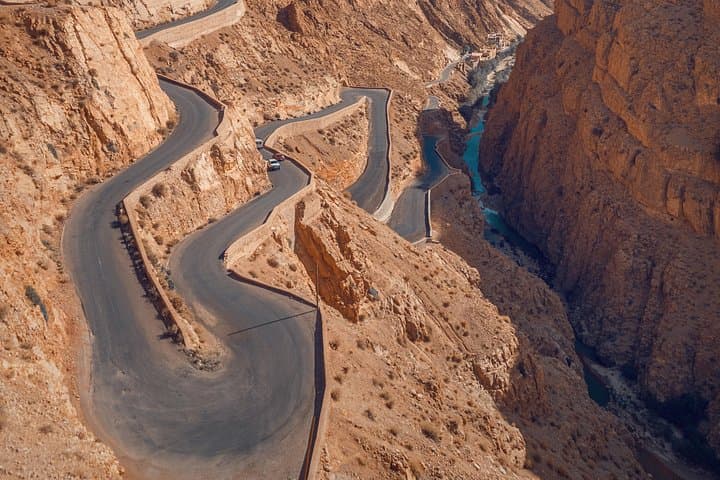
This three-day route follows historical caravan corridors—through Ifrane and its Alpine-style streets, across the Ziz Valley and gorges carved by ancient rivers, past Midelt and Erfoud into the orange-brown sea of Merzouga. The geology swings from granite and cedar in the Middle Atlas to sedimentary basins and aeolian sand seas in the Sahara. Cultural notes: Berber villages, the Rose Valley’s small-scale agriculture, and the adobe kasbah of Ait Ben Haddou—an architectural anchor of southern Morocco—trace a living connection between trade, film, and local crafts.
Practical guidance: expect roughly 8 hours driving on day one (Fez→Merzouga, ~470 km), ~5 hours on day two (Merzouga→Ouarzazate via Todra/Dades), and ~4–5 hours on day three to Marrakech (~200 km via Tizi n'Tichka). Camel treks at sunrise and sunset last 1–2 hours; overnight is in semi-permanent Berber camp tents. Bring sun protection, layered clothing for cold desert nights, sturdy footwear for hard sand and rocky stops, and at least 2–3 liters of water per day. Timing matters—sunrise on the dunes is the clearest light and the coolest window for walking. Respect local rhythms: ask before photographing people and follow guides on sensitive dune routes to reduce erosion.
moderate.
3 days (approx. 72 hours).
Suitable for travelers in average fitness; be comfortable with several hours of driving and short camel treks.
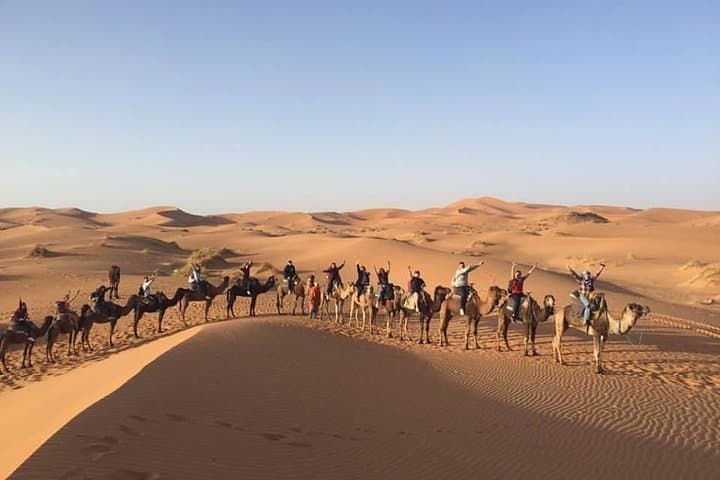
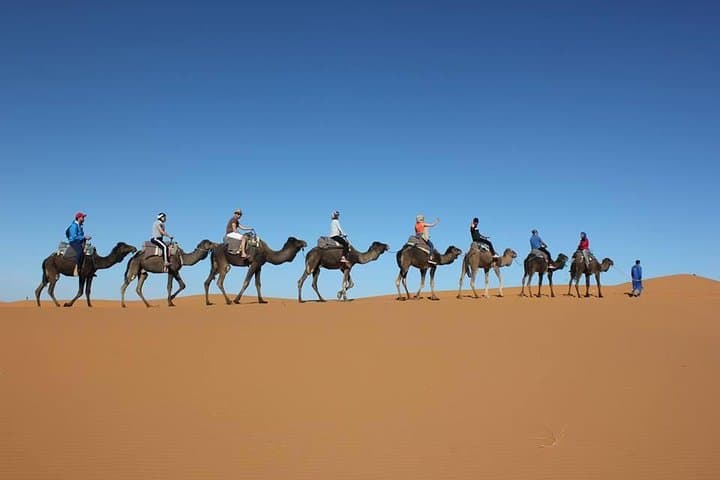
Typical camel rides for sunset or sunrise are about 1–2 hours, covering the dune crest and nearby sand corridors before reaching the camp.
Yes—overnight in a desert camp near Erg Chebbi and hotel nights on other segments are included along with local driver and some meals as listed in the itinerary.
The tour involves long drives and walking on uneven terrain; camel saddles require basic mobility—check with the operator for tailored arrangements and age restrictions.
Carry passport identification and any relevant visas; provide full names and pickup details during booking as requested by the operator.
This corridor reflects centuries-old caravan routes linking Saharan trade with Atlantic and Mediterranean markets; Ait Ben Haddou stands as a fortified ksar tied to trans-Saharan commerce and later film productions.
Dune systems are delicate—stay on established paths and support camps that manage waste and limit plastic; water is scarce, so minimize consumption and rely on bottled sources when directed.
Great Morocco Tours operates guided outdoor trips and adventures with an emphasis on safety, stewardship, and memorable experiences.
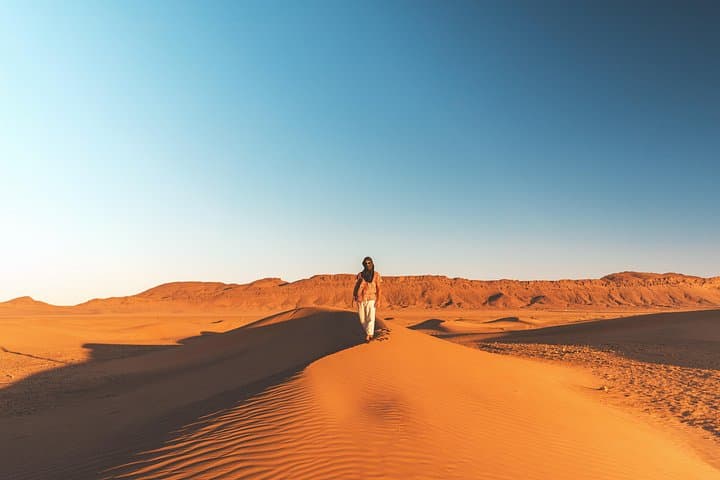
Daybreak in the Atlas is a moving picture: cedar slopes give way to a long ribbon of road, and the air thins as the Tizi n'Tichka pass presses you up toward 2,260 meters before the landscape opens into sunbaked valleys. By afternoon the dunes of Erg Chebbi rise like a living wall; wind sculpts the sand and the colors change as if the desert were breathing.
Daybreak in the Atlas is a moving picture: cedar slopes give way to a long ribbon of road, and the air thins as the Tizi n'Tichka pass presses you up toward 2,260 meters before the landscape opens into sunbaked valleys. By afternoon the dunes of Erg Chebbi rise like a living wall; wind sculpts the sand and the colors change as if the desert were breathing.
This three-day route follows historical caravan corridors—through Ifrane and its Alpine-style streets, across the Ziz Valley and gorges carved by ancient rivers, past Midelt and Erfoud into the orange-brown sea of Merzouga. The geology swings from granite and cedar in the Middle Atlas to sedimentary basins and aeolian sand seas in the Sahara. Cultural notes: Berber villages, the Rose Valley’s small-scale agriculture, and the adobe kasbah of Ait Ben Haddou—an architectural anchor of southern Morocco—trace a living connection between trade, film, and local crafts.
Practical guidance: expect roughly 8 hours driving on day one (Fez→Merzouga, ~470 km), ~5 hours on day two (Merzouga→Ouarzazate via Todra/Dades), and ~4–5 hours on day three to Marrakech (~200 km via Tizi n'Tichka). Camel treks at sunrise and sunset last 1–2 hours; overnight is in semi-permanent Berber camp tents. Bring sun protection, layered clothing for cold desert nights, sturdy footwear for hard sand and rocky stops, and at least 2–3 liters of water per day. Timing matters—sunrise on the dunes is the clearest light and the coolest window for walking. Respect local rhythms: ask before photographing people and follow guides on sensitive dune routes to reduce erosion.