THE ADVENTURE COLLECTIVE® · Independent discovery and booking for outdoor travel

Cross the Middle Atlas and arrive at Erg Chebbi on a four-day shared journey from Fez to Marrakech. Expect cedar forests, canyon walls, sweeping dunes, a camel ride, and a night in a luxury camp.
Cross the Middle Atlas and arrive at Erg Chebbi on a four-day shared journey from Fez to Marrakech. Expect cedar forests, canyon walls, sweeping dunes, a camel ride, and a night in a luxury camp.
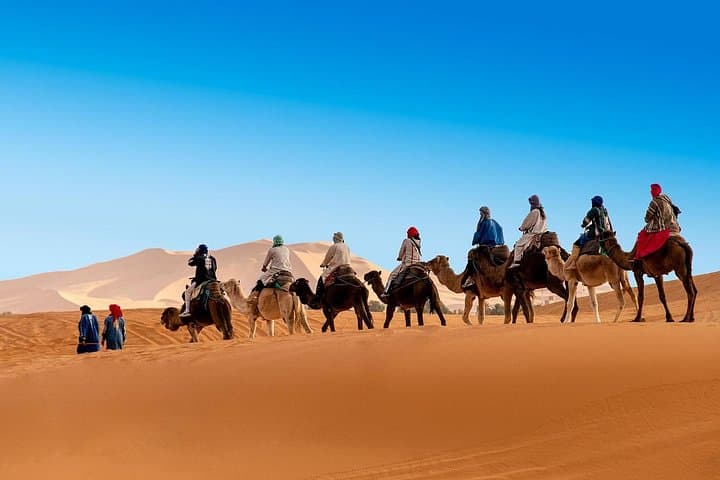
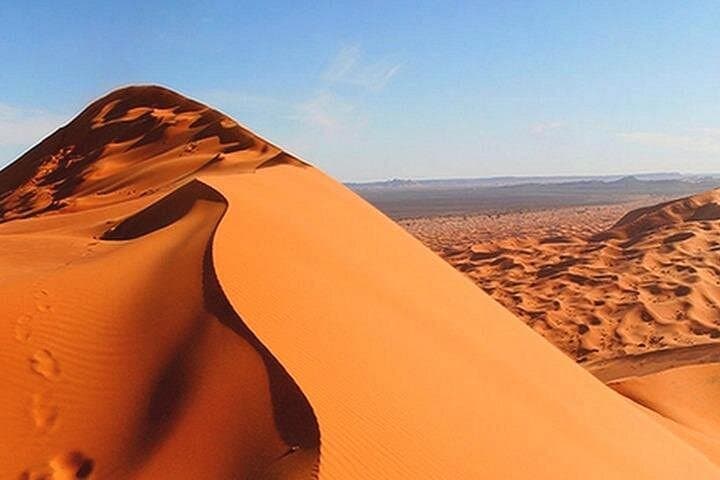
A wind-bleached ridge of dunes breaks the late afternoon light as the convoy pulls into Merzouga — sand hissing like distant applause. Travelers step down from the van to find a horizon that moves: wind-sculpted humps of ochre that climb and fall, and a skyline that insists on silence.
Verified experiences and guided adventures in the surrounding area.
Operated by Sahara safaris · Merzouga, Drâa-Tafilalet
A wind-bleached ridge of dunes breaks the late afternoon light as the convoy pulls into Merzouga — sand hissing like distant applause. Travelers step down from the van to find a horizon that moves: wind-sculpted humps of ochre that climb and fall, and a skyline that insists on silence.
This four-day route threads through the Middle Atlas and the Ziz Valley, passes cedar forests where Barbary macaques leap between trunks, and descends into the Sahara at Erg Chebbi — dunes that can top 100–150 meters and were formed by millennia of wind and river-borne sand. Along the way, Todra Gorge slices a narrow limestone corridor used by caravan routes for centuries, while kasbahs like Aït Ben Haddou bear the architecture of a trade network that linked sub‑Saharan routes to Atlantic ports.
Culturally, the trip mixes Berber hospitality with desert craft: local camps offer mint tea and shared stories under an enormous, star-pricked sky. Geology and human history meet in the mesas and river courses that shaped settlements and travel corridors.
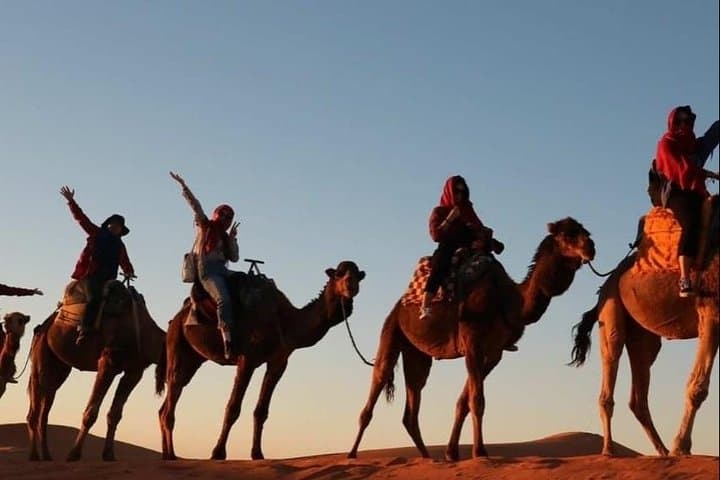
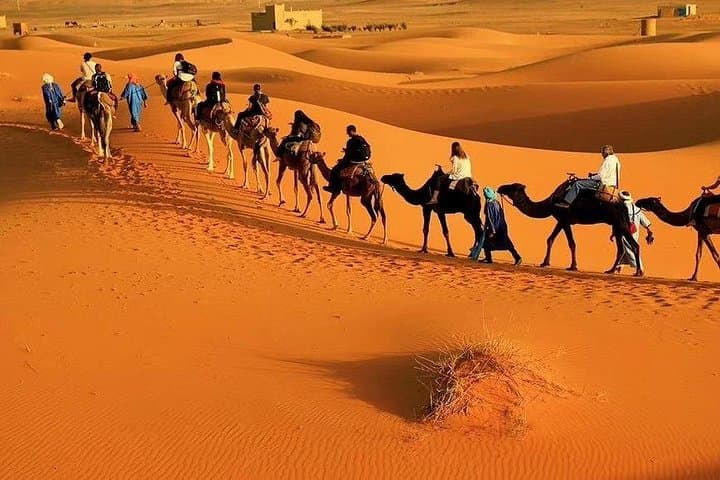
Practically, expect long driving days offset by short hikes, a camel ride at sunset, and a night in a luxury desert camp with dinner and breakfast included. Pack layers for cool nights, sun protection for daytime, and a small daypack for canyon walks. Hydrate on the road, carry cash for roadside markets and tips, and allow extra time for photography at dawn and dusk — the light in the Sahara changes the landscape hourly.
moderate.
4 days.
Suitable for travelers with basic fitness — able to climb dunes and walk short canyon trails; long drives require patience.
Camel rides are gentle and guided; walking on dunes requires balance and short bursts of effort — basic mobility is sufficient.
Soft-sided bags are preferred for vehicle storage and camel transfers; keep valuables and a daypack with essentials on you.
The tour includes 2 hotel nights and 1 night in a luxury desert camp with dinner and breakfast; check specifics with the operator.
The itinerary notes infants must sit on laps; it is not recommended for travelers with serious spinal injuries — consult the operator if unsure.
This corridor connected Saharan caravan trade routes to Moroccan towns; kasbahs and fortified villages grew where water and trade intersected.
The Sahara’s ecosystems are fragile—stick to established camps, minimize water use, and avoid disturbing wildlife or archaeological sites.
Sahara safaris operates guided outdoor trips and adventures with an emphasis on safety, stewardship, and memorable experiences.
A wind-bleached ridge of dunes breaks the late afternoon light as the convoy pulls into Merzouga — sand hissing like distant applause. Travelers step down from the van to find a horizon that moves: wind-sculpted humps of ochre that climb and fall, and a skyline that insists on silence.
A wind-bleached ridge of dunes breaks the late afternoon light as the convoy pulls into Merzouga — sand hissing like distant applause. Travelers step down from the van to find a horizon that moves: wind-sculpted humps of ochre that climb and fall, and a skyline that insists on silence.
This four-day route threads through the Middle Atlas and the Ziz Valley, passes cedar forests where Barbary macaques leap between trunks, and descends into the Sahara at Erg Chebbi — dunes that can top 100–150 meters and were formed by millennia of wind and river-borne sand. Along the way, Todra Gorge slices a narrow limestone corridor used by caravan routes for centuries, while kasbahs like Aït Ben Haddou bear the architecture of a trade network that linked sub‑Saharan routes to Atlantic ports.
Culturally, the trip mixes Berber hospitality with desert craft: local camps offer mint tea and shared stories under an enormous, star-pricked sky. Geology and human history meet in the mesas and river courses that shaped settlements and travel corridors.
Practically, expect long driving days offset by short hikes, a camel ride at sunset, and a night in a luxury desert camp with dinner and breakfast included. Pack layers for cool nights, sun protection for daytime, and a small daypack for canyon walks. Hydrate on the road, carry cash for roadside markets and tips, and allow extra time for photography at dawn and dusk — the light in the Sahara changes the landscape hourly.