THE ADVENTURE COLLECTIVE® · Independent discovery and booking for outdoor travel

Cross cedar forests, palm oases and Erg Chebbi dunes on a four-day private journey from Fez to Marrakech. Experience camel rides, desert camps, Todra Gorges and the UNESCO site Ait Ben Haddou with local guides and comfortable transfers.
Cross cedar forests, palm oases and Erg Chebbi dunes on a four-day private journey from Fez to Marrakech. Experience camel rides, desert camps, Todra Gorges and the UNESCO site Ait Ben Haddou with local guides and comfortable transfers.
Dawn breaks over Fez and the road unfurls — cedar forests and jagged ridgelines give way to palm-fringed valleys and a sea of golden sand. By late afternoon you arrive at Erg Chebbi, where camels climb the dune crests and the desert horizon sharpens like a held breath.
Verified experiences and guided adventures in the surrounding area.
Operated by Marrakech Camel Trips - Day Trips · Merzouga, Drâa-Tafilalet
Dawn breaks over Fez and the road unfurls — cedar forests and jagged ridgelines give way to palm-fringed valleys and a sea of golden sand. By late afternoon you arrive at Erg Chebbi, where camels climb the dune crests and the desert horizon sharpens like a held breath.
This four-day route threads Morocco’s varied geography: the volcanic Middle Atlas, the irrigated Ziz Valley, the fossil-rich plains around Erfoud, and the banded canyon walls of Todra Gorges. Geologically, Erg Chebbi’s dunes are wind-sculpted silt and sand deposited during Holocene climatic shifts; the High Atlas you cross on day four was formed by the convergence of the African and Eurasian plates.
Culturally the journey is a living corridor of Berber (Amazigh) villages, kasbah architecture, and marketplaces where caravan routes once met. Ait Ben Haddou stands as a fortified waypoint from the trans-Saharan era and later as a film location, revealing layers of history in mud-brick façades.
Practical guidance: expect long driving segments—plan for 4–6 hours on some days—comfortable transport with AC is provided. Desert nights are cold; layers and a windproof shell make camp hours comfortable. Hydration and sun protection are essential during dune walks and camel rides; the camel leg is short and guided for all ages.
Local tips: rise early for dune light, visit Khamlia for Gnawa music, and check fossil workshops in Erfoud. Respect private wells and minimize plastic in camps; the dune ecology is fragile and recovery from footprints and waste is slow.
moderate.
4 days.
Suitable for travelers in average fitness; mostly vehicle travel with short camel rides and light dune walking requiring balance and basic stamina.
The tour is vehicle-based with short camel rides and light walking; basic mobility is enough, though some dune walking requires balance.
One or two nights are in desert camps—options range from standard Berber tents to luxury tents with mattresses and shared facilities depending on booking.
Camel rides are generally safe and guided; children should be supervised and may be required to sit on laps according to operator rules.
Book at least several weeks in advance during high season (spring and autumn); private tours may be available on shorter notice in low season.
The route follows old caravan corridors; Ait Ben Haddou is a classic example of southern Moroccan ksar architecture and a stop on trans-Saharan trade routes.
The Erg Chebbi dune system is sensitive to disturbance; practice leave-no-trace, minimize single-use plastics, and respect nomad lands and local water sources.
Marrakech Camel Trips - Day Trips operates guided outdoor trips and adventures with an emphasis on safety, stewardship, and memorable experiences.
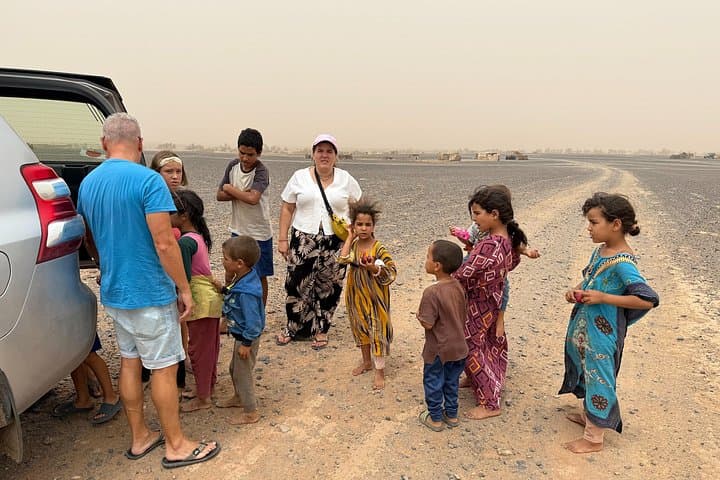
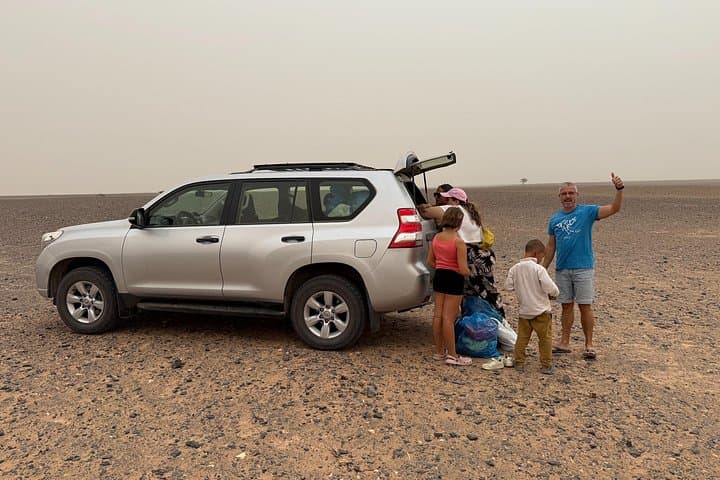
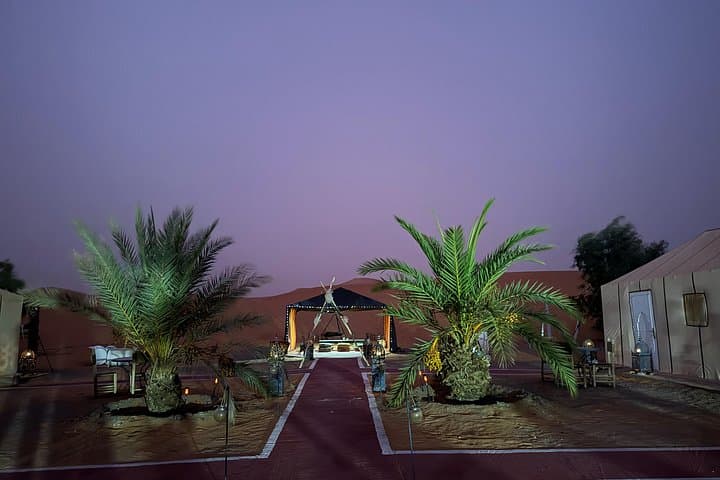
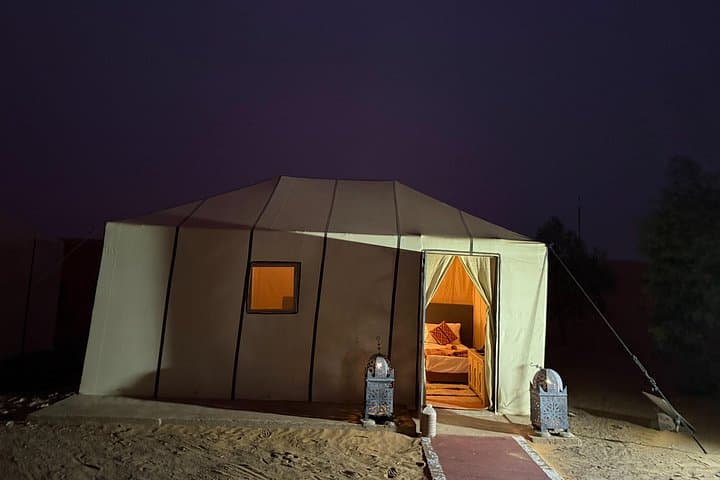
Dawn breaks over Fez and the road unfurls — cedar forests and jagged ridgelines give way to palm-fringed valleys and a sea of golden sand. By late afternoon you arrive at Erg Chebbi, where camels climb the dune crests and the desert horizon sharpens like a held breath.
Dawn breaks over Fez and the road unfurls — cedar forests and jagged ridgelines give way to palm-fringed valleys and a sea of golden sand. By late afternoon you arrive at Erg Chebbi, where camels climb the dune crests and the desert horizon sharpens like a held breath.
This four-day route threads Morocco’s varied geography: the volcanic Middle Atlas, the irrigated Ziz Valley, the fossil-rich plains around Erfoud, and the banded canyon walls of Todra Gorges. Geologically, Erg Chebbi’s dunes are wind-sculpted silt and sand deposited during Holocene climatic shifts; the High Atlas you cross on day four was formed by the convergence of the African and Eurasian plates.
Culturally the journey is a living corridor of Berber (Amazigh) villages, kasbah architecture, and marketplaces where caravan routes once met. Ait Ben Haddou stands as a fortified waypoint from the trans-Saharan era and later as a film location, revealing layers of history in mud-brick façades.
Practical guidance: expect long driving segments—plan for 4–6 hours on some days—comfortable transport with AC is provided. Desert nights are cold; layers and a windproof shell make camp hours comfortable. Hydration and sun protection are essential during dune walks and camel rides; the camel leg is short and guided for all ages.
Local tips: rise early for dune light, visit Khamlia for Gnawa music, and check fossil workshops in Erfoud. Respect private wells and minimize plastic in camps; the dune ecology is fragile and recovery from footprints and waste is slow.